The brain is the body’s favorite show-off. It weighs about three pounds, runs on twenty percent of your energy, and hosts a hundred trillion connections — a combination so impressive that the jokes practically write themselves. This collection gathers 200 original neuroscience puns and one-liners, all written fresh for this page, all clever, and all safe for the whole family. No joke here is copied from anywhere; every line was thought up fresh for this page alone.
Why do brain jokes work so well? Because everyone has one — the neurons firing, the synapses whispering, the frontal lobe planning tomorrow’s to-do list. The jokes below stay bright and curious — our neurons wear lab coats, brainstorm clouds rain lightbulbs, and knocks land on classroom doors — and they never touch anything mean or unkind. Read the science section first, and every pun after it lands a little better. Then pick your favorites for quiz night, the classroom science week, or the caption that needs exactly one good idea.
⚡ Quick Answer: Neuroscience puns turn neurons, synapses and brain labs into family-friendly fun. These 200+ original one-liners cover captions, classrooms, cards and parties — clever, bright, and safe for all ages.
Brain Science: Real Facts Behind the Fun
The adult human brain weighs about 1.3 to 1.4 kilograms — roughly three pounds of the most complex matter known. It runs on about twenty percent of the body’s oxygen and energy even when you are just sitting still. That is a lot of fuel for an organ that never takes a day off.
The brain’s workforce is about 86 billion neurons — nerve cells that send signals racing along their axons. Each neuron can connect to thousands of others, building an estimated 100 trillion synapses. It is the most connected network anyone has ever found.
Neurons never actually touch. When a signal reaches the end of an axon, chemical messengers called neurotransmitters leap across the tiny gap — the synapse — to the next cell. That microscopic jump is where every thought, memory, and giggle begins.
The brain has neighborhoods with different jobs. The cerebrum, the largest part, handles thinking; the frontal lobe plans and decides; the hippocampus files new memories; the cerebellum — the “little brain” — keeps you balanced and moving smoothly. The left and right hemispheres divide the labor but constantly collaborate.
The brain is an electrical organ. It hums with measurable rhythms called brain waves, and it keeps humming all night while you sleep — replaying, filing, and tidying the day’s thoughts. Even your dreams are the night shift doing paperwork.
The brain is about 73 to 75 percent water, and its fastest signals can travel at up to 270 miles per hour. Yet for all its power, the brain itself cannot feel pain — it has no pain receptors. Headaches come from the tissues around it, not the brain itself.
That is the machinery behind every joke on this page. Which brings us to the wordplay engine — the twelve terms that power almost every neuroscience pun.
Now the wordplay engine — the terms that power almost every neuroscience pun. Learn these twelve and you will catch every joke on the page twice as fast, because nearly every line below is built on one of them:
Neuron — the brain’s messenger cell; about 86 billion of them
Synapse — the tiny gap where messages jump between neurons
Cerebrum — the largest brain part, where thinking happens
Cerebellum — the “little brain” of balance and movement
Hippocampus — the memory center, the brain’s librarian
Axon — the neuron’s long tail that carries signals outward
Neurotransmitter — the chemical mail carrier crossing the synapse
Gray Matter — the neuron-packed tissue that makes thinking look like a walnut
Frontal Lobe — the planner and decision-maker of the brain
Brain Wave — the electrical rhythms, partying even during sleep
Brainstorm — a storm of ideas raining lightbulbs
Hemisphere — one half of the brain’s teamwork pair
Kinds of Brain Stars: A Friendly Field Guide
Not all brain stars work the same shift. Before the puns, here is a quick tour of the regulars — the five players you will meet on this page, each with its own job, its own speed, and its own favorite corner of the lab.
Neurons: the messengers — about 86 billion tiny cells sending signals at lightning speed.
Brain lobes: the neighborhoods — frontal, parietal, temporal, and occipital, each with its own job.
Synapses: the handshakes — the tiny gaps where one neuron passes the message to the next.
Neurotransmitters: the mail carriers — chemical messengers like serotonin and dopamine that keep signals moving.
Hemispheres: the teamwork pair — left brain and right brain, different strengths, always collaborating.
Classic Neuroscience One-Liners
These are the all-rounders — the lines that work at quiz night, in the group chat, or on a card tucked into a science-week gift bag. They lean on the classic props from the science section: neurons, synapses, hemispheres, and brain waves. Each one is a complete little scene, built for reading aloud, and none of them needs explaining. Keep a few ready; the next study session will hand you a reason to use one, and the one after that will hand you three more.
The neuron fired at dawn, raced down its axon, and beat the coffee to the brain.
Two brain cells argued over a thought until a synapse split the difference.
The cerebrum held a meeting at nine sharp, and every region showed up on time.
The cerebellum caught the wobbling bike rider and steered him home upright.
A neuron in a lab coat pipetted ideas into a petri dish and waited for one to spark.
The hippocampus filed a birthday memory under “best cake” and locked the drawer.
The frontal lobe vetoed the third dessert and approved a walk instead.
A brain wave rolled across the lab screen, and the researchers cheered.
The left hemisphere did the math; the right hemisphere painted the answer.
A gray matter cloud drifted over Brainstorm Central, and the ideas started pouring.
The neurotransmitters delivered their packages to the synapses before lunch.
The brain weighed in at three pounds and ran the whole body like a boss.
An axon stretched a mile in cell years and delivered the message in a flash.
The brain waves partied all night while the body slept.
Two hemispheres shook hands over a crossword and called it teamwork.
The synapse whispered the secret across the gap, and the whole neuron network knew by noon.
The cerebrum ordered breakfast: one memory, two ideas, and a fresh perspective.
A brain cell waved at the MRI machine and posed for its close-up.
The hippocampus dug up a childhood summer and played it like a movie.
The frontal lobe drafted the weekend plans and filed them under “fun”.
Neurons lit up like a city at night when the quiz question landed.
The brain spent twenty percent of the body’s energy and earned every watt.
A thought jumped the synapse gap like a trapeze artist and stuck the landing.
The cerebellum balanced the tightrope walker without breaking a sweat.
The gray matter walnut cracked a joke that the whole head laughed at.
The brain’s electrical storm lit up the lab monitors at midnight.
A neuron sent an RSVP to the synapse party and brought a friend.
The mind filed seventy thousand thoughts and still had room for one more joke.
The right hemisphere hummed a tune while the left one did the taxes.
The brainstem kept the lights on while the cerebrum planned the day.
A memory packed its bags in the hippocampus and moved to long-term storage.
The brain finished the puzzle, framed it, and hung it in the frontal lobe.
Cute Brain Puns
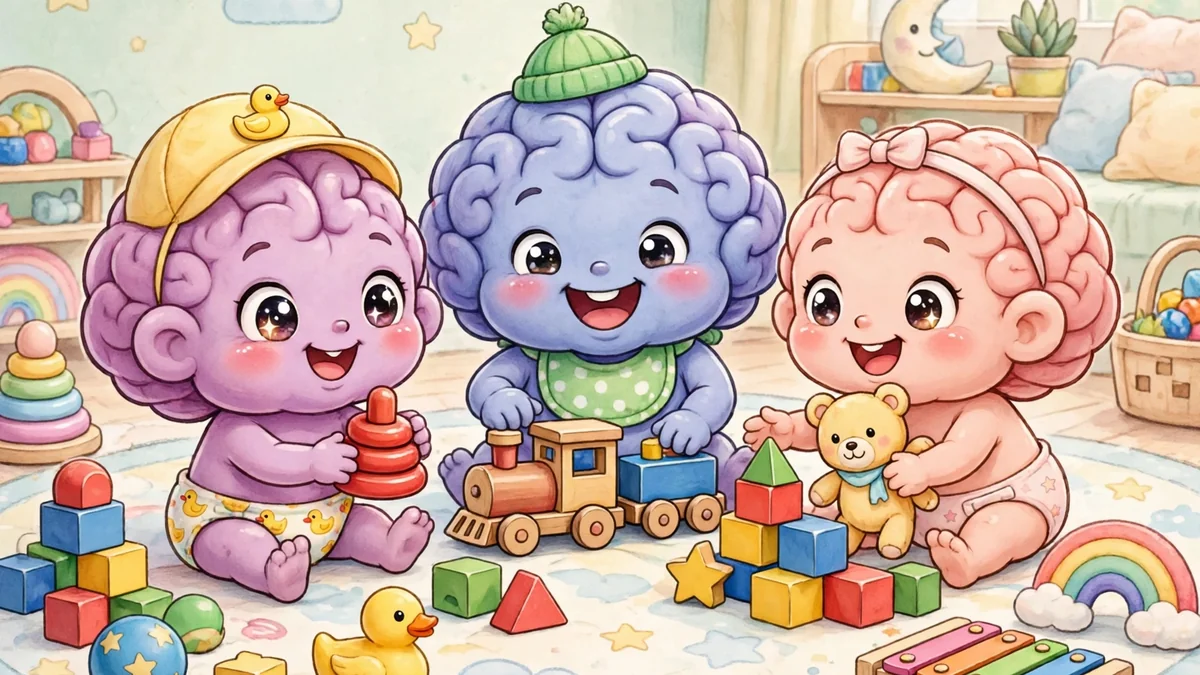
“Cute” in lab humor means warm: the lines you would tell at the study table or write in a card for the friend with the big ideas. These are sweet, gentle, and safe for anyone — pass them along with a good grade, a finished puzzle, or a promise of the next quiz night. Nothing here is scary; the wildest thing in this section is a baby neuron in a party hat.
The baby neuron wore a tiny lab coat and took its first signal for a walk.
A little brain cell hugged a synapse and refused to let go.
The baby brain waved at the MRI with both hemispheres.
Two baby neurons shared one thought and giggled.
The little cerebrum stacked blocks labeled “ideas” into a wobbly tower.
A tiny hippocampus kept a shoebox of happy memories under the bed.
The baby brain’s first brain wave was a sleepy wiggle on the monitor.
A little axon stretched as far as it could and said, “Look at me grow!”
Two brain cells blew bubbles in the lab sink and watched them pop.
The baby cerebellum took its first wobbly step and nailed the landing.
A tiny frontal lobe planned a tea party for its stuffed neurons.
The little brain giggled when a thought tickled its synapses.
A baby neuron fell asleep in a cozy gray-matter blanket.
The little brain waved goodnight to its thoughts one by one.
A tiny brain cell drew a crayon picture of its favorite idea.
The baby hippocampus found a lost memory and returned it with a smile.
Two little neurons raced signals down their axons, and the message won.
The tiny brain’s bedtime story was about the bravest neuron ever.
A little brain cell counted its synapses: one, two, a hundred!
The baby brain danced the neuron shuffle for its lab friends.
A tiny cerebellum rode a tricycle in circles and cheered.
The little brain dreamed in bright colors and woke up smiling.
Brain Q&A Puns
Question-and-answer jokes are the easiest kind to perform: you ask, they guess, you land the punchline. This set is built for quiz nights, classroom science weeks, and the family game night that wants one more round. The first fourteen answers teach a real brain fact on the way to the laugh — the rest are pure playful fun. Try the factual ones on a teacher first; they double as quiz answers.
Q: How much does an adult brain weigh? A: About 1.3 to 1.4 kilograms — roughly three pounds.
Q: How many neurons does the brain have? A: Around 86 billion nerve cells.
Q: How much energy does the brain use? A: About twenty percent of the body’s oxygen and energy, even at rest.
Q: Is the brain mostly water? A: Yes — it is about 73 to 75 percent water.
Q: Do neurons actually touch each other? A: No — signals jump across a tiny gap called the synapse.
Q: Can the brain feel pain? A: No — it has no pain receptors; headaches come from surrounding tissues.
Q: What does the left hemisphere do? A: It leans toward logic and language, while the right leans toward creativity — and they always team up.
Q: What is the hippocampus for? A: It is the memory center — new memories form there.
Q: What does the cerebellum do? A: The “little brain” coordinates balance and movement.
Q: What does the frontal lobe handle? A: Planning and decision-making — the brain’s committee.
Q: What is a brain wave? A: The electrical rhythms the brain makes — it stays busy even during sleep.
Q: What is the cerebrum? A: The largest part of the brain, where thinking happens.
Q: How fast do brain signals travel? A: Up to about 270 miles per hour in the fastest nerves.
Q: How many synapses does the brain have? A: Around 100 trillion — the most connected network known.
Q: Why did the neuron bring a ladder? A: It wanted to climb to a higher thought.
Q: What is a neuron’s favorite sport? A: Relay — it was born to pass the baton.
Q: Why did the brain go to the library? A: It heard the hippocampus had new arrivals.
Q: What do you call a brain that tells jokes? A: A real thinker-upper.
Q: Why did the synapse blush? A: The message it carried was a compliment.
Q: What is a brain’s favorite dessert? A: Anything with layers — like a good thought.
Q: Why did the cerebrum stay up late? A: It was brainstorming and lost track of time.
Q: What do brains do on weekends? A: Replay the week’s best memories.
Q: Why did the neuron get promoted? A: It never dropped a single signal.
Q: What is a brain’s favorite song? A: Anything with a good rhythm and a catchy idea.
Q: Why did the frontal lobe take a nap? A: Even planners need a planning break.
Q: What do you call a polite neuron? A: One that always says thank you at the synapse.
Q: Why did the brain join the quiz team? A: It knew all the answers and loved the buzzer.
Q: What is a brain’s favorite holiday? A: Thinksgiving — a day for big ideas.
Brain Captions & Texts
Captions live or die in the first few words, so these stay short and punchy. The Instagram set is written for lab photos, whiteboard wins, and study marathons — while the texting set works as quick heads-ups and everyday updates you can send in seconds. Pair any caption with a photo of your own bright idea and the likes take care of themselves.
Brain Instagram Captions
Brain hair, don’t care.
Running on neurons and coffee.
Current mood: deep in thought.
Mind officially blown.
Powered by 86 billion neurons.
Synapses firing on all cylinders.
Big ideas, small skull.
Caught thinking.
My brain has main-character energy.
Idea loading…
Left brain, right brain, both vibing.
Gray matter, golden ideas.
Thinking cap: on.
My neurons did the group project.
Brain waves looking wavy today.
Mentally in the lab.
Thought of the day: this caption.
Cerebrum approved this message.
One hundred trillion connections, one great photo.
Officially the brightest idea in the room.
Short Brain Texts to Send
Quiz night at 7. Bring your brain and your best guesses.
Brain fact: 86 billion neurons and not one is on break.
Study break in five. The neurons are staging a protest.
The brainstorm went great — the whiteboard is full.
My left brain did the math; my right brain drew the diagram.
Coffee for the frontal lobe. It’s decision o’clock.
Science week display is up — the brain model works!
I thought of you today. The hippocampus insisted.
Lab results: one hundred percent pure idea.
Nap time. The brain waves are throwing a party without me.
That test was easy — the synapses were on fire.
Movie night: documentaries only. The cerebrum demands it.
The Brain Lab
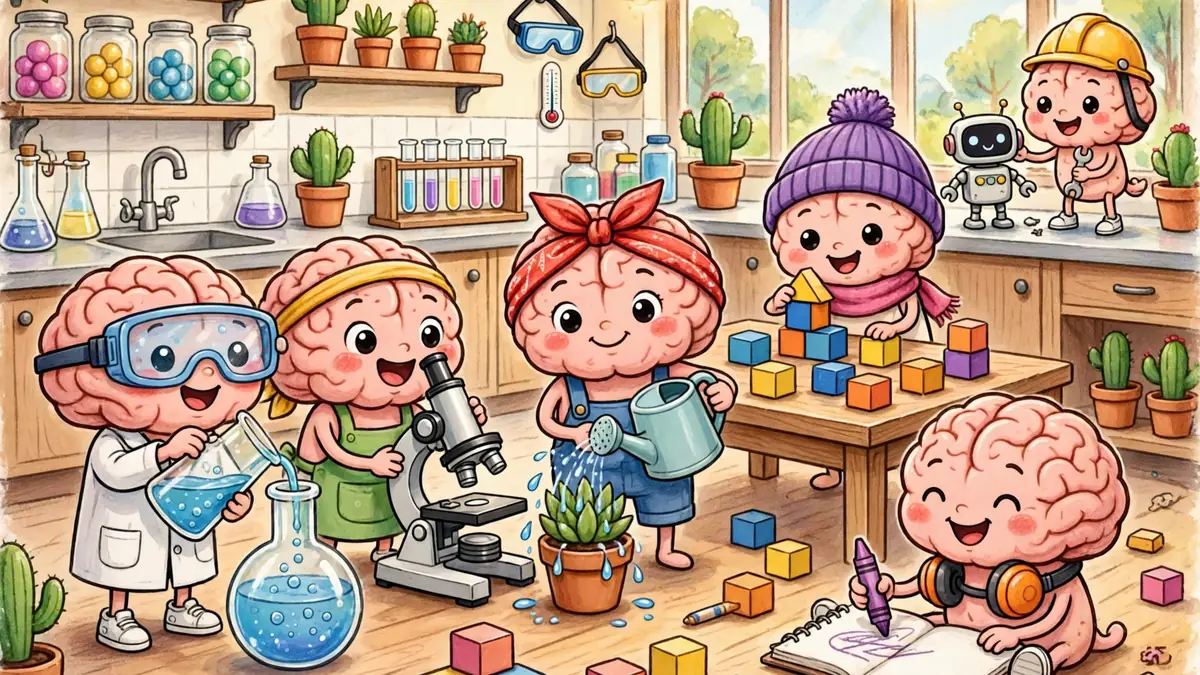
This is the lab section: goggles on, pipettes ready, and petri dishes full of almost-ideas. These lines come straight from the bench — microscopes, bubbling flasks, and lab-notebook triumphs. Read them with your safety goggles on; the neurons take their experiments seriously.
The neurons clocked in at the lab bench, goggles on, pipettes ready.
A brain cell labeled three flasks “ideas” and watched one bubble over.
The microscope revealed a neuron mid-thought, and the intern gasped.
The lab notebook read: “Experiment 42 — the synapse worked again.”
Two brain cells in white coats debated the results over petri dishes.
The bubbling flask of curiosity boiled over at exactly the right moment.
A neuron safety-pinned its lab coat and aced the safety quiz.
The centrifuge spun the day’s thoughts into neat little layers.
The lab’s prize specimen was a neuron that never missed a signal.
The researchers high-fived when the brain wave monitor spiked.
A brain cell filed its findings under “Eureka” and dated the page.
The lab closed at six, and the neurons took their thoughts home.
Brainstorm Central
This is the weather section: storm clouds of ideas, lightbulb rain, and thought-bubble forecasts. These lines are for the planners, the dreamers, and anyone who has ever watched a whiteboard fill up like a sky before rain. Bring an umbrella and an open mind.
The storm cloud of ideas rolled in, and the lightbulbs started raining.
A thought-bubble forecast predicted scattered genius with a chance of eureka.
The idea lightning struck twice — the whiteboard caught both.
Brainstorm winds picked up, and sticky notes flew like leaves.
The team sheltered under one big umbrella idea until the storm passed.
A rainbow of plans arched over the meeting after the brainstorm.
The thunder of applause followed the lightning of the winning idea.
The cloud seeding worked: every seeded thought grew a full plan.
The drizzle of small ideas turned into a downpour of big ones.
The weather vane of creativity spun wildly and pointed at genius.
After the storm, the sky cleared into the sunniest outlook yet.
The brainstorm ended at noon, and the forecast stayed brilliant all week.
Sarcastic & Clever Brain Puns
Not every experiment works. The sarcastic set is for the dropped flask, the forgotten memory, and the answer that arrived after the quiz — dry laughs aimed at situations, never at the thinkers, and always clever at heart. The clever half follows with the science and wordplay from the top of this page, bent into lines that make people say, “Okay, that one was good.” Save the sarcastic ones for friends who have survived a failed hypothesis; they will feel seen.
Sarcastic Brain Puns
Oh great, another brilliant idea at 3 a.m. The neurons were thrilled.
Sure, I’ll remember that. The hippocampus has nothing else to file.
Love how my brain replays embarrassing moments in high definition.
The frontal lobe made a plan. The weekend laughed.
Great: I walked into a room and the memory left the building.
The synapse delivered the message. To the wrong neuron.
Perfect timing, brain — the answer arrived after the quiz ended.
I didn’t forget — my hippocampus is just extremely selective.
The committee in my frontal lobe voted. The vote was “nap.”
My brain has 100 trillion connections and zero bars of focus.
The thought was right there. Then it jumped the synapse and vanished.
I meant to overthink that. Quality control is my job.
Clever Brain Puns
A neuron is just a brain’s way of sending a text message.
The synapse is the shortest commute in the body.
The cerebrum is the penthouse; the brainstem pays the rent.
Gray matter: proof that thinking comes in a walnut-shaped package.
The hippocampus is a librarian who never takes a day off.
Brain waves are the only party that never stops, even in sleep.
The frontal lobe is a committee that approves every idea twice.
An axon is a slide, and every message rides it screaming with joy.
Neurotransmitters are mail carriers with a perfect delivery record.
The cerebellum is a tiny coach with a whistle made of balance.
One hundred trillion synapses: the busiest group chat in history.
The brain’s motto: stay curious, stay connected, stay firing.
Brain Puns for Kids, School & Parties
Everything in this part of the page is clean, simple, and built for the toughest crowd there is: children. Teachers get science-week lines, families get the party set, and the friendly neuron stays the star of every section — bright, cheerful, and zero-fear, and the puns are for everybody. If a joke works for a seven-year-old and a grandparent at the same table, it earned its place here.
Kid-Friendly Brain Puns
Why did the baby neuron giggle? A thought tickled it!
The little brain built a tower of blocks and called it a big idea.
A baby brain cell wore a party hat and celebrated a new memory.
The tiny hippocampus kept its favorite giggle in a treasure box.
Two baby neurons played tag along the axon and nobody got tired.
The little brain counted its thoughts: one, two, a hundred!
A baby brain blew a raspberry at the microscope and the lens fogged up.
The tiny cerebellum learned to skip and never fell once.
A little neuron drew a smiley face on the lab notebook.
The baby brain’s bedtime story was about the bravest thought ever.
Two baby brains shared one crayon and drew the same rainbow.
The little brain waved goodnight to its neurons, one by one.
Brain School Puns
Our class built a brain model, and the teacher called it mind-blowing.
The science fair project mapped how neurons pass messages.
Why did the biology report get an A? It had diagrams and a neuron diorama.
Our teacher showed a brain documentary, and the class learned what a synapse is.
The worksheet asked us to label the lobes — we got all four.
What is the busiest cell in the body? The answer won the quiz: the neuron.
The class measured reaction time — the synapses won by a landslide.
Our group project listed every brain region, with drawings.
The principal announced Science Week — bring goggles, not guesses.
Geography answer of the year: the organ that runs the whole show — the brain.
The art teacher had us draw the perfect neuron: cell body, axon, and a smile.
Why did the history report mention brains? Because great ideas changed history.
Brain Party Puns
Party game idea: neuron relay. First team to pass the signal wins the golden axon.
The quiz night had one rule: no googling, brains only.
Movie night pick: the brain documentary marathon. Bring popcorn and curiosity.
The icebreaker game: share your best idea. The neuron won by a landslide.
Costume contest rule: best brain hat wins the gray-matter prize.
The backyard party ended with everyone on the trivia team laughing — ten out of ten.
Playlist verdict: lo-fi beats for arrivals, brain waves after the toast.
The photo booth had a giant neuron, and the line never got shorter all night.
Snack table: “brain food” trail mix, “synapse” soda, and cupcakes with tiny lightbulbs.
The piñata was shaped like a brain, and the candy rained like ideas.
Favor bags went out as mini lab kits with goggles and a note: “For thinking purposes only.”
Cleanup crew found twelve sticky notes, three whiteboard markers, and zero regrets. Best party of the year.
Knock-Knock Brain Puns
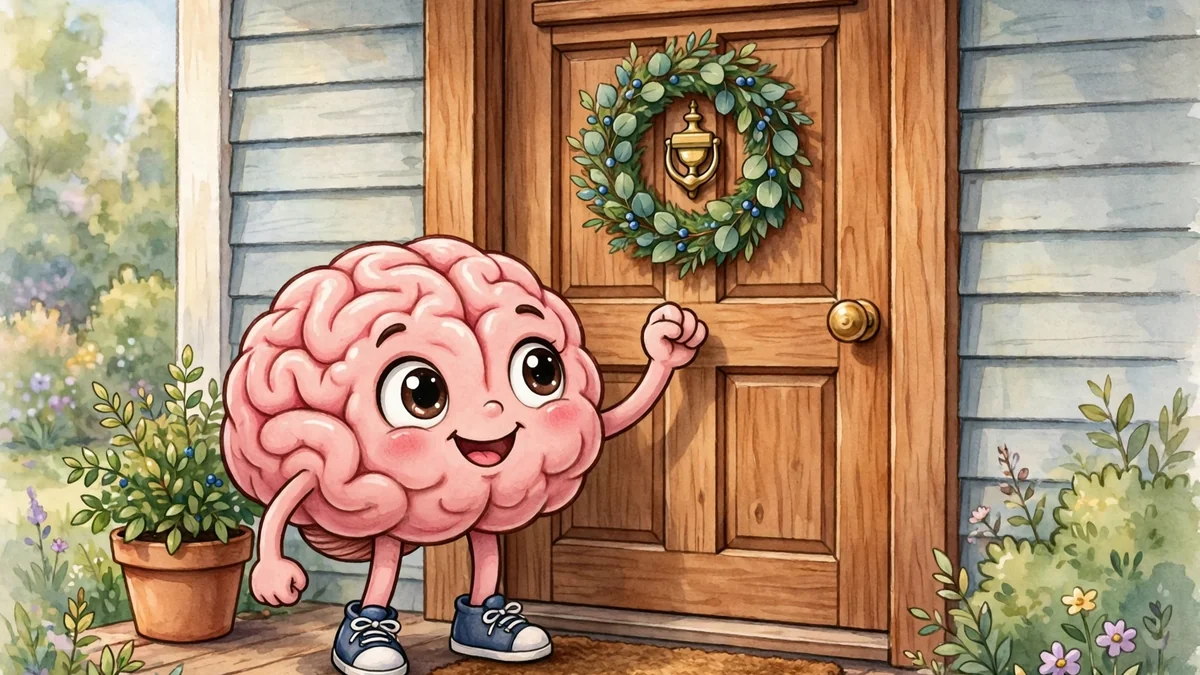
Knock-knock jokes are the oldest trick in the book, and the classroom door was built for them — a wooden door that has opened for every curious mind, every quiz-night team, and every lab coat for years was made for this game. Perform them at the door, over text, or with a kid who will demand all twelve in a row. Fair warning: that kid will then invent a thirteenth, and it will be better than yours.
Knock, knock. Who’s there? Neuron. Neuron who? Neuron your business — come to the lab!
Knock, knock. Who’s there? Axon. Axon who? Axon you a question — ready for quiz night?
Knock, knock. Who’s there? Mind. Mind who? Mind if I borrow your frontal lobe?
Knock, knock. Who’s there? Thought. Thought who? Thought you’d never ask — party’s inside!
Knock, knock. Who’s there? Lobe. Lobe who? Lobe-ly to see you at the lab!
Knock, knock. Who’s there? Wave. Wave who? Wave hello to the cleverest night ever!
Knock, knock. Who’s there? Idea. Idea who? Idea-l weather for a brainstorm!
Knock, knock. Who’s there? Gray. Gray who? Gray-t to meet you — the matter’s settled!
Knock, knock. Who’s there? Spark. Spark who? Spark up the fun — the neurons are ready!
Brain Terms & What Makes Them Funny
Brain talk comes with its own vocabulary — and half of it already sounds like a joke waiting to happen. Here is the cheat sheet: ten terms, what each one really means, and why each one is funny. Memorize three before your next quiz night and you will sound like the cleverest thinker there.
Term
Quick Fact
Why It Is Funny
Neuron
The brain’s messenger cell — about 86 billion of them
The hardest-working gossip network in the body
Synapse
The tiny gap where one neuron passes a message to the next
The brain’s version of whispering across the fence
Cerebrum
The largest brain part — where thinking happens
The corner office of the whole operation
Cerebellum
The “little brain” that handles balance and movement
A tiny coach yelling at your feet
Hippocampus
The memory center — where new memories form
The brain’s librarian, never off duty
Axon
The long tail of a neuron that carries signals outward
The cell’s own personal slide for messages
Neurotransmitter
The chemical messengers crossing synapses (like serotonin)
Tiny mail carriers with excellent delivery records
Gray Matter
The darker outer brain tissue packed with neurons
The reason your thinking looks like a walnut
Frontal Lobe
The brain’s planner and decision-maker
The committee that approves every idea
Brain Wave
The electrical rhythms the brain makes — even asleep
Proof your brain parties all night without you
Brain Puns for Different Moments
The same pun can flop or fly depending on the moment you use it in. Here is a quick guide to matching the line to the occasion, with pointers to the right section of this page. Think of it as a seating chart for jokes: every line has a table where it belongs, and this guide walks it to its seat.
Quiz night icebreakers: this is where the Party set earns its keep. Open with a knock-knock or a quick neuron-relay story — “share your best idea” gets strangers laughing in minutes. The neuron relay works for big groups; the trivia twist works for small ones. Start early; icebreakers set the tone.
Study-break captions: keep it short and clever. The Captions section was built for lab selfies, whiteboard wins, and library marathons — and the Texts set handles the quick “study break in five” updates. One strong line under a study photo beats a paragraph every time.
Classroom science week: keep it factual, bright, and a little funny. The Q&A section’s first fourteen answers teach real science — how many neurons, what a synapse is, why the brain can’t feel pain — and the School set was written for teachers, quizzes, and hallway announcements. Students remember the joke and keep the fact as a bonus.
Family movie night: lead with the classics, not the complicated. The Classic set is full of lines that fit between films, during the popcorn refill, or right after the big eureka scene — one warm line about the neuron tells the room exactly what kind of fun you are having. Pausing the movie makes it twice as good.
Party invitations and cards: open with cleverness. The Cute set is full of lines that fit a quiz-night invite, a thank-you note for the friend with the big ideas, or a good-luck card before the big test — one warm line about bright thinking tells the reader you are cheering for them. Handwriting it makes it twice as good.
How to Deliver a Brain Pun
A good brain pun is like a good experiment: designed with care, shared with the lab, and never aimed at anyone’s real feelings. Three small rules from the comedy handbook will keep your timing straight and your audience grinning. They fit on an index card, which is convenient, because you will want them in your pocket on quiz night.
1. Keep it clever — laugh WITH ideas, not AT people
The best brain puns celebrate thinking, never mock it. Tell the joke about the cartoon neuron, the willing volunteer, or yourself — and never aim a joke at someone’s intelligence. Save the applause for the real brains doing real good work in the lab.
2. Keep it clean — family first
The pun is only funny when everyone at the table can laugh. Neurons firing, lightbulbs raining, ideas sparking — that is the energy. Anything grown-up or medical stays out of the joke. When in doubt, make the neuron the hero.
3. Timing beats quantity
One well-timed neuron story as the quiz buzzer sounds beats ten puns before the teams are even seated. Tell it, let it land, then pass the snacks. Comedy people understand this rule — it is why the best brainstorm stories get told once, properly, at just the right moment.
Ethan Parker is the Lead Humor Strategist at Easy Puns, where he writes and fact-checks joke collections for readers of all ages. Every line on this page was written originally for Easy Puns — researched against top-ranking pages for topic coverage, then written from scratch so no joke is copied from anywhere. The brain facts above reflect widely shared knowledge — the 86 billion neurons, the synapse gap, the hemispheres’ teamwork, and the electrical brain waves — and the whole collection is kept family-friendly and free of anything unkind. New collections go up regularly, so there is always a fresh page of jokes waiting.
Neuroscience Puns FAQs
What are the most popular neuroscience puns?
The favorites grow from a few classic props: neurons, synapses, brain waves, and brainstorms. Fresh versions of each run through this page — start with the Classic One-Liners and pick your favorites for quiz night, the caption, and the group chat.
Are neuroscience puns okay for kids?
Yes — when they stay clever and cheerful like the ones on this page. Every pun here celebrates ideas and the neurons that carry them, and nothing involves anything unkind. The Kid-Friendly section was written for lab-brightness and zero worry.
What is a neuron?
A neuron is the brain’s messenger cell — about 86 billion of them carry signals racing along their axons, jumping from cell to cell across tiny synapse gaps.
How many neurons does the brain have?
Around 86 billion nerve cells, connected by an estimated 100 trillion synapses — the most connected network known.
Are brain puns good for captions?
They are some of the best. Labs, whiteboards, and study marathons photograph beautifully, and the Captions section was written for exactly those shots — short lines that fit under a photo without explaining the joke.
How can I write my own neuroscience puns?
Start with a real brain detail — the synapse that whispered, the idea that struck at 3 a.m., the neuron that never dropped a signal — then bend it into a full lab scene with a cheerful ending. Short, clever, and kind is the whole recipe.