🥕 2026 • VEGETABLE PUNS • 200+ ORIGINAL ONE-LINERS
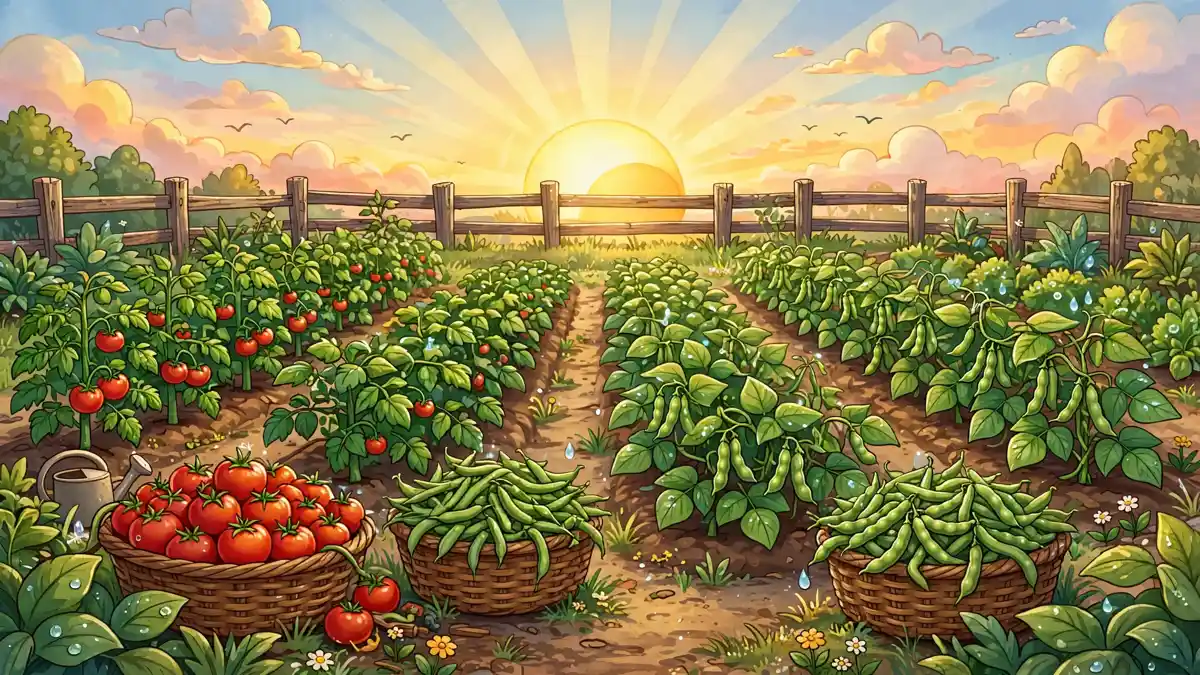
Some gardens grow one star. This patch grows a whole cast: roots working the night shift underground, leafy greens posing for the sun, and fruiting vegetables that started as flowers and never stopped showing off. Every row has a personality, every basket has a story, and every harvest morning is a small parade. This collection gives you more than 200 original vegetable puns and one-liners, written fresh for this page and sorted by exactly where you plan to use them.
For every use: garden-visit captions, classroom garden units, garden-party invites, encouragement cards, and thank-you notes for the growers who host the best harvest days.
For every age: kid-safe sections, sweet lines for family crews, clever wordplay for grown-ups — the whole page is family-friendly.
With real garden know-how: a quick science and wordplay section up front, plus an honest guide to roots, leafy greens, fruiting vegetables, and the kit that keeps them happy.
Curated by a human editor: every line below was written for Easy Puns — no copied lists, no filler.
Why do vegetable jokes land so well? Because the patch is daily life with a built-in audience: everyone has watched a bean vine climb clean past its pole, found a zucchini that hid until it was enormous, or carried in a basket still warm from the sun. Once you see how the wordplay works in the next section, every joke below lands a little fresher.
⚡ Quick Answer: The funniest vegetable puns play on carrots and tomatoes, peas and beans, garden rows and harvest baskets, market stalls and sunny green plots. Start with the Classic One-Liners below, try the Q&A jokes for quick laughs, and tap any Copy button to grab a line in one click.
The Science & Wordplay Behind Vegetable Humor
A vegetable garden is not one character — it is a whole company of them, and that is not gardener flattery. A patch holds roots, stems, leaves, flower buds, and seed pods all working the same small plot, each with its own schedule, its own weather opinions, and its own way of announcing that it is ready. Gardeners say a patch you have walked once expects you to remember every row of it forever, too.
Start with the honest definition. A vegetable is any part of a plant that people eat: a root, a stem, a leaf, a flower bud, or the seeds themselves. There is no single “vegetable” plant part — the word is a kitchen word, not a botany word, and the whole cast of this page is built on that happy fact. One patch, five different plant parts, all on the same menu.
Now the famous surprise. In botany, a fruit is the part that develops from a flower and carries the seeds — which means tomatoes, cucumbers, peppers, peas in the pod, squash, and pumpkins are all botanical fruits. In the kitchen, they are vegetables, because they cook and season like vegetables. Neither side is wrong; they are using two different rulebooks, and the patch has been laughing about it for centuries.
Meet the parts in person. A carrot is a root, growing quietly underground while its leafy top waves above the row. Spinach and lettuce are leaves — green solar panels with a stem. Celery is a stem, the crisp ribs that carry water upward. And broccoli is a bunch of flower buds, picked just before they open; leave one plant to itself and it will bloom yellow in thanks.
The growing recipe is short enough to fit on a seed packet. Plants need sunlight, water, and good soil. The roots drink, the leaves catch the light and turn it into food for the plant, and the stem runs the delivery service between them. Gardeners handle the scheduling: sowing in spring, watering through summer, and standing back while the patch does the actual growing.
Every vegetable story begins the same way: as a seed. Give a seed warmth and moisture and it wakes up and sprouts — that first green push is called germination, and fast starters like radishes and beans can manage it in a few days. That tiny shoot, the sprout, carries enough packed food to reach the sunlight on its own. The whole garden, folded into something smaller than a fingernail.
The fruiting vegetables have extra staff to thank. Their flowers need pollen moved from bloom to bloom before fruit can set, and bees do most of that delivery work for free. Meanwhile, under the gardener’s boots, compost runs the patch’s recycling program: peels, leaves, and last season’s plants rotted down into dark food for the soil, so old plants quietly feed the new ones.
One last fact that explains the crunch: many vegetables are mostly water. A cucumber is about ninety-five percent water in a green jacket, and a ripe tomato is nearly as full. That is why harvest timing is a whole art — pick at the right morning and the basket is crisp, cool, and heavy with the garden’s own weather.
Now the wordplay engine — the sound pairs that power almost every vegetable joke:
Lettuce / let us — the leafy green that starts half the invitations in the garden
Peas / peace — the pod’s small green crew, and the quiet they never quite keep
Beet / beat — the deep-red root, and the rhythm of the harvest line
Turnip / turn up — the humble root, and what it always does at the best moment
Root / route — the underground anchor, and the gardener’s daily path between the rows
Sprout — the first green push of a seed, and the patch’s youngest headline
Row — the straight green line the whole garden writes itself in
Patch — the vegetable plot itself, and the coziest word in gardening
Plot — the gardener’s piece of land, and the story every season tells
Vine — the climbing stem of beans, peas, and cucumbers, always reaching one pole higher
Stalk — the strong stem under the leaves, built like a small green tower
Harvest — the gathering morning everything in the patch has been rehearsing for
Compost — the quiet recycling heap, turning scraps into next year’s suppers
Greenhouse — the sunny glass house where seedlings spend their spring
Carrot — the orange root with the leafy hair, and this page’s cheerful mascot
Squash — the big soft-shouldered fruiting vegetable that treats every fence like a suggestion
Keep those pairs in mind — nearly every line below is built on one of them.
Roots, Greens, and Fruiting Stars: A Quick Patch & Garden Guide
Every garden beginner started as a person standing at a gate, wondering which vegetable does what in the patch. Here is the friendly, honest guide:
The Roots — the underground crew. The roots run the patch’s night shift: carrots, beets, radishes, turnips, and their heavyweight cousin the potato, which is really a swollen underground stem storing the plant’s savings. Roots anchor the plant, drink for the whole crew, and spend the season quietly getting sweeter in the dark. You never see the best part until harvest morning — the pull, the shake, the reveal. Respect the roots; the whole patch stands on their work.
The Leafy Greens — the sun-chasers. Lettuce, spinach, kale, and cabbage are the patch’s optimists: flat green leaves spread wide to catch every spare sunbeam, growing fast and asking only for cool weather and steady water. Greens are the first harvest of spring and the last brave row of autumn, and a mother plant talks to the whole bed through the simple method of shading out the weeds. A garden without greens is a story missing its first chapter.
The Fruiting Vegetables — the show-offs. Tomatoes, cucumbers, peppers, peas, beans, squash, and pumpkins are the patch’s headline act — botanical fruits wearing vegetable badges, every one of them starting as a flower that a bee had to visit. They climb, sprawl, blush, and swell all summer, and they run the harvest parade: first the peas, then the beans, then the great tomato weeks. Between the flowers and the fruit, a good patch has both kinds of greatness on the payroll.
The Garden Kit — the grower’s best friend. Good soil dark with compost, a watering can that never quite rests, seed packets labeled in pencil, and a sunny bed kept clear through the summer: the four quiet items that decide whether a patch feels lucky or just planted. Add a sharp hoe and a harvest basket with a strong handle, and you have the whole recipe. Ten minutes of setup buys a calmer, healthier, funnier garden — growers talk about their soil the way bakers talk about a good oven.
Classic Vegetable One-Liners
These are the all-rounders — the lines that work anywhere vegetables show up: the garden gate, the family group chat, the market-stall counter. They lean on the classic sound pairs from the science section, so they land even with people who have grown vegetables for years and have heard every lazy patch line twice. Keep a few in your pocket; the first harvest round will give you a reason to use one within the hour.
Dad checks the garden before he checks the weather, because the tomato vines leaning toward the fence already know what kind of day it is.
The first ripe tomato of the summer got its own announcement at breakfast, and by lunch the whole street had visited it.
Grandma claims the bench at the end of the bean row for her morning tea and calls it “the front row of the growing show.”
Our garden wears a map of muddy boot prints by July, and every single path leads to the pea fence.
The carrot row came up so straight that Dad salutes it on his way to the shed, out of respect for good drilling.
A fresh basket of green beans gets announced to the entire kitchen; the snapping session is not a quiet one.
Mom counts the zucchini every evening the way other people count sheep, except these keep getting bigger overnight.
The old scarecrow stands at the top corner of the plot for his morning survey, because a supervisor likes a view and he knows it.
Uncle Ray judges a garden by the confidence of its cucumbers; a vine that owns the trellis is a vine well kept.
The watering can at sunrise draws a crowd faster than the bakery on a Saturday — every row leans in.
Every garden in the neighborhood has one famous shady corner, and every gardener knows the lettuce votes for it by noon.
My sister photographs the evening lineup along the bean poles, “so the rows can sign the guest book before bed.”
The first pumpkin of the season is never weighed right away; it is debated, guessed at, and then weighed by Grandpa.
A slow snail crossed the cabbage patch at noon, and the outer leaves have never fully recovered.
The rain barrel at midday holds a perfect mirror, and the watering meetings there always run long.
Grandma keeps one notebook of “best rows of the year,” dated like a family album of small green trophies.
The wind rearranged the seed labels during lunch; the afternoon weeding session had an entirely new map.
Our garden cat followed the harvest basket at a respectful distance all morning, hunting nothing and supervising everything.
The creak of the garden gate is the only ringtone the whole patch answers to — heads up in every row.
Dad opens the potting shed only after his first coffee, “so the seedlings and I start the day equally awake.”
The hose hangs loose on purpose: the cucumbers have claimed the cool puddle beneath it as their summer club.
Every glove by the back door has a garden story — the mud week, the great slug standoff, the zucchini surprise of June.
My brother tracks the sweet corn’s growing in a notebook like train times, with heights in hand-spans instead of stations.
The neighbor over the fence reads the evening garden better than any forecast on my phone.
Fresh pea pods at the spring fair drew a crowd of children counting new pods like votes.
The first person up always checks the tomato row before the phone; garden news travels by curtain in this house.
The bean vines drifted across the whole fence by Tuesday, and the fence politely read it as a parade.
Grandpa keeps a jar of “first spring air” from the best garden morning of each year, tightly labeled, never opened.
The old shed has its own bench, its own tool wall, and — according to Dad — its own seniority among garden buildings.
By the second week of summer, the whole road glances at the garden at dawn out of habit, each errand paused for the sprout report.
Home is wherever somebody has already opened the gate because the patch is putting on a morning show.
The seed order goes on the kitchen calendar in red ink, circled twice, and the whole family discusses it all winter like a royal tour.
Cute Vegetable Puns
“Cute” in garden country means warm: the lines you would write in a card for the person who keeps your mornings bright. These are sweet, gentle, and safe for anyone — pass them along with a shared porch coffee, a saved seat on the bench, or a photo of the first ripe tomato that simply has to be shared.
You are the person I save the shady end of the bench for when the harvest comes in, and in this house that is a serious honor.
Grandpa holds the gate for Grandma at watering time, every visit — fifty summers of the same quiet arrangement.
My best friend knows my favorite tomato plant by name and ripening schedule, which is basically a love language in July.
Dad leaves the porch light on until the last basket is in, “so nobody carries tomatoes home in the dark,” and then winks at Mom.
There is a flat stone by my sister’s herb bed worn smooth by years of kids stopping to watch the butterflies.
The new sprout waits by the pea fence in its wobbly best, certain the garden parade was scheduled personally for it.
Mom writes “first tomato — maybe” on the calendar in pencil, with a tiny star she pretends is not hopeful.
You remembered my gloves split at the thumb, and the new pair appeared by the shed door without a word.
A shared thermos passed hand to hand down the bean row says everything a long speech would, only warmer.
Grandma still holds the seed tray while Grandpa counts the rows — a two-person tradition invented in 1986 and never updated.
Our first little garden had one small bed and a view of the lane, and we watched the beans climb it like it was a private tower.
Holding the flashlight while someone you love checks the night garden for slugs is the proudest job on the whole plot.
Our neighbor leaves a jar of jam on our porch after every garden visit with a note: “For the crew that keeps our corner cheerful. Booking my bench spot early.”
My son lined up his carrot drawings by size and announced that a family, like a garden, stays strong by growing close.
You held the umbrella over my seed notebook before your own, in the first drops of rain, and that is the whole story of us.
Sunday mornings in the garden end the same way: one last look at the rows, and nobody in a hurry to go inside.
My daughter insists each sprout’s first true leaves are a tiny letter the garden sends by hand, and she “reads” the evening rows aloud before dinner.
My daughter builds her fairy garden “exactly beside Dad’s pea fence,” then quietly adds one tiny gate “for the beans to visit.”
A morning started by someone who knows your coffee order feels warmer. This is not opinion; it is family law.
The porch light, the hush after watering, and the rows settling into the dusk: that is the whole recipe for our favorite evening.
My best friend trades me her Saturday weeding shift for my Sunday watering shift every July, and neither of us mentions it.
A seed does not hurry, and neither should you — every tall row in this patch started as a small brown promise in a paper packet.
Vegetable Q&A Jokes
Question-and-answer jokes are the easiest kind to perform: you ask, they guess, you land the punchline. This set is built for garden gates, porch steps, and school garden trips, where one good Q&A usually starts a whole round of everyone trying their own. The carrot, the tomato, and one very determined sprout do most of the heavy lifting — and the first fourteen answers teach a real garden fact on the way to the laugh.
Q: What is a vegetable? A: A part of a plant that we eat — a root, a stem, a leaf, a flower bud, or the seeds. The patch serves dinner from almost every part of the plant.
Q: Is a tomato a fruit or a vegetable? A: Both, honestly. Botanists call it a fruit because it grows from a flower and holds seeds; cooks call it a vegetable because it belongs in salads and sauces, not fruit salad.
Q: What is the difference between a fruit and a vegetable? A: In botany, a fruit develops from a flower and carries the seeds, while a vegetable is any other edible plant part. In the kitchen, fruit means sweet and vegetable means savory — two rulebooks, both right at home.
Q: What part of the plant is a carrot? A: The root — the orange part grows underground, drinking up water for the plant, and the leafy top is the part that waves at you from the row.
Q: What part of the plant is spinach? A: The leaves. A spinach plant is basically a small green solar panel with a stem, and we eat the panels.
Q: What part of the plant is celery? A: The stem — those crisp green ribs are the stalks that carry water up to the leaves, which is why they crunch with every bite.
Q: What part of the plant is broccoli? A: Flower buds — a whole bunch of tiny green flowers picked just before they open. Leave a broccoli plant alone long enough and it blooms yellow.
Q: Which kitchen vegetables are botanical fruits? A: More than you would think: tomatoes, cucumbers, peppers, peas in the pod, beans, squash, and pumpkins all grow from flowers and carry seeds, so botany files them as fruit.
Q: How do vegetables begin? A: Almost all of them start as seeds. When a seed gets warmth and moisture, it sprouts — that first green push is called germination, and it can happen in just a few days.
Q: What do vegetables need to grow? A: Sunlight, water, and good soil — plus a little space and patience. Roots drink, leaves catch the light, and the gardener handles the scheduling.
Q: What is compost? A: The garden’s recycling bin: fruit peels, leaves, and plant scraps rotted down into dark, rich food for the soil. Old plants feed new plants, and the patch approves.
Q: Why do gardeners thank the bees? A: Bees carry pollen from flower to flower, and the fruiting vegetables — tomatoes, cucumbers, squash — cannot set their fruit without that visit. No bees, no harvest parade.
Q: What is a group of garden vegetables called? A: There is no single special name, and gardeners are honest about it: the vegetables grow in rows, in beds, in a patch, or on a plot — so the group takes its name from wherever it is standing.
Q: Why are vegetables good for you? A: They pack vitamins, minerals, and fiber into very few calories, and many are mostly water — a cucumber is about ninety-five percent water wearing a green jacket.
Q: What did the carrot say to the watering can? A: “You had me at the first sprinkle — lead the way and I will bring the whole row.”
Q: Why did the pea stay close to the fence? A: The trellis is a map, a ladder, and a lookout in one — a pea who climbs eats first and views best.
Q: What did the tomato say to the sunrise? A: “You’re late to my ripening again — I started blushing at the fence twelve minutes ago.”
Q: Why did the gardener inspect the soil twice? A: Standards. A patch of this reputation does not settle for yesterday’s compost arrangement.
Q: What is a gardener’s favorite meeting style? A: Short, standing, and held around the harvest basket — with snacks provided and the minutes taken by whoever weeds slowest.
Q: Why do families love the morning harvest round? A: It is the only news broadcast that also confirms the patch is up, growing, and ready to supervise the day’s menu.
Q: What did the sprout say on its first morning? A: “Big sky, tall fence, excellent soil — I accept this position.”
Q: Why did the cucumber visit the trellis at noon? A: A second climb never hurt anyone — the vine deserves updates, and it deserves an audience.
Q: What is a gardener’s busiest hour? A: Dusk — the tools need cleaning, the gate needs latching, and every row has one last story from the compost corner.
Q: Why did the beans lead the peas to the sunny fence? A: Sun hour is a family tradition, and they teach it the way their vines were taught: climb, reach, wave, repeat.
Q: What did the patch say to the new gate? A: “We have reviewed your design and tested the lower hinge for a week. You’re welcome.”
Q: Why do garden jokes always land? A: They arrive with a story from the rows, they are built on real mornings, and there is something in the patch for everybody.
Q: What did the garden say to the gardener? A: “Same time tomorrow — you bring the watering can, I will bring the view.”
Q: Why does the garden go quiet at sunset? A: The evening roll call has begun, and even the loudest bean row respects a full patch settling in for the night.
Vegetable Captions & Texts
Captions live or die in the first few words, so these stay short and warm. The Instagram set is written for photos and clips — morning rows, proud tomatoes, and sprouts on parade — while the texting set works as quick replies and everyday updates you can send in seconds.
Vegetable Instagram Captions
Gate’s open, rows are watered, first photo goes to whoever spots the first ripe tomato.
Patch status: one supervisor, two climbers, and a zucchini nobody can keep up with.
This harvest lineup required both a sunset and a short pep talk with the bean row.
Garden rule one: the person holding the basket names the first tomato; the person holding the camera names the second.
My morning route — porch, patch, shed, gate — has more planning in it than my weekend does.
Shade level: one slow row of lettuce, parked proudly under the bean tower all afternoon.
This climbing wall took all week to claim. Photographing it slowly from a safe distance.
Market day today: same garden, fancier basket.
Six rows of morning, finished in shades of green and orange.
Grandpa’s boots, Dad’s watering can, my gate turn: three generations of teamwork.
Some people collect stamps. I collect sunrise photos with a bean vine in them.
A tiny sprout for the seed tray, a deep row for the carrots.
That first-harvest quiet right after says more than this caption can.
Porch light on, baskets full, rows glowing: Saturday, complete.
My zucchini reached the size nobody wanted to queue behind. Diplomacy, extended.
The rain moved in an hour after the last photo was taken. The garden accepts the compliment and glistens.
One patch for this family, one patch for the next. Summer, in chapters.
Notebook update: the striped tomato remains grower of the month.
Garden-visit day. The gate has never looked so popular.
The last carrot fit the basket like it was made for it — because the row arranged it, twice.
Short Vegetable Texts to Send
Patch is open in twenty. Your spot on the bench is saved and non-negotiable.
First sprout’s up. Repeat: first sprout’s up. The garden is receiving visitors again.
I saved your seat exactly your way — sunny end, best view, nothing written down.
Tomato emergency: the first one is ripe. The tasting crew is being promoted.
Grandpa named the big pumpkin at dawn and apologized to it out loud. It is a whole thing here.
First garden Saturday of summer is this weekend. This message is my entire personality until then.
Saved you the shady side of the patch. It comes with lemonade and the good bench.
The shop by the crossroads stocks garden gloves in your size this year. We have plans now.
Rain check on the errands — harvest day instead, same crew, warmer socks.
Grandpa says the gate is open and the coffee is poured. Bring your appetite for pancakes at eight.
I watered your rows while you were away and only adopted one tomato plant emotionally.
Sending a photo instead of a zucchini because the mail is cruel. It was enormous. You’re welcome, and I’m sorry.
Garden & Harvest Life Vegetable Puns
This is the section growers were born for: morning rows, harvest baskets, and the small rituals that turn a garden gate into the best-run small town in the county. These lines come straight from patch life, so they land with gardeners, allotment crews, and anyone who has ever been handed the watering can like a baton.
The bench at the end of the rows keeps the best shade in the whole county inside its little frame, and the first hot morning of June is when it starts its real job.
Garden rule at our house: the person who reaches the gate first picks the radio station, and the person still asleep chooses the pancakes.
The old watering rota on the shed door has not changed in years, but the growing show in front of it performs all summer long.
A cool morning beside a happy patch in full leaf feels better than anywhere else on Earth — established science at our table.
The lemonade somehow tastes better after the harvest round, while the baskets glisten in the sun. Nobody knows why.
Grandma writes “rows straight, soil dark, water deep” on the day’s plan like it is a classified ingredient, and we respect the secrecy.
Gardeners read a coming storm without a single window check, a magic trick performed with a lifetime of watching leaves.
Our family’s map of the valley is just a list of gardens with great soil, connected by lanes and strong opinions about jam.
The voice from the shed door knows the patch so well that “the usual bed, please” is now a full sentence here.
A mug of tea drunk at the garden gate, boots resting against the fence, beats most cafés that take reservations.
The spare seed packets by the door are not clutter — they are the reserve team, and the rows outrank them anyway.
Somewhere between the first sprout and the last basket of the day, every great garden day earns one legendary golden afternoon.
Market & Kitchen-Garden Life Vegetable Puns
This is the patch’s front door: market stalls at sunrise, crates stacked by color, and the kitchen garden outside the back door where supper starts. These lines are for stallholders, market regulars, and anyone whose family map is really just a list of beloved market towns.
The market stall’s seating chart is unwritten but strict: the tomatoes live at the front, the herb pots have their own corner, and the pumpkin’s spot in the middle never moves.
Stallholders share a secret language: one raised eyebrow means “regulars,” and two means “visitor at the gate — everybody look glossy, now.”
The first good market morning of the season opens at the herb stall, and boots start appearing at the back doors of three houses.
Saturday market in our town ends with pancakes, every single time, like a parade route in reverse.
The neighbor who “never eats vegetables” has strong opinions about our striped tomatoes and brings his own basket along to supervise.
A slow afternoon with a full stall and nowhere to be is the richest feeling I know.
Market life’s real schedule is not the clock — it is “first ripe,” “basket hour,” and “who counts the crates tonight.”
The smell of fresh basil down the market aisle is the town’s reset button; two stalls down, kitchen windows start opening by themselves.
There is a regular at our stall who has said “I’ll just take one tomato” for six summers and has never once left with fewer than a dozen.
The hush of the kitchen garden plus a whole row of herbs settling in view is the coziest sound-and-picture combination known to science.
Early risers get the quiet garden; stallholders get the golden hour — the best produce photos belong to the morning light.
The porch light comes on, the last crate ambles up the ramp, and the stall becomes the warmest room on the farm — the one without walls.
Sarcastic & Clever Vegetable Puns
Not every garden moment is golden. The sarcastic set is for the 6 a.m. weekend watering round, the rain that arrives the minute the hose is coiled, and the zucchini that hid until it was enormous — dry laughs aimed at situations, never at people, and always kind to the patch. The clever half follows with the facts and wordplay from the top of this page, bent into lines that make people say, “Okay, that one was good.”
Sarcastic Vegetable Puns
Oh sure, the weeds respect weekends — said nobody whose window faces the garden at 6:05 on a Sunday, ever.
Wonderful: the rain arrived the very minute the watering finished its inspection tour. Perfect timing, as always.
I love how the forecast called it “a dry week” while the patch has filed for a swimming permit.
Yes, I bought the bigger harvest basket. No, the pocket one did not feel sufficient as a collection system.
The garden stay sold me a room facing one solid wall of dawn watering for four mornings. One. The view is inspiring.
Somebody left the gate open by exactly one rabbit’s width. The investigation is ongoing; the suspect list is the entire neighborhood.
The slug season closed the lettuce bed again. I have replanted the long way twice this spring, and now we are both just pretending this is exercise.
The packet calls it a “small zucchini.” It is one submarine wearing leaves, but sure.
My tomato attended the whole afternoon meeting and contributed more opinions than the actual gardener did.
Sure, the good slug fence cost more — as if the cheap one was going to outsmart the night patrol out of pride by Saturday.
The bean tower took all morning to build and one proud vine to redecorate. Record construction, terrible management.
No, I do not need a tidier garden. I need a shorter weed season, and that is not happening.
Clever Vegetable Puns
A row of seedlings is a hundred small breaths agreeing to grow in a line: same soil, one very determined arrangement.
Keeping a garden is applied patience — ten quiet minutes with the morning rows now, ten honest plans for the day later.
A harvest photo is just editing you can eat: a whole season of garden life, revised into one bright basket.
The tomato is the patch’s full stop with an identity debate — set it at the front of the stall, and every sentence of the market after it reads calm.
The gardener writes in first light, the soil asks for its meals on schedule, and the sprout was built for exactly the front row — because it was.
The garden fence is the patch’s punctuation: one long line that tells every vine where the story goes.
The sun gave the morning, the soil gave the minerals, and a quiet compost heap is credited with the result — a truly local committee.
Root, leaf, stem: the plant speaks three small verbs of garden life, and every watching family is fluent.
The watering can is the unsung furniture of the whole garden — it holds the drinks, the reflections, and most of the meetings.
The tomatoes always catch up eventually — usually one blush at a time, starting the minute you praised the green ones.
The dawn watering is the garden’s polite signature: one bright pass of the can, and the whole sleepy valley reads easier behind it.
Every patch is a texture argument — silky from the lettuce, sturdy from the kale, glossy from the peppers — and the evening calm settles the debate.
Vegetable Puns for Kids, School & Parties
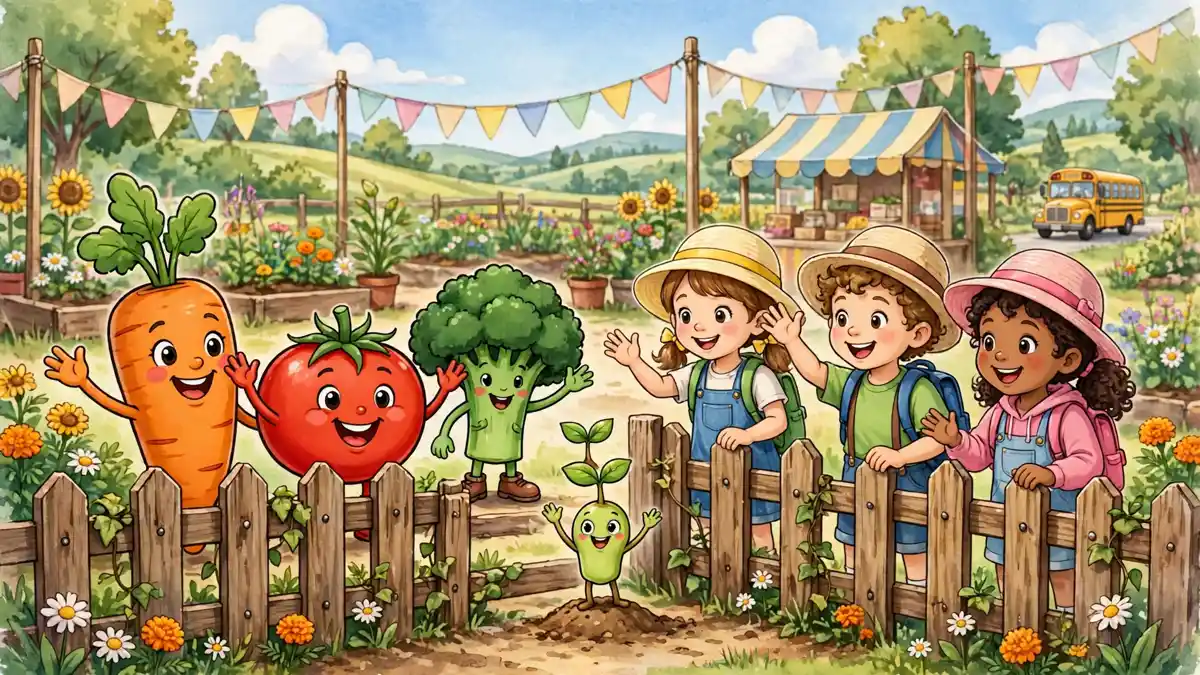
Everything in this part of the page is clean, simple, and built for the toughest crowd there is: children. Teachers get classroom and garden-unit lines, families get the party set, and the carrot herself stays the star of every section — the jokes are for everybody.
Kid-Friendly Vegetable Puns
Why did the little sprout wear tiny boots to the garden? Because spring was coming close and the puddles were almost ready.
Our class counted the pumpkins over the school fence and cheered like it was a sports final — there were twenty-three!
What do baby carrots call their mom? The warmest blanket with green hair — she tucks the whole row in and tells the tallest tales.
I drew our garden as a row of green beds guarding the shed, and the teacher hung it by the classroom door.
Why did the tomato bring a camera to the fair? She heard the afternoon was going to be bright and a little bit breezy.
Grandpa let me carry exactly four pea pods to the harvest basket, which makes me an official junior keeper of the patch.
What is a sprout’s favorite school subject? History — it loves hearing how gardens were grown in the old days.
The morning mist rolled off the beds in one long white ribbon, and my little brother wore it as a scarf for exactly one photograph.
Why did the bean join the school parade? Somebody had to lead the climbing line, and it was already reaching straight.
Our class grew one sunflower so tall that Dad says it was clearly raised to wave at the scarecrow.
What do baby vegetables dream about? A sunny row, a line of friendly fences, and growing in first thing on Saturday.
The tiniest vegetable drawing in the contest went to my stuffed bear, who attends every garden day and never complains.
Vegetable School Jokes
Our science teacher explained germination with one bean in a jar and a sunny chart, and it remains the most-watched lesson of the year.
Garden week at school runs on one planting chart, two teachers, and forty very focused young growers.
The school garden fundraiser sent the whole class to the autumn county fair, proving painted plant pots raise money and morale.
My nature report covered vegetables from the first sprout to the last compost pile, and the teacher asked for the roots section twice.
The spelling bee word was “zucchini,” and half the class tried to sneak an extra “h” into “asparagus.”
Snack math problem: if the garden has twelve beds and thirteen cousins coming for the fair, the answer is still “plant one more bed.”
The school fair’s longest line was at the name-the-pumpkin game, and the principal took the voting personally.
Our class spring vote ended in a tie between the garden walk and the greenhouse visit, and the vegetables won either way.
The school rule for field day is simple: the gate talk stays cheerful and complete, because the teacher can hear everything.
Geography quiz answer of the year: warm air from the south beds, cool air from the north hedge — the class’s favorite map ever.
The teacher’s cap says “chief grower,” and on garden days the whole school salutes the patch.
Our book club’s summer chapter ended with lemonade on the library steps and a vote to hold every meeting facing the garden.
Vegetable Party Puns
The pumpkin-photo line at our garden party had six aunts in a row and a queue that outlasted the birthday song.
A backyard garden party with a borrowed speaker and unlimited lemonade beats a fancy venue every single time.
The host labeled every lemonade jar, and the mint jar needed a refill before the guests finished arriving.
Party rule: the birthday kid gets the first bench spot and the last slice of watermelon cake, by law of the house.
The hang-your-own paper tomato table ended with more admiring than hanging, and nobody filed a complaint.
Game night runs better with the porch string lights on under a clear sky; even the sore losers stay for one more garden story.
Our graduation garden party served lemonade in jars with the year printed on them — drinkable diplomas, one guest called them.
The snack table’s patch-shaped cake lasted eleven minutes, a new record the host is quietly proud of.
Costume party verdict: the toddler dressed as a tiny carrot with a paper-leaf hat won before judging was even invented.
The farewell party’s gift was a framed garden photo for the guest’s own wall, and it got more applause than the speech.
Sleepover law: the window gets checked twice during the scariest story, purely for the moonlit garden.
Every guest left with a jar of the host’s homemade jam, still cool from the pantry at the first red light.
Knock-Knock Vegetable Jokes
Knock-knock jokes are the oldest trick in the book, and the carrot was born for them — a character who arrives at every garden gate, kitchen door, and shed door all year long was made for this game. Perform them at the gate, over text, or with a kid who will demand all twelve in a row. Fair warning: that kid will then invent a thirteenth.
Knock, knock. Who is there? Carrot. Carrot who? Carrot top reporting for duty — leafy hair, orange boots, ready for the harvest photo!
Knock, knock. Who is there? Lettuce. Lettuce who? Lettuce in — the greenhouse is warm and the soup is nearly on!
Knock, knock. Who is there? Pea. Pea who? Pea-nut gallery’s arrived — the whole pod showed up to watch the harvest!
Knock, knock. Who is there? Beet. Beet who? Beet you to the garden gate — the first ripe tomato gets picked at sunrise!
Knock, knock. Who is there? Turnip. Turnip who? Turnip early tomorrow — sowing day starts with the sunrise roll call!
Knock, knock. Who is there? Sprout. Sprout who? Sprout time you visited — the seedlings have been asking for you all week!
Knock, knock. Who is there? Bean. Bean who? Bean waiting at this gate since breakfast — the rows look fantastic this year!
Knock, knock. Who is there? Corn. Corn who? Corn you believe this weather? The whole field grew two inches this week!
Knock, knock. Who is there? Kale. Kale who? Kale the whole crew — supper is a garden salad tonight and everybody’s invited!
Knock, knock. Who is there? Onion. Onion who? Onion mark, get set — the harvest race to the kitchen starts now!
Knock, knock. Who is there? Radish. Radish who? Radish-io show at six — the garden gate variety hour, starring the whole patch!
Knock, knock. Who is there? Yam. Yam who? Yam so glad the harvest is in — the baskets are full to the brim!
Vegetable Terms & What Makes Them Funny
Vegetable talk comes with its own vocabulary — and half of it already sounds like a joke waiting to happen. Here is the cheat sheet:
Term
Quick Fact
Why It Is Funny
Vegetable
A plant part eaten as food — a root, stem, leaf, flower bud, or the seeds
The only menu where the whole plant shows up and every part gets a speaking role
Root
The underground part that drinks water and anchors the plant — carrots and beets are roots
The patch’s basement crew — never seen at parties, responsible for everything
Leaf
The flat green part that catches sunlight to feed the plant — spinach and lettuce are leaves
A solar panel you can put in a salad, working overtime all summer
Seed
The tiny package a new plant grows from, holding food for the first days
A whole garden folded into something smaller than a fingernail
Sprout
A seed’s first green shoot, pushing up through the soil
The patch’s opening line — small, brave, and impossible to ignore
Harvest
Gathering the ripe vegetables at the end of their growing run
The garden’s graduation day — baskets out, cameras ready, everybody proud
Compost
Garden scraps and leaves rotted down into rich food for the soil
The patch’s recycling hero — yesterday’s peelings become tomorrow’s tomatoes
Row
A straight line of plants growing side by side in a bed
The garden’s handwriting — neat lines that the weeds keep trying to edit
Greenhouse
A glass or clear-covered house that keeps plants warm and growing longer
A sunny hotel for seedlings, with room service twice a day
Farmers Market
The open-air shop where growers sell their harvest straight to neighbors
The patch’s red carpet — the rows dress up and meet their public
Vegetable Puns for Different Moments
The same pun can flop or fly depending on the moment you use it in. Here is a quick guide to matching the line to the occasion, with pointers to the right section of this page:
Garden-visit posts and captions: this is where the Captions section earns its keep. A perfect morning garden deserves a line like “Gate’s open, rows are watered, first photo goes to whoever spots the first ripe tomato,” and the Garden & Harvest Life set covers the bigger scenes — harvest hour, shady corners, and the gate every patch treats like a front door.
Classroom garden units: keep it clean, short, and proud. The Kids and School sets were built for teachers — sprout charts, garden weeks, and spelling-bee warnings — and the Q&A jokes double as quiz material, since half of them teach a real plant fact on the way to the punchline.
Birthday and garden-party invites: the Kids, School & Parties section was written at the gate, not at a desk. Drop one line in the group chat when the party gate opens, save another for the dusk photograph of the harvest lineup, and let the Party set handle the “best bench spot in the whole garden” debate.
Encouragement cards for growers and strivers: lead with the garden’s own lesson, not the paperwork. A row grows one quiet week at a time, and the Cute set holds the line for exactly this: “A seed does not hurry, and neither should you” — it tells the reader precisely what kind of quiet confidence you are cheering for, whether they face an exam week, a new job, or a long recovery.
Thank-you notes for garden hosts: the household that opened their gate, walked you through harvest season, and sent you home with a warm story deserves more than a plain thanks. A Cute line about saving someone the shady end of the bench makes a fine closer for a card, and it tells that host their whole system was noticed.
How to Deliver a Vegetable Pun
A good vegetable pun is like a good garden morning: set up at first light, timed to the harvest, and never forced on a crew that is still lacing its boots. Three small rules from the grower’s handbook will keep your timing straight and your audience grinning.
1. Match the pun to the patch
Vegetable puns land best in garden company. Drop one as the gate opens in the morning, when the first harvest basket crosses the yard, or at the fence as the rows file into the evening light. The setting does half the work, and the same line sounds twice as good with the smell of warm soil in the air.
2. Keep it kind, keep it garden-warm
The best vegetable jokes laugh at melting schedules, ambitious weeds, and our own six-bed setups — never at a person’s growing skills, drawings, or snack luck. Every patch is the right patch on its own plot. Aim for the laugh that makes the whole fence line grin, not the one person squint.
3. Timing beats quantity
One well-timed “first tomato, full house” as the garden wakes up beats ten puns before the coffee is even poured. Say it, let it land, then pass the thermos. Garden people understand this rule — it is why the best harvest story gets told once, properly, over the evening lemonade.
Ethan Parker is the Lead Humor Strategist at Easy Puns, where he writes and fact-checks pun collections for readers of all ages. Every line on this page was written originally for Easy Puns — researched against top-ranking pages for topic coverage, then written from scratch so no joke is copied from anywhere. The vegetable facts above reflect widely shared garden and plant knowledge — including why a tomato counts as both a fruit and a vegetable, how seeds sprout, and how compost feeds the soil — and the whole collection is kept family-friendly.
Vegetable Puns FAQs
What are the most popular vegetable puns?
The favorites grow from a few sound pairs: lettuce and let us, peas and peace, beet and beat, turnip and turn up, plus the dawn watering every garden morning starts with. Fresh versions of each run through this page — start with the Classic One-Liners and pick your favorites for the caption, the card, and the garden-gate group chat.
Is a tomato a fruit or a vegetable?
Both. Botanically it is a fruit, because it grows from a flower and carries the seeds inside it. In the kitchen it is a vegetable, because it cooks, seasons, and serves like one. The tomato has been cheerfully holding both titles for centuries, and gardens everywhere are fine with the arrangement.
What is the difference between a fruit and a vegetable?
Botany sorts by plant part: a fruit develops from a flower and holds the seeds, while vegetables are the other edible parts — roots, stems, leaves, and flower buds. Kitchens sort by taste and use instead: sweet goes to fruit, savory goes to vegetables. Both rulebooks are correct; they are simply answering different questions.
Why are vegetables good for you?
They bring vitamins, minerals, and fiber in a light package, and many of them are mostly water — a cucumber is about ninety-five percent water. Different colors usually mean different nutrients, which is why gardeners and doctors give the same advice: eat the whole rainbow of the patch.
What is a group of garden vegetables called?
Honestly, there is no single special name. Gardeners name the group by where it grows: the vegetables stand in rows, spread across beds, fill a patch, or cover a whole plot. The group simply takes the name of its home.
How can I write my own vegetable puns?
Start with a real garden detail — the sprout that beat your alarm clock, the gardener who inspects the soil twice, the harvest basket filling at dawn — then bend a matching everyday word toward it: a root becomes a route home, and a patch becomes home base. Short, kind, and built on a true detail is the whole recipe.