Some animals are funny because they are graceful, and some are funny because they are sneaky — the fox is both at once. This collection takes the whole woodland world of foxes — red coats, bushy tails, midnight pounces, clever kits, and autumn forests full of rustling leaves — and turns it into 200 original fox puns and one-liners, all written fresh for this page, all playful, and all safe for the whole family. No joke here is copied from anywhere; every line was built from scratch for this page alone.
Why do fox jokes work so well? Because foxes hand the writer a full toolbox: bushy tails, pointy ears, dens, moonlit prowls, and a reputation as the cleverest animal in the woods. The jokes below keep everything warm and kind — our foxes chase fireflies, tumble through fallen leaves, and nap in sunny meadows — and they never touch anything mean. Read the fox-facts section first, and every pun after it lands a little better. Then pick your favorites for the fall festival, the classroom animal week, or the group chat that needs exactly one good line from the forest.
Fox Facts & Forest Folklore: The Truth Behind the Tricks
The red fox is the largest of the true foxes and one of the most widespread mammals on Earth — it lives across forests, grasslands, mountains, farmland, and even big cities on every continent except Antarctica. Its famous red coat, white-tipped bushy tail, and black “socks” make it the fox most people picture, but the family is bigger: the gray fox climbs trees, the arctic fox turns white in winter, and the tiny fennec fox of the desert has ears bigger than its head.
Foxes hear better than almost any dog. A red fox can hear a mouse squeaking from about a hundred meters away, and its ears swivel like satellite dishes to pin down the sound. That hearing is only half the trick: when a fox pounces on prey under snow or grass, it leaps high and lands headfirst — and scientists found foxes aim toward the northeast, lining up with the Earth’s magnetic field, with measurably better success when they do.
The bushy tail, called a brush, is a multi-tool. Foxes use it for balance when they leap and twist mid-air, wrap it around their nose like a scarf on freezing nights, and raise or lower it to signal other foxes. A white tail tip is the red fox’s signature — researchers think it helps kits follow their mother through tall grass.
Baby foxes are called kits, and they start life tiny and blind in an underground den called an earth. Their eyes open at about two weeks old, and by autumn the kits are hunting on their own. Fox mothers move the kits between dens if danger comes near, carrying each one gently by the scruff of the neck.
Foxes are night-shift workers. They are most active at dusk and through the night, and their eyes have a reflective layer — the tapetum lucidum — that bounces light back through the retina so they can see in near-darkness. That is why fox eyes shine green in a flashlight beam on a woodland trail.
The fennec fox is the smallest fox in the world and looks like it was drawn by a cartoonist: enormous ears, tiny body, cream-colored fur. Those ears are not just cute — they radiate heat to cool the fox in the desert and can hear insects moving underground. Fennec foxes live in the Sahara and sleep through the hottest part of the day in cool burrows.
The arctic fox is built for the opposite extreme. Its coat changes with the seasons — thick white in winter, brown-gray in summer — and its fur grows even on the soles of its feet, like built-in snow boots. Arctic foxes can survive temperatures of minus fifty degrees and follow polar bears to share leftover meals.
Gray foxes break the fox rulebook by climbing trees. They are the only canid in North America that regularly climbs — rotating their forearms to grip bark like a cat — and they nap on branches to escape predators and steal fruit. A gray fox’s grizzled coat blends perfectly with bark, which makes it the hardest fox to spot.
Now the wordplay engine — the terms that power almost every fox joke. Learn these twelve and you will catch every pun on the page twice as fast, because nearly every line below is built on one of them:
Bushy Tail — the fox’s famous brush; used for balance, warmth, and dramatic entrances
Kit — a baby fox; born blind, playing within weeks, trouble within months
Den — the underground earth where foxes rest, raise kits, and store snacks
Fennec — the tiny desert fox with ears bigger than its head
Red Fox — the classic: red coat, white tail tip, black socks, worldwide range
Arctic Fox — the winter specialist that changes coat color with the seasons
Pounce — the high headfirst leap foxes use to catch prey under snow
Scent — the marking system foxes use to map their territory
Nocturnal — active at night, when the best fox adventures happen
Cunning — the fox’s famous cleverness, earned over a million tales
Vixen — a female fox; also the star of a thousand folk tales
Tod — an old country word for a male fox, and Reynard’s formal title in the tales
Kinds of Foxes: A Friendly Field Guide
Not all foxes are built the same. Before the jokes, here is a quick tour of the regulars — the five kinds you will meet on this page, each with their own style, their own forest, and their own idea of a good time.
Red fox: the classic — red coat, white tail tip, black-legged socks, and the widest range of any fox on Earth. It trots through forests, farms, suburbs, and city parks, pounces on mice under the snow, and poses beautifully for trail cameras. Clever, adaptable, and the face of every “fox” emoji.
Arctic fox: the winter specialist — thick white coat in the cold months, brown-gray in summer, fur on its feet like snow boots. It follows polar bears across the tundra, sleeps curled nose-to-tail in blizzards, and looks like a small cloud with ears. Built for weather nobody else wants.
Fennec fox: the desert cartoon — the smallest fox in the world, cream-colored, with ears so large they seem borrowed from a larger animal. It hears insects underground, sleeps through the desert noon, and wraps its huge tail around its nose at night. Impossible not to smile at.
Gray fox: the climber — grizzled gray coat, rusty-red sides, and the only North American canid that climbs trees regularly. It naps on branches, picks fruit from limbs, and disappears into bark-patterned camouflage. The fox that chose the high road, literally.
Kit fox: the desert sprinter — tiny, big-eared, and lightning-fast across the sandy plains of North America. It hunts at night, dens deep underground, and drinks almost no water, getting moisture from its food. Small, quick, and rarely seen — the ghost of the grasslands.
⚡ Quick Answer: Fox puns turn bushy tails, clever kits and moonlit forest mischief into family-friendly woodland wordplay. These 200+ original one-liners cover captions, cards, classrooms and parties — sly, sweet, and safe for all ages.
Classic Fox One-Liners
These are the all-rounders — the lines that work at the fall festival, in the group chat, or on a card tucked into a birthday gift for the woodland lover in your life. They lean on the classic props from the fox-facts section: bushy tails, pointed ears, midnight pounces, and the autumn den. Each one is a complete little scene, built for reading aloud, and none of them needs explaining. Keep a few ready; the first crisp evening of the season will hand you a reason to use one, and the second will hand you three more.
The red fox crossed the autumn trail at dusk, and the hikers stood still so long the squirrel started narrating.
A fennec fox heard a beetle moving underground, tilted those enormous ears, and the whole desert went quiet with respect.
The arctic fox curled nose-to-tail in the snowstorm, and the blizzard just went around like a polite neighbor.
A gray fox climbed the oak tree for the ripest apples, and the branches held still like they were in on the plan.
The vixen moved her kits to the backup den at midnight, and the moonlight made it look like a tiny parade.
A red fox pounced straight up and came down headfirst, and the falling leaves applauded by rustling.
The kit fox sprinted across the desert floor at dawn, and the jackrabbit asked for a rematch on a cooler day.
Two fox kits wrestled in the pile of autumn leaves, and the pile won by a landslide of orange and gold.
The old tod marked his favorite log with great ceremony, and the younger foxes took notes like interns.
A red fox’s white tail tip waved through the tall grass, and the kits followed it like a tiny flag on a tour.
The fennec fox wrapped its enormous tail around its nose at bedtime, and the desert night said goodnight back.
An arctic fox’s summer coat came in patchy and brown, and the tundra flowers pretended not to notice the wardrobe change.
The gray fox napped on a low branch all afternoon, and the woodpecker kept the noise down for once.
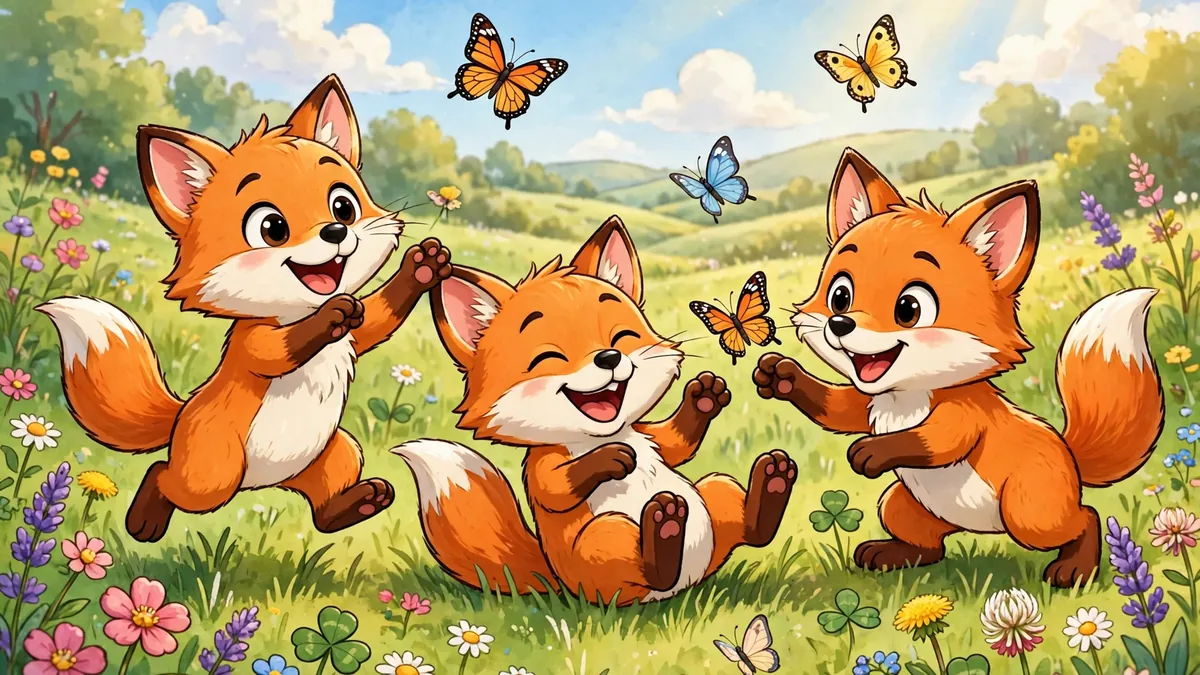
A vixen taught her kits the pounce in the meadow, and the third kit landed it on the first try with total confidence.
The red fox cached three apples under the oak roots, and the squirrel union filed a formal complaint.
Moonlight caught the fox’s eyes on the woodland trail, and the hiker’s flashlight suddenly felt unnecessary.
A kit fox den had seven entrances, and the mother knew exactly which one each kit would pick.
The fennec fox’s ears swiveled toward a distant cricket, and the cricket stopped mid-song to reconsider.
An old red fox trotted the fence line at dawn, and the farm dog watched from the porch with professional admiration.
The arctic fox shook snow off its fur like a dog after a bath, and the whole tundra sparkled.
A gray fox stole a pear from the orchard branch it was sitting on, which the farmer agreed was technically fair.
The kits played king of the log until the log rolled, and the game became king of the new log instantly.
A red fox paused at the meadow’s edge to listen, and the crickets held their breath for a full ten seconds.
The vixen’s den had a perfect view of the sunset, and the kits fought over the front-row burrow every evening.
An arctic fox followed the polar bear’s trail at a respectful distance, and the bear pretended not to notice the company.
The fennec fox dug a burrow so deep the thermometer gave up, and the midday heat never found it.
A red fox’s ears swiveled left, right, then left again, and the mouse under the leaves started sweating.
The old tod settled into the sunny spot by the den entrance, and the afternoon belonged to him completely.
Two kits chased the same falling leaf down the hill, and the leaf is still the undefeated champion.
A gray fox watched the sunrise from the top branch, and the whole forest woke up underneath it.
The red fox trotted home with a stolen corn cob, and the scarecrow looked the other way on purpose.
Fireflies lit the meadow path for the night-prowling fox, and the fox tipped its tail in thanks.
Cute Fox Puns
“Cute” in the forest means warm: the lines you would write in a card for the friend who loves woodland creatures a little too much. These are sweet, gentle, and safe for anyone — pass them along with a shared bag of trail mix, a saved seat at the fall festival, or a photo of the kits in the leaves. Nothing here is scary; the wildest thing in this section is a fennec fox with somewhere to be.
The baby kit tripped over its own enormous ears, and the whole meadow said “aww” in four languages.
A little red fox waved its white tail tip at the trail camera, and the photo won the nature contest by a landslide.
Two kits fell asleep in a pile of autumn leaves, and the leaves tucked themselves around them like a blanket.
The fennec kit sneezed, and its giant ears wobbled so hard the desert flowers laughed.
A tiny arctic fox pup rolled down the snowy hill and landed in a drift, looking extremely pleased with itself.
The gray fox kit climbed its first branch, very slowly, and the branch held extra still for the occasion.
A baby fox left tiny paw prints in the morning dew, and the kids followed the trail like a treasure map.
The little vixen’s kit practiced the pounce on a pinecone, and the pinecone never stood a chance.
Two fennec kits shared one burrow entrance, taking turns like tiny gentlemen.
A red fox kit tried to catch a falling leaf mid-air, missed, and blamed the wind with great dignity.
The arctic kit’s first snow was deeper than it was tall, and it swam through the drift like a tiny swimmer.
A little gray fox curled up in the hollow log, and the log became the coziest room in the forest.
The kit fox pup’s ears were so big the sunset fit inside them, and the whole desert glowed.
A baby red fox napped on the warm den floor, and the afternoon tour of the forest tiptoed past in whispers.
The fennec kit’s first cricket hunt ended with a triumphant pounce and a look that said “did you see that?”
Two kits played peek-a-boo behind the same oak root, and neither one was fooling anybody.
A tiny fox sneezed out a perfect puff of dandelion fluff, and it floated away over the meadow like a wish.
The red fox kit’s tail was already fluffy at eight weeks, and the mother called it her little feather duster.
An arctic kit batted a snowball with its paw, very carefully, and held the pose for a full ten seconds.
A baby gray fox hugged the low branch goodbye at the end of the day, and the branch has smelled faintly of pine ever since.
The little vixen brought her kits a feather, and the kits treated it like the crown jewels.
A fennec kit fell asleep with its tail over its nose, and the desert night rocked it gently to sleep.
Fox Q&A Jokes
Question-and-answer jokes are the easiest kind to perform: you ask, they guess, you land the punchline. This set is built for fall festivals, classroom animal weeks, and the campfire group that wants one more story. The first fourteen answers teach a real fox fact on the way to the laugh — the rest are pure playful fun. Try the factual ones on a teacher first; they double as quiz answers.
Q: How do foxes catch prey they cannot see under the snow? A: They use the Earth’s magnetic field — they pounce toward the northeast and land headfirst with measurably better aim.
Q: How good is a fox’s hearing? A: A red fox can hear a mouse squeaking from about a hundred meters away, with ears that swivel like satellite dishes.
Q: What is a fox’s tail for? A: The bushy brush balances the fox mid-leap, wraps around its nose for warmth, and signals mood to other foxes.
Q: What is a baby fox called? A: A kit. Kits are born blind and tiny in an underground den, and their eyes open at about two weeks old.
Q: What is a fox den called? A: An earth. Foxes often borrow old badger or rabbit burrows and keep several entrances.
Q: How do foxes see at night? A: Their eyes have a reflective layer, the tapetum lucidum, that bounces light back through the retina — that is why fox eyes shine green in flashlight beams.
Q: Why are fennec fox ears so big? A: The huge ears radiate heat to cool the fox in the desert and can hear insects moving underground.
Q: Why do arctic foxes change color? A: Their coat is white in winter for camouflage and warmth, then brown-gray in summer to blend with the tundra.
Q: Where do red foxes live? A: Across forests, grasslands, mountains, farms, and cities in the Northern Hemisphere — one of the widest ranges of any mammal.
Q: What do foxes eat? A: They are omnivores — rodents, rabbits, birds, insects, berries, and apples; a hungry fox is not picky.
Q: How do foxes mark their territory? A: With scent — they leave scent marks along their routes like a map only foxes can read.
Q: How long do wild foxes live? A: Wild red foxes usually live two to five years, though they can reach nine or more in good conditions.
Q: Can any fox climb trees? A: Yes — the gray fox, the only North American canid that regularly climbs, gripping bark with rotating forearms.
Q: What is a female fox called? A: A vixen. A male is an old country word, a tod, and the tales call the cleverest one Reynard.
Q: Why did the fox bring a compass to the meadow? A: He said his pounce worked better facing northeast, and the magnetic field agreed.
Q: What is a fox’s favorite instrument? A: The drums — nobody keeps a beat like a kit with a hollow log and four paws.
Q: Why don’t foxes ever get lost in the forest? A: Their noses read the scent map, and the den always smells like home.
Q: What did the vixen order at the forest cafe? A: Everything except the mice — she said she was dining with colleagues and it would be awkward.
Q: Why did the fox take up stargazing? A: He heard the night shift had the best views, and his eyes were built for it.
Q: What do you call a fox who tells great stories? A: A tall-tail spinner — the whole den gathers round every moonrise.
Q: Why did the kit fox join the track team? A: He had the speed for sprints and the ears for excellent listening.
Q: What is a fox kit’s favorite game? A: Hide and go pounce — he is terrible at hiding but unbeatable at the pouncing.
Q: Why did the arctic fox skip the summer party? A: He was booked for a coat-change appointment and could not reschedule.
Q: What did the red fox say to the falling leaf? A: “Don’t worry, I’ll catch you — that is literally what my pounce is for.”
Q: Why did the fennec fox bring earplugs to the desert? A: He said the crickets were too loud at midnight, which nobody believed.
Q: What do foxes put on their toast? A: Blackberry jam — spread thin, eaten at trot speed, gone by sunrise.
Q: Why is the den the coziest place in the forest? A: Everybody there is whispering hello at once, and the kits are all talking over each other.
Q: What did the gray fox say to the oak branch? A: “Nice to finally meet a fellow professional climber — I have been watching your work for years.”
Fox Captions & Texts
Captions live or die in the first few words, so these stay short and sly. The Instagram set is written for autumn forest photos, moonlit trail shots, and golden-hour meadow stories — while the texting set works as quick woodland-walk invites and everyday updates you can send in seconds. Pair any caption with a photo of a fox in the leaves and the likes take care of themselves.
Fox Instagram Captions
Current status: rustling leaves, sharp ears, fox-approved.
This trail has better lighting than my living room.
The forest understood the assignment; the fox overdid it.
Me and the red fox, having our annual staring contest.
Autumn loading: 99% golden leaves, 1% remaining daylight.
Old oaks, new boots, same forest magic.
Found the cleverest neighborhood in the woods. Zero complaints, great views.
Moon’s out, ears are up, camera is ready.
That moment when the fox is prettier than the sunset.
Caption of the day: “Life is better with a bushy tail.”
Crisp air looks good on these old whiskers.
Took the long way home along the woodland trail.
The squirrels approved this afternoon. The fox wants a recount.
Den goals: warm burrow, good friends, zero hurry.
Somewhere between the pines and the moonlight, Saturday happened.
Resting my camera roll in peace after this forest.
The stars have seen centuries; I have seen one great fox.
Forest trail at sunset. Bring boots and your best fox wave.
Autumn walk plan: leaves, moonlight, fox watching. You are on snack duty.
The fox is showing off again. Come see before the light goes.
Found the perfect sunset clearing. Meet at the big oak at six.
Nature center check: are we doing the owl talk or the fox feeding?
The leaves are doing the thing. Get here fast.
Reminder: warm jacket, good boots, and zero fear of owls. We have sandwiches.
The trail misses you. Come visit.
New forest spot for the group chat. You will love it.
Moonrise + foxes + best friends = tonight’s plan.
Bring the camera. The kits are cooperating for once.
Meet at the hollow log. The bench with our names is free.
Autumn Forest
This is the fall section: rustling leaves, harvest moons, and the crunch of acorns under paw. These lines come straight from autumn life — tumbling through leaf piles, caching apples for winter, and watching the forest turn gold overhead. Read them with something warm in your hands; the chill is optional but strongly recommended.
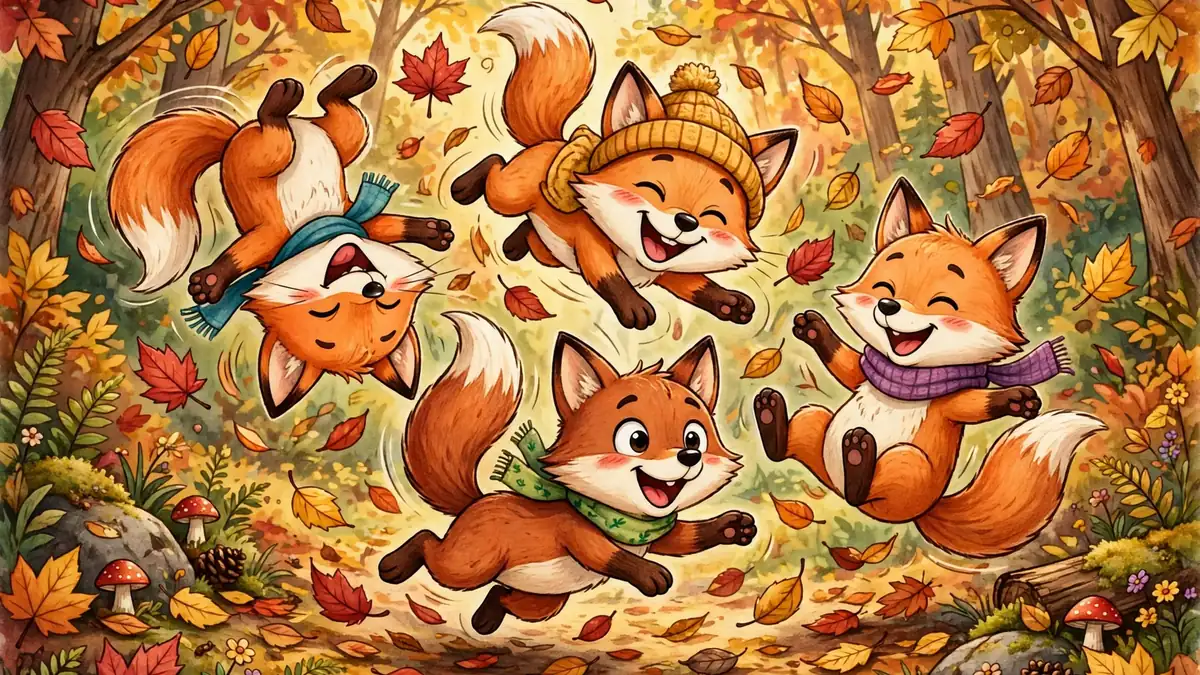
The red fox dove into the leaf pile headfirst, and the pile exploded like a slow-motion firework.
Three kits raced through the golden oak leaves, and the leaves chased them right back down the hill.
The vixen cached apples under the hollow log for winter, and the log kept the secret perfectly.
An old tod napped in the warmest patch of afternoon sun, and the falling leaves covered him like a quilt.
The gray fox picked the last ripe persimmon from the high branch, and the branch bowed in respect.
Acorns rained down on the den entrance, and the kits collected them like tiny treasure hunters.
The red fox’s coat matched the autumn leaves so well the hikers walked past twice.
A kit fox buried a pinecone, marked the spot with great ceremony, and forgot it by lunchtime.
The harvest moon rose over the pines, and every fox on the ridge turned to watch it climb.
Two fennec foxes traded desert stories with a red fox, and the autumn night listened in.
The vixen led her kits on the first frost walk, and the frost sparkled under six pairs of paws.
Leaving the forest at dusk, the fox looked back once at the orange canopy, then slipped into the shadows without a sound.
Moonlit Meadow
Not every fox day needs daylight. This is the night section: moonbeams, fireflies, and the silver hush of a meadow after dark. These lines are for the night owls, the star-watchers, and anyone who has ever taken the moonlit route home just because it felt right. Bring a jacket and an unhurried evening.
The red fox crossed the moonlit meadow in three silent bounds, and the grass barely bent.
Fireflies spelled out the trail for the night-prowling vixen, and she followed their glowing map.
An arctic fox’s white coat glowed blue under the full moon, and the snowfield looked like daylight.
The kits chased their own shadows across the silver grass, and the shadows always won.
A fennec fox’s ears caught the moonlight like two tiny sails, and the desert night applauded.
The old tod howled a soft greeting to the rising moon, and the owls answered from the pines.
Two gray foxes met at the meadow’s edge at midnight, and the fireflies formed a welcoming committee.
The vixen taught her kits to read the stars, and the smallest kit picked the brightest one as its favorite.
A red fox pounced on a rustling in the moonlit grass, and the field mouse had already left for the evening.
The harvest moon painted the meadow gold, and every fox turned its face to the light like a sunflower.
A kit fox curled up under the starry sky, and the constellations kept watch until dawn.
Leaving the meadow at first light, the fox waved its tail at the fading moon, and the morning breeze waved back.
Sarcastic & Clever Fox Puns
Not every forest day goes smoothly. The sarcastic set is for the squirrel that stole your trail mix, the rain that soaked your map, and the signpost that was confidently wrong about the mileage — dry laughs aimed at situations, never at animals, and always kind to the foxes. The clever half follows with the facts and wordplay from the top of this page, bent into lines that make people say, “Okay, that one was good.” Save the sarcastic ones for friends who have survived a bramble patch; they will feel seen.
Sarcastic Fox Puns
Oh great, the squirrel stole my sandwich right in front of the fox. Very professional forest we have here.
Love how the trail map is printed in tiny print, slightly wrong, and completely confident about it.
The rain soaked my boots, my book, and my dignity. Subtle entrance to the meadow: ruined.
Sure, the “twenty-minute forest walk” took two hours — the mushroom patch is excellent at wasting time beautifully.
The thermos leaked in my backpack before the first mile. Excellent planning, past me.
Wonderful: it rained exactly when the nature center started the outdoor fox talk.
The guide said “just one more clearing” six clearings ago. We believe in her anyway.
I wore new shoes to the forest. The mud has filed a formal complaint.
The “shortcut” to the lookout added forty minutes and three excellent wrong turns. Worth it, allegedly.
The fox looked at my tent setup, then at me, with an expression of deep architectural concern.
The crows screamed through my entire peaceful moonrise moment. Rude. Iconic. Keeping the photo.
No, I did not get lost on the woodland trail. I was conducting an unscheduled extended tour of the pines.
Clever Fox Puns
A bushy tail is just the forest’s way of saying “dress warmly” with extra fluff and excellent results.
Those ears are nature’s reminder that the best tools are the ones you are born with.
A pounce is just a jump that did its homework on the magnetic field first.
The vixen’s den has one rule: knock never, enter softly, bring snacks.
A red fox’s coat is like a fingerprint, if fingerprints were gorgeous and covered in autumn leaves.
The den is the only meeting where showing up late means you get the coldest burrow, and nobody minds.
An arctic fox’s winter coat is the tundra’s way of saying “be right back” until spring.
The fennec’s ears are just nature’s satellite dishes, with fur thrown in for style.
A kit’s first pounce is a graduation ceremony where the diploma is a field mouse and the cap is a leaf.
The den at moonrise is the quietest lullaby in the forest, and every kit sleeps through it.
A gray fox in a tree is physics showing off, with whiskers.
Zero fear, full tail, one moonlit meadow — the fox’s entire philosophy in six words.
Fox Puns for Kids, School & Parties
Everything in this part of the page is clean, simple, and built for the toughest crowd there is: children. Teachers get classroom animal-week lines, families get the party set, and the friendly cartoon fox stays the star of every section — bright, cheerful, and zero-fear, and the jokes are for everybody. If a joke works for a seven-year-old and a grandparent at the same table, it earned its place here.
Kid-Friendly Fox Puns
Why did the little fox bring a basket to the forest? Because even clever foxes like to collect the shiniest acorns.
The red fox at the nature center waved its tail at our class, and the teacher waved back because good manners work everywhere.
What do you call a fox who loves recess? A play-pouncer, first in line for the slide every single day.
The baby fennec shared its burrow, and it sparkled in the sun like a tiny sandcastle.
Why did the fox kit sit in the leaves? It was the crunchiest seat in the whole forest.
Our class counted the fireflies over the meadow and cheered like it was a sports final — there were forty-two!
What is a friendly fox’s favorite snack? Apple slices, shared with the whole class at the party.
The little paws left perfect prints in the morning dew, and the teacher said the sun would frame them.
Why did the kid bring a map to the nature center? To find the fox den before lunchtime.
The arctic fox smiled at the class — well, it looked like a smile, and the whole class smiled back.
What do foxes use to fix a wobbly leaf pile? A tail-ful of dry leaves and a whole lot of teamwork.
The gray fox at the show let us clap along twice, which the keeper said was extremely good manners.
Fox School Jokes
Our science teacher explained the magnetic pounce with one magnet, one toy mouse, and a great story — best lesson of the month.
The spelling bee word was “nocturnal,” and half the class tried to sneak an extra “r” into “night.”
What did the class learn on animal week? That foxes are mammals, just like us, only much better at hearing.
The art teacher had us draw the fennec fox, and everyone’s ears came out looking wonderfully enormous.
Why did the forest report get an A? It covered arctic fox coat changes, complete with a hand-drawn season chart.
Our teacher explained the food chain with one acorn, one mouse toy, and a photo of the fox at dawn.
The class vote for the coolest real fox fact went to ears that hear insects underground, and the teacher confirmed it is genuinely true.
Geography quiz answer of the year: the tundra, where snow falls and arctic foxes nap in white.
What is the forest’s favorite school subject? Science — it has been running experiments for millions of years.
The librarian’s animal-week display featured books about foxes, and the hold list filled up by Friday.
Our group project mapped every fox species: red, arctic, fennec, gray, and one very quick kit fox.
The principal’s morning announcement reminded everyone that the nature walk needs permission slips by Thursday.
Fox Party Puns
The fall festival invites went out on little tail-shaped cards, and the RSVPs came back faster than the leaves fell.
Costume contest rule: the best-dressed fox gets the first slice of pumpkin cake, by ancient party law.
The leaf pile by the bonfire worked perfectly this year, and the neighbors are still talking about the jumping contest.
Party game idea: acorn-toss contest. Longest throw wins the golden tail trophy.
The snack table shaped like a tiny forest was the hit of the party, and it emptied in eleven minutes flat.
Decorations report: paper leaves, string lights, and one cardboard fox that took three hours and was worth every minute.
The “pumpkin” carving race used the whole porch, and the winning team looked ready for the art finals.
Playlist verdict: forest sounds for arrivals, dance hits after the costume parade, silence for the moonrise round.
The photo booth had a cardboard den, and the line for pictures never got shorter all night.
Midnight snack table: “acorn” cookies, “honey” candy, and cider the color of a perfect autumn sunset.
Favor bags went out as tiny treasure chests, and every kid left with candy and a glow-in-the-dark fox.
Cleanup crew found one lost tail headband, three plastic acorns, and zero regrets. Best party of the year.
Knock-Knock Fox Jokes
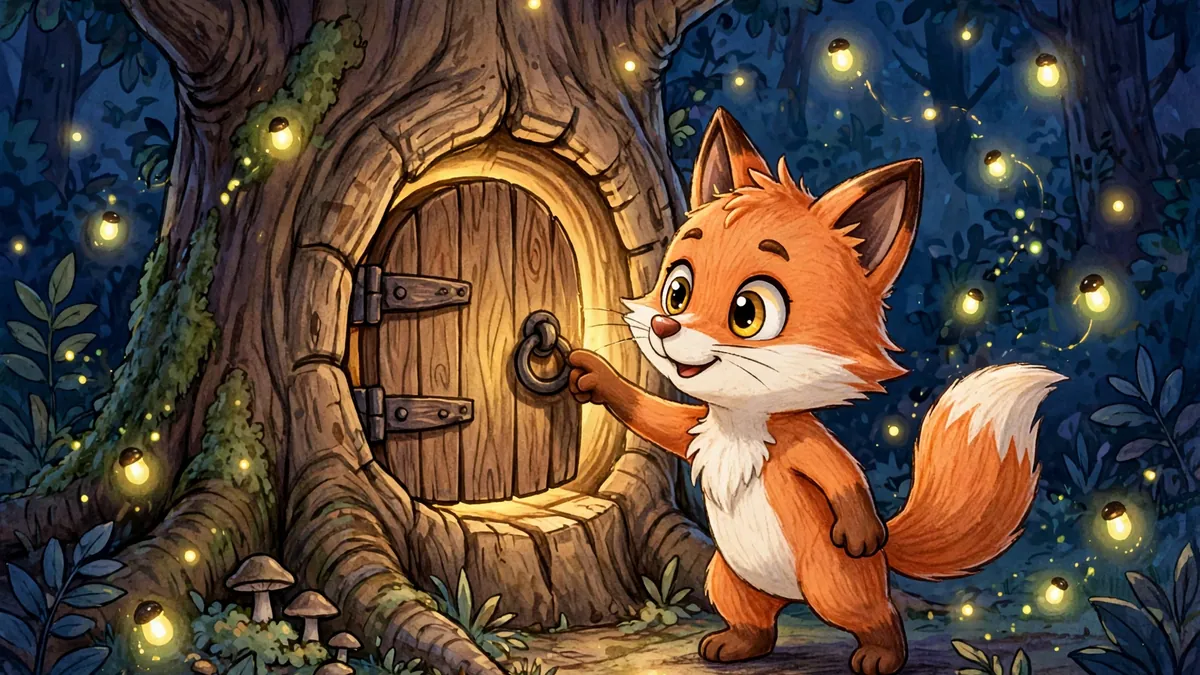
Knock-knock jokes are the oldest trick in the book, and the hollow tree door was born for them — a wooden door that has opened for every hiker, every camper, and every muddy kid for decades was made for this game. Perform them at the door, over text, or with a kid who will demand all twelve in a row. Fair warning: that kid will then invent a thirteenth, and it will be better than yours.
Knock, knock. Who’s there? Fox. Fox who? Fox your information, this forest party is the best one ever!
Knock, knock. Who’s there? Tail. Tail who? Tail me about your day — I have been waiting at the den since moonrise!
Knock, knock. Who’s there? Kit. Kit who? Kit me your best forest joke — I will trade you a fox story!
Knock, knock. Who’s there? Den. Den who? Den you coming inside? The fireflies are already here!
Knock, knock. Who’s there? Pounce. Pounce who? Pounce upon a time, a clever fox knocked on this very door!
Knock, knock. Who’s there? Vixen. Vixen who? Vixen the mood — the forest festival starts at dusk!
Knock, knock. Who’s there? Fennec. Fennec who? Fennec you hear me? The desert fox is calling all the way from the dunes!
Knock, knock. Who’s there? Moon. Moon who? Moon over the meadow — the night prowl begins right now!
Knock, knock. Who’s there? Leaf. Leaf who? Leaf your worries behind — it is a perfect autumn night!
Knock, knock. Who’s there? Acorn. Acorn who? Acorn-y joke coming your way — the fox saved the best for last!
Knock, knock. Who’s there? Tod. Tod who? Tod you I was clever — the fox knocked twice just to prove it!
Knock, knock. Who’s there? Bush. Bush who? Bush your tail and come on in — the party is already hopping!
Fox Terms & What Makes Them Funny
Fox talk comes with its own vocabulary — and half of it already sounds like a joke waiting to happen. Here is the cheat sheet: ten terms, what each one really means, and why each one is funny. Memorize three before your next fall festival and you will sound like the cleverest walker there.
Term
Quick Fact
Why It Is Funny
Bushy Tail
The fox’s famous brush, used for balance and warmth
A scarf that grew on an animal and never came off
Kit
A baby fox; born blind, playing within weeks
A tiny troublemaker with ears bigger than its plans
Den
The underground earth where foxes rest and raise kits
The only meeting where the latecomer gets the coldest burrow
Fennec
The tiny desert fox with enormous ears
A cartoon character that escaped into the Sahara
Red Fox
The classic fox with the widest range on Earth
A dog that went to art school and came back orange
Arctic Fox
The winter specialist that changes coat color
Nature’s quick-change artist, twice a year, no costume budget
Pounce
The high headfirst leap foxes use to hunt
A jump that did its homework on the magnetic field
Scent
The marking system foxes use to map territory
A map only foxes can read, written in smells
Nocturnal
Active at night, when fox adventures happen
The night shift nobody applied for but everybody loves
Cunning
The fox’s famous cleverness from a million tales
Street smarts with a tail, honed over centuries of stories
Fox Puns for Different Moments
The same pun can flop or fly depending on the moment you use it in. Here is a quick guide to matching the line to the occasion, with pointers to the right section of this page. Think of it as a seating chart for jokes: every line has a table where it belongs, and this guide walks it to its seat.
Autumn party invites: this is where the Party set earns its keep. A tail-shaped invite deserves a line like “The fall festival invites went out on little tail-shaped cards,” and the Autumn Forest set covers the bigger scenes — leaf piles, bonfires, and the moonrise photo everyone takes. Send the invite a week early; fall weekends fill up fast.
Forest-walk captions for trail photos: keep it short and sly. The Captions section was built for golden forests, moonlit meadows, and fox close-ups — and the Texts set handles the quick “meet at the big oak at six” messages that start the whole afternoon. One strong line under a fox photo beats a paragraph every time.
Classroom animal week: keep it factual, proud, and a little funny. The Q&A section’s first fourteen answers teach real fox facts — how the magnetic pounce works, why fennec ears are huge, how arctic foxes change coats — and the School set was written for teachers, spelling bees, and nature-walk permission slips. Students remember the joke and keep the fact as a bonus.
Greeting cards for clever friends: lead with the cute, not the complicated. The Cute set is full of lines that fit a birthday card, a get-well-soon note for a forest fan, or a thank-you to the friend who shared their trail mix — one warm line about a waving kit tells the reader exactly what kind of fun you are having. Handwriting it makes it twice as good.
Costume-party icebreakers: open with a knock-knock. The Knock-Knock section was written for exactly this moment — a door that opens, a guest who answers, and twelve rounds before anyone remembers to check the snack table. Start with “Fox your information” and let the room take it from there; by round three, everyone will be inventing their own.
How to Deliver a Fox Pun
A good fox pun is like a good trail: timed to the moment, shared with friends, and never aimed at anyone’s real feelings. Three small rules from the forest guide’s handbook will keep your timing straight and your audience grinning. They fit on an index card, which is convenient, because you will want them in your pocket on the autumn walk.
1. Match the pun to the setting
Fox puns land best with the woods around them. Drop one as the leaves fall at sunset, when the campfire crowd gathers at the meadow’s edge, or at the fall festival as the cider starts pouring. The setting does half the work, and the same line sounds twice as good with pine in the air. Even a classroom gets a boost when the animal posters are on the wall.
2. Keep it kind — never joke about real harm to animals
The best fox jokes laugh at stolen trail mix, squirrel chaos, and our own muddy boots — never at an animal’s real hurt or trouble. Every fox in the forest deserves respect. Aim for the laugh that makes the whole group grin, not the one that lands wrong.
3. Timing beats quantity
One well-timed “ears up” as the fox trots across the clearing beats ten puns before the thermos is even open. Say it, let it land, then pass the snacks. Forest people understand this rule — it is why the best moonrise stories get told once, properly, at dusk.
Ethan Parker is the Lead Humor Strategist at Easy Puns, where he writes and fact-checks pun collections for readers of all ages. Every line on this page was written originally for Easy Puns — researched against top-ranking pages for topic coverage, then written from scratch so no joke is copied from anywhere. The fox facts above reflect widely shared knowledge — how the magnetic pounce works, why fennec ears are huge, how arctic foxes change coats, and how to tell a gray fox from a red fox — and the whole collection is kept family-friendly and free of anything unkind. New collections go up regularly, so there is always a fresh page of puns waiting.
Fox Puns FAQs
What are the most popular fox puns?
The favorites grow from a few classic props: bushy tails, pointy ears, midnight pounces, and the autumn den. Fresh versions of each run through this page — start with the Classic One-Liners and pick your favorites for the party, the caption, and the group chat.
Are fox puns okay for kids?
Yes — when they stay warm and playful like the ones on this page. The Kid-Friendly section was written for autumn-day brightness and zero worry: tumbling kits, smiling vixens, and leaf piles, with nothing unkind.
Are fox puns good for autumn captions?
They are some of the best. Golden forests, rustling leaves, and bushy-tailed faces photograph beautifully, and the Captions section was written for exactly those shots — short lines that fit under a photo without explaining the joke.
What is a fox kit?
A baby fox. Kits are born blind and tiny in an underground den called an earth, open their eyes at about two weeks old, and are playing and pouncing within a couple of months.
Do foxes bark?
They have their own calls — red foxes make short barks, yips, and the famous eerie scream, while vixens use a sharp “gekker” sound with their kits. It is a whole woodland vocabulary, not just one bark.
How can I write my own fox puns?
Start with a real fox detail — the tail waving through tall grass, the ears swiveling toward a cricket, the kit’s first wobbly pounce — then bend a matching everyday word toward it: a den becomes the coziest meeting spot, and a pounce becomes the most dramatic entrance. Short, kind, and built on a true detail is the whole recipe.