Visual puns are jokes you can see. A picture takes a familiar phrase and draws it literally, so the double meaning pops the moment you look at it. This page has 210 of them, all fresh, all clean, and all safe for kids, school, and work. Because a picture cannot always travel with the joke, every line here is written as a scene you can picture in your mind — a traffic jam in a jar, a cat napping on a napkin, a star with a backpack. You will find classic scenes, cute animals, question-and-answer jokes, captions, texts, kitchen and office scenes, school and art project ideas, and knock-knock jokes, plus a guide to drawing your own.
Visual pun: a joke told with a picture that shows a phrase literally
Sight gag: a visual joke that needs no words at all
Idiom: a common phrase whose meaning differs from its literal words
Literal: taking words at face value, exactly as they sound
Doodle: a quick, playful sketch, often drawn while thinking
Sketch: a fast drawing that captures an idea in a few lines
Meme: a funny picture shared online, often with a short caption
Poster: a big printed picture made to be seen from across a room
Cartoon: a funny drawing, often with a simple style and a big joke
Caption: the short line of text that goes with a picture
Logo: a small picture or mark that stands for a brand or team
Double meaning: one picture or phrase that can be read two ways at once
⚡ Quick Answer: A visual pun is a joke told with a picture that shows a familiar phrase literally, so the double meaning pops the moment you look at it. These 200+ original visual puns paint every joke as a scene in words, so they work even without the picture — for kids, school, captions, memes, and art projects.
What Is a Visual Pun?
A visual pun is a joke that lives in a picture. Where a verbal pun plays with the sound or meaning of a word, a visual pun plays with what you see. The picture shows a familiar phrase literally, and your brain spots the second meaning in the same instant. That flash of recognition is the whole joke.
The classic trick is the idiom, drawn word for word. Take “raining cats and dogs” and draw cats and dogs falling from a cloud. Take “a piece of cake” and draw a cake sliced into pieces. The phrase is ordinary, the picture is silly, and the gap between them is where the laugh lives. Good ads and logos use the same trick. The FedEx logo hides a small white arrow between the E and the x, pointing forward — a picture inside a word, doing the job of a whole slogan.
Visual puns work in every place a picture can go: posters, memes, cartoons, school projects, birthday cards, and office whiteboards. They cross language barriers better than word jokes, because the picture does most of the talking. A kid who cannot yet read the phrase can still laugh at the drawing. That is why teachers love them, and why this page describes every joke as a scene — so you can see it in your mind even when the picture is only words.
Classic Visual Puns
These are the timeless ones: famous phrases drawn exactly as they sound. Picture each scene, and the joke will draw itself.
Picture a traffic jam drawn as cars stuck inside a giant jar of strawberry jam.
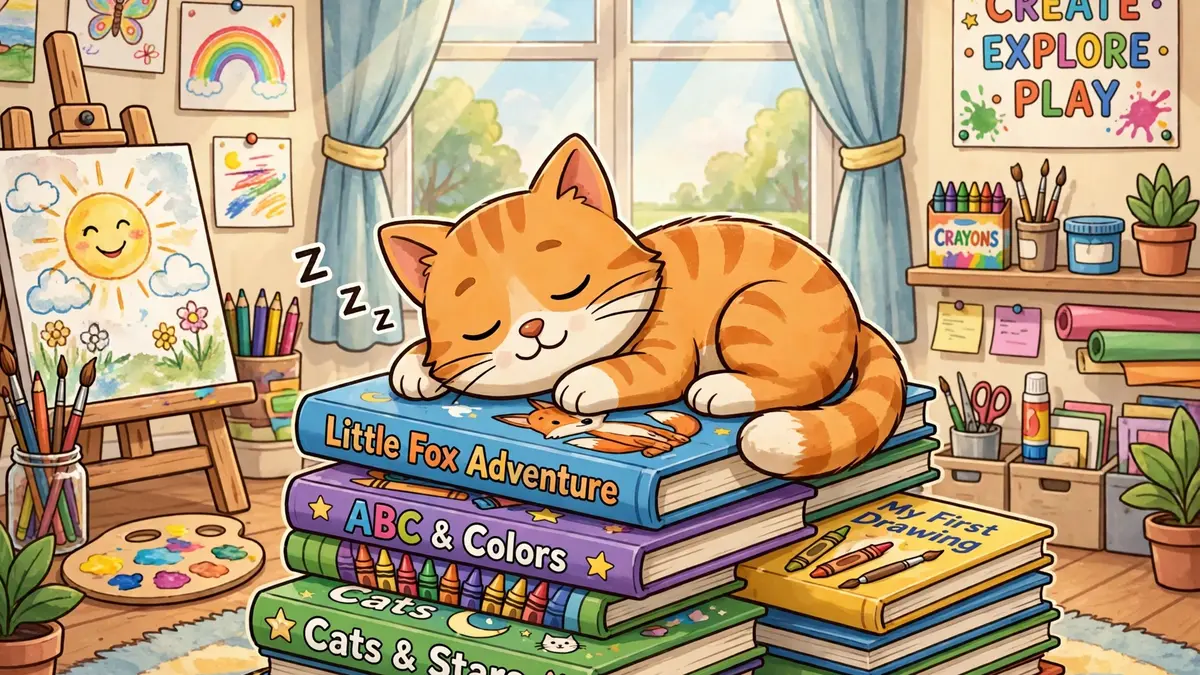
Picture a cat napping on a paper napkin, with the words “cat nap” written underneath.
Picture a bee spelling out words with tiny wooden letter blocks — a spelling bee.
Picture a star wearing a backpack and holding a pencil — a star student.
Picture a brain sitting under a little rain cloud — a brain storm.
Picture a storm cloud with one big eye in the middle — the eye of the storm.
Picture a shoulder wearing a tiny ice pack — a cold shoulder.
Picture a bear in a suit ringing the opening bell at a stock exchange — a bear market.
Picture a school of fish sitting at little desks with backpacks, ready for class.
Picture a cake sliced into neat pieces on a plate — a piece of cake.
Picture a bowl of beans tipped over on a table — spill the beans.
Picture cats and dogs falling from a rain cloud with tiny umbrellas — raining cats and dogs.
Picture a snail carrying a tiny mailbox on its shell — snail mail.
Picture a piggy bank flying with little wings — when pigs fly.
Picture a clock with wings flying past a calendar — time flies.
Picture a dog chasing its own tail in a circle — a tail-chasing tale.
Picture a banana slipping on its own peel — a-peel-ing.
Picture a tomato blushing bright red next to a salad bowl.
Picture a mushroom invited to every party because he is a fungi.
Picture a skeleton who never lies because you can see right through him.
Picture a ghost who loves to read because he is always in high spirits.
Picture a vampire who takes up photography because he loves a good snap, even if he never shows up in it.
Picture a witch who bakes broom-shaped cookies for every Halloween party.
Picture a snowman who melts a little every time he tells a hot joke.
Picture a pirate drawing a treasure map while his parrot keeps moving the X.
Picture a cow painting spots on herself to blend in with the dalmatians.
Picture a frog sitting on a lily pad with a tiny umbrella in the rain.
Picture a penguin wearing a bow tie to every formal dinner on the ice.
Picture a lion combing his mane with a tiny fork before every photo.
Picture a monkey taking selfies with a banana phone.
Picture a duck wearing rain boots even on sunny days, just in case.
Picture a turtle who wins the race by taking the scenic route.
Cute Visual Puns
Soft, sweet, and made for smiles. These little scenes work on cards, posters, and classroom walls.
Picture a baby chick hatching from an egg wearing a tiny party hat.
Picture a kitten tangled in a ball of yarn, looking very proud of the mess.
Picture a puppy wearing rain boots that are two sizes too big.
Picture a bunny eating a carrot shaped like a heart.
Picture a baby elephant blowing bubbles with its trunk.
Picture a little bird wearing a scarf in winter, tweeting a happy song.
Picture a ladybug with polka-dot shoes dancing on a leaf.
Picture a teddy bear holding a tiny cup of honey for his friend the bee.
Picture a duckling following its mother in a perfect little line.
Picture a hamster stuffing its cheeks with popcorn at a movie night.
Picture a baby owl wearing glasses too big for its face, reading a bedtime story.
Picture a goldfish blowing heart-shaped bubbles in its bowl.
Picture a baby panda hugging a bamboo shoot like a pillow.
Picture a little frog wearing a crown made of daisies.
Picture a chick in a raincoat jumping in puddles with tiny yellow boots.
Picture a kitten asleep inside a teacup, purring softly.
Picture a puppy with a bow tie delivering a tiny love letter.
Picture a bunny with a carrot-shaped birthday cake and one candle.
Picture a baby penguin sliding down a snowy hill on its belly.
Picture a little mouse holding a piece of cheese bigger than itself.
Picture a duckling wearing a tiny life jacket for its first swim.
Picture a baby hedgehog rolling into a ball to hide from a butterfly.
Visual Pun Q&A Jokes
First, the real answers: what visual puns are, how they work, and where to use them. Then the silly ones, where the questions are just an excuse for a picture joke.
Q: What is a visual pun? A: A visual pun is a joke told with a picture — an image that shows a phrase literally, so the double meaning clicks when you see it.
Q: How is a visual pun different from a verbal pun? A: A verbal pun plays with words you hear or read, while a visual pun plays with what you see — the picture carries the joke.
Q: What is a sight gag? A: A sight gag is a visual joke in a film, cartoon, or photo where something funny happens on screen without needing words.
Q: Can a visual pun work without a caption? A: Yes, the best ones need no words at all — the picture alone shows the double meaning clearly.
Q: What is an idiom? A: An idiom is a common phrase whose meaning is different from its literal words, like “raining cats and dogs.”
Q: Why do artists draw idioms literally? A: Drawing an idiom literally turns a familiar phrase into a surprise picture, and the surprise is what makes people laugh.
Q: What is a meme? A: A meme is a funny picture or video shared online, often with a short caption that gives it a second meaning.
Q: What makes a good visual pun poster? A: One clear picture, one clear idea, and a short caption — if a stranger gets it in three seconds, it works.
Q: Are visual puns good for school projects? A: Yes, they teach wordplay, drawing, and creative thinking, and they make class displays fun to look at.
Q: What is a logo pun? A: A logo pun is a brand mark that hides a second meaning in its shape, like an arrow or a hidden letter.
Q: Who invented the visual pun? A: No one person did — artists have drawn literal idioms for centuries, from old cartoons to modern ads.
Q: Can visual puns help kids learn? A: Yes, they help kids link words to pictures, which makes new phrases easier to remember.
Q: What is a doodle? A: A doodle is a quick, playful sketch, often drawn while thinking — and a great place to hide a small visual joke.
Q: Do visual puns work in ads? A: Yes, advertisers love them because a clever picture sticks in your memory longer than a plain sentence.
Q: What did the picture say to the pencil? A: “You really draw me in.”
Q: Why did the cartoon sun bring a towel? A: It was planning to have a ray of a day at the beach.
Q: What do you call a fish who paints? A: A brush with the sea.
Q: Why did the camera go to school? A: It wanted to get a better focus on its future.
Q: What did the sketchbook say to the crayon? A: “You color my world.”
Q: Why did the meme go to the doctor? A: It was feeling a little pixelated.
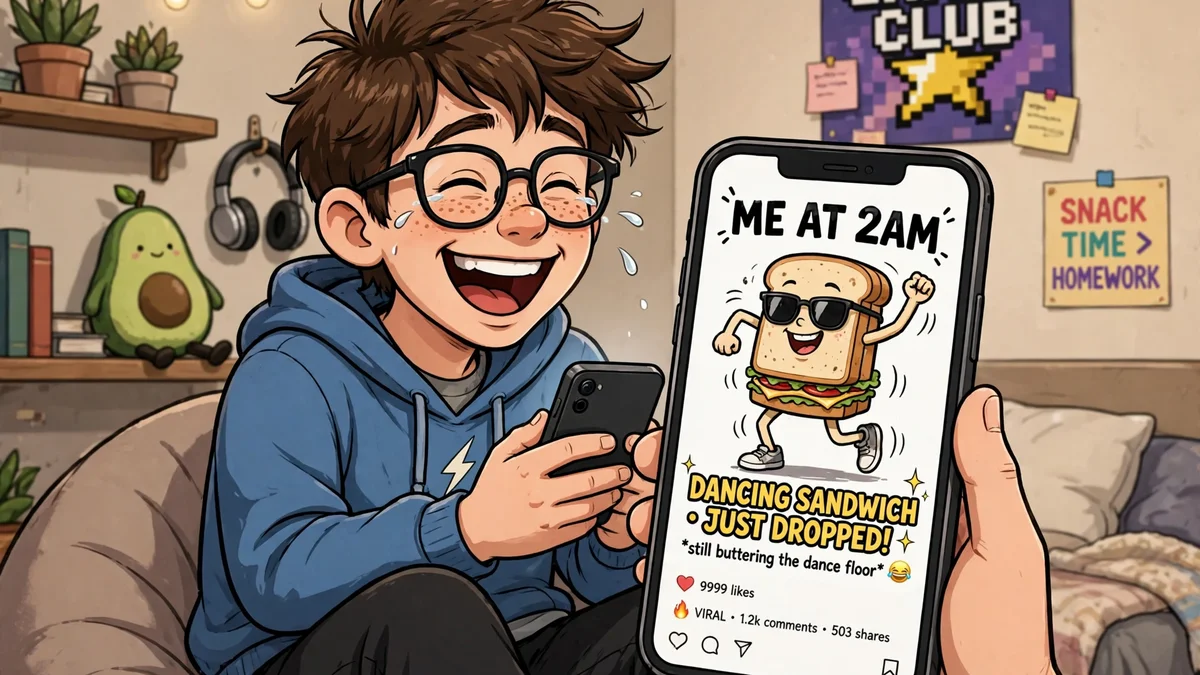
Q: What do you call a sandwich that tells jokes? A: A pun-wich.
Q: Why did the paintbrush blush? A: It saw the canvas in its birthday suit.
Q: What did the eraser say at the party? A: “I am here to rub out the bad vibes.”
Q: Why did the easel break up with the canvas? A: It felt like their relationship had no frame.
Q: What do you call a cat who draws comics? A: A purr-fect cartoonist.
Q: Why did the glue stick stay home? A: It was stuck on a good book.
Q: What did the ruler say to the pencil? A: “You are really on the straight and narrow.”
Q: Why did the rainbow get a job? A: It wanted to add a little color to its life.
Visual Puns for Captions and Texts
Short lines for photos, posts, and messages. Pair each one with a picture, and the joke doubles.
Visual Pun Captions
Use these under photos, drawings, and memes. The picture does half the work, so keep the line short.
“I am not a regular picture. I am a cool picture.”
“Drawn to be wild.”
“This is my masterpiece. Do not touch it with sticky hands.”
“Sketchy behavior, but make it cute.”
“I woke up like this — drawn.”
“Picture perfect, pun intended.”
“I put the ‘art’ in ‘smarty pants.'”
“Life is a canvas. I just brought bigger crayons.”
“Currently in my doodle era.”
“Frame me. I am ready for my close-up.”
“I am a big deal — just ask my sketchbook.”
“Painted with love and a little bit of mess.”
“Warning: this picture contains 100% puns.”
“I did not choose the art life. The art life drew me.”
“Color outside the lines. That is where the fun lives.”
“My happy place has paint on the walls.”
“Just me and my sketchbook against the world.”
“Smile! You are on candid canvas.”
“This photo is un-framed-ily funny.”
“I came, I saw, I doodled.”
Visual Pun Texts
Quick lines for chats and messages. Send the picture first, then let the text land the joke.
“Sent you a picture. It is worth a thousand puns.”
“This meme drew itself. I just watched.”
“You have got to see this sketch. It is picture perfect.”
“New profile pic. I drew it myself, obviously.”
“This drawing is my whole mood today.”
“Look what I sketched in class. The teacher loved it.”
“Sending you a doodle because words were not enough.”
“This picture says everything I could not.”
“My art project is done. Prepare to be amazed.”
“Just drew this in five minutes. Do not ask how.”
“This is my masterpiece. Be nice.”
“Pun intended. Picture attached.”
Visual Puns in the Kitchen
The kitchen is full of visual jokes waiting to happen. Every spoon, pot, and snack has a second meaning.
Picture a fridge covered in magnets spelling out “lettuce be friends.”
Picture a teapot whistling a happy tune while wearing a tiny hat.
Picture a spoon and a fork holding hands at a dinner table.
Picture a chef’s hat with a face, smiling at a bowl of soup.
Picture a toaster popping up bread that looks surprised to be awake.
Picture a banana in a hammock between two cereal boxes.
Picture a carrot wearing sunglasses in a salad bowl.
Picture an egg cracking a joke while sitting in a frying pan.
Picture a pizza with a face, winking at the slice next to it.
Picture a milk carton doing a little dance on the kitchen counter.
Picture a cookie jar with a sign that says “Do not feed the monsters.”
Picture a blender mixing a smoothie while wearing a party hat.
Visual Puns at the Office
Work is better with a little drawing on the whiteboard. These clean office scenes are safe for every desk.
Picture a stapler wearing a tie, ready for a big meeting.
Picture a paperclip chain forming a bridge between two desks.
Picture a coffee mug with a face, looking very awake on a Monday.
Picture a computer mouse running on a tiny wheel next to the keyboard.
Picture a plant on a desk holding a tiny “Do not disturb” sign.
Picture a printer spitting out pages that spell “You did it!”
Picture a desk lamp shining a spotlight on a hardworking pencil.
Picture a notebook with arms, giving a high five to a pen.
Picture a calendar with a party hat on the day the project ends.
Picture a chair rolling itself to the meeting room, right on time.
Picture a whiteboard covered in doodles of the whole team as superheroes.
Picture a phone ringing with a little bell that says “Answer me, I dare you.”
Sarcastic Visual Puns
Gentle eye-rolls in picture form. These are dry, not mean — perfect for anyone who has ever drawn a potato and called it a cat.
Picture a picture frame hanging perfectly straight, captioned “Sure, nothing is wrong here.”
Picture a pencil with a tiny sign: “I am fine. Totally not broken.”
Picture a clock showing five o’clock on a Monday, captioned “Great. Only four more days.”
Picture a blank canvas with the words “My masterpiece is still loading.”
Picture a coffee mug that says “World’s Okayest Artist” in fancy letters.
Picture a paintbrush lying on the floor, captioned “I meant to do that.”
Picture a sketch of a cat that looks like a potato, captioned “Modern art, obviously.”
Picture a ruler that only measures in “close enough.”
Picture a glue stick holding a sign: “I am stuck here, and I am fine with it.”
Picture a poster of a rainbow in black and white, captioned “I ran out of colors. You are welcome.”
Picture a drawing of a sun wearing a raincoat, captioned “Great weather, as always.”
Picture a sticky note on a mirror that says “You look great today. The mirror disagrees.”
Clever Visual Puns
These take a second look. The joke hides in the picture, and the clever part is finding it.
Picture a mirror reflecting a drawing of itself, captioned “A self-portrait of a self-portrait.”
Picture a book with a door drawn on its cover, slightly open.
Picture a light switch that turns on a drawing of a light bulb.
Picture a pair of glasses that make everything look like a cartoon.
Picture a maze drawn on a napkin with a tiny cheese at the center.
Picture a key that opens a door painted on a wall.
Picture a shadow that waves back at the person who casts it.
Picture a window with a drawing of a sunny day taped over a rainy one.
Picture a map where the treasure X is drawn on the kitchen table.
Picture a photograph of a camera taking a photograph of itself.
Picture a puzzle with one piece missing — and the missing piece is a drawing of a puzzle piece.
Picture a clock where the numbers are tiny pictures of the day’s events.
Visual Puns for Kids
Big, bright, and easy to draw. Every scene here works as a coloring page or a classroom poster.
Picture a dinosaur drawing a rainbow with a giant crayon.
Picture a robot made of cardboard boxes, waving at the class.
Picture a superhero cape made from a blanket, flying over a couch.
Picture a dragon who blows bubbles instead of fire.
Picture a pirate ship made from a laundry basket, sailing across the living room.
Picture a castle built from pillows, with a teddy bear king on top.
Picture a rocket ship drawn on a cardboard box, ready for a trip to the moon.
Picture a monster with three eyes who is afraid of the dark.
Picture a wizard’s hat with a rabbit who keeps popping out to say hello.
Picture a train made of shoe boxes, carrying stuffed animals to the zoo.
Picture a snowman built from marshmallows, melting in the sun.
Picture a fishbowl with a goldfish wearing a tiny pirate hat.
Visual Puns for School
Classroom scenes that teachers can pin on the wall. Each one turns a school object into a little joke.
Picture a backpack with arms, carrying its own lunchbox.
Picture a chalkboard with a drawing of a teacher who looks exactly like the real one.
Picture a globe spinning so fast it looks like a merry-go-round.
Picture a lunchbox that opens to reveal a tiny picnic scene.
Picture a pencil case that zips itself shut when the bell rings.
Picture a ruler measuring a rainbow to see how long it really is.
Picture a school bus with a smiley face on the front, waving at the kids.
Picture a notebook where the doodles come alive at recess.
Picture a locker door covered in drawings of the whole class as animals.
Picture a science poster showing a volcano made of glitter and glue.
Picture a library book with a bookmark that looks like a tiny ladder.
Picture a teacher’s desk with a “Best Teacher Ever” banner drawn in crayons.
Visual Puns for Art Projects
These scenes double as project ideas. Each one names a material and a picture, so you can make it yourself.
Picture a poster made from old magazines, with a rainbow of cut-out pictures.
Picture a sculpture built from bottle caps, shaped like a giant fish.
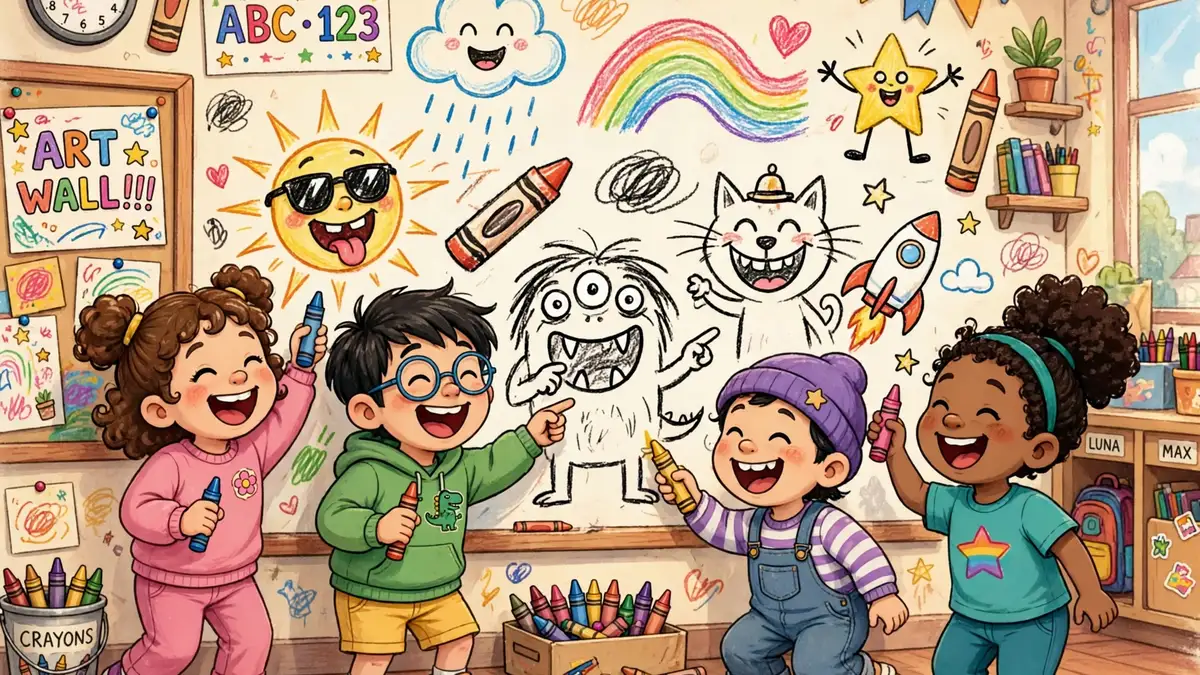
Picture a handprint tree painted on a classroom wall, with every student’s name on a leaf.
Picture a collage of buttons and beads forming a smiling sun.
Picture a mobile made of paper stars hanging from a classroom ceiling.
Picture a mural of the ocean painted across a whole school hallway.
Picture a mask made from a paper plate, decorated with feathers and glitter.
Picture a puppet made from an old sock, with googly eyes and a yarn smile.
Picture a mosaic made from tiny pieces of colored paper, showing a butterfly.
Picture a paper lantern with a drawing of the moon and stars.
Picture a clay pot painted with stripes, holding a tiny cactus.
Picture a friendship bracelet woven from bright threads, with a bead for every friend.
Knock-Knock Visual Jokes
Knock-knock jokes with a drawing twist. Say the whole exchange out loud — the picture joke is in the answer.
Knock, knock! Who’s there? Art. Art who? Art you glad I drew you a picture?
Knock, knock! Who’s there? Canvas. Canvas who? Canvas you guess what I painted?
Knock, knock! Who’s there? Doodle. Doodle who? Doodle you want to see my sketchbook?
Knock, knock! Who’s there? Pencil. Pencil who? Pencil down your name — I drew you a card!
Knock, knock! Who’s there? Paint. Paint who? Paint you a picture of my day?
Knock, knock! Who’s there? Sketch. Sketch who? Sketch me if you can!
Knock, knock! Who’s there? Brush. Brush who? Brush up on your jokes, mine are better!
Knock, knock! Who’s there? Color. Color who? Color me surprised to see you!
Knock, knock! Who’s there? Poster. Poster who? Poster child for funny pictures, that is me!
Knock, knock! Who’s there? Meme. Meme who? Meme-ory lane is full of funny pictures!
Knock, knock! Who’s there? Photo. Photo who? Photo finish — I drew the fastest picture ever!
Why Visual Puns Make Us Laugh: The Science
Our brains love a puzzle with a quick answer. A visual pun gives the brain two meanings at once — the literal picture and the familiar phrase — and the moment they click together feels like solving a tiny riddle. That little rush of solving is a big part of the laugh.
Pictures also reach us faster than words. When you see a cat on a napkin, you get the joke before you read the caption. The image carries the meaning, and the words only confirm it. That is why visual puns travel so well across languages and ages: a drawing of a traffic jam in a jar needs no translation.
Memory plays a part too. A clever picture sticks in your mind longer than a plain sentence, which is why advertisers and teachers both use them. The FedEx arrow, a smiling sun on a poster, a fish at a school desk — once you have seen the picture, the phrase is hard to forget. A good visual pun is a joke you remember with your eyes closed.
Visual Pun Terms & What Makes Them Funny
Ten words sit behind almost every visual joke on this page. Learn them, and you will start spotting double meanings everywhere.
Term
What It Means
Why It Is Funny
Visual pun
A joke told with a picture that shows a phrase literally
The picture and the phrase collide, and the surprise makes you laugh
Sight gag
A visual joke that needs no words
It works in any language, because the picture does the talking
Idiom
A common phrase with a meaning beyond its words
Drawing it literally turns a boring phrase into a silly picture
Literal
Taking words at face value, exactly as they sound
It is the engine of every visual pun on this page
Doodle
A quick, playful sketch
It looks careless, which makes the hidden joke feel like a happy accident
Sketch
A fast drawing that captures an idea in a few lines
Simple lines leave room for the joke to shine
Meme
A funny picture shared online with a short caption
The picture plus the caption gives the joke two chances to land
Poster
A big printed picture made to be seen from far away
It turns one joke into a whole room full of laughs
Caption
The short line of text that goes with a picture
It points the reader at the second meaning, like a wink
Logo
A small mark that stands for a brand or team
A hidden shape inside a logo is a joke you can carry in your pocket
Visual Puns for Different Moments
The same visual joke can land perfectly or fall flat depending on the moment. Here is a quick guide to matching the picture to the occasion, with pointers to the right section of this page.
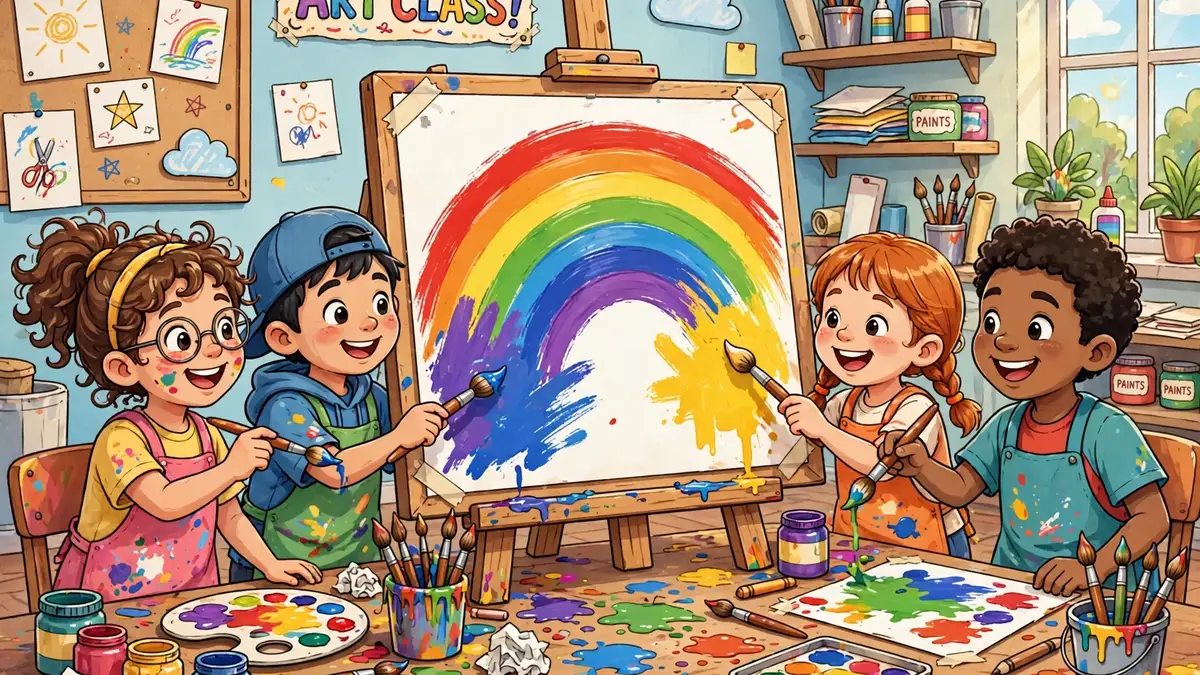
At a school art class. Use the school and art project sections, one picture per poster, and let the class guess the phrase before you show the caption.
At a birthday party. Use the cute and kids sections with a card, and keep the lines short so the birthday song can start on time.
On social media. Use the captions and texts sections, one picture per post, and add the caption last so the image gets the first laugh.
At the office. Use the office section on the whiteboard, one doodle per meeting, and keep it clean so everyone can enjoy it.
At a family dinner. Use the kitchen and knock-knock sections, one joke between courses, and let the kids draw the next one.
How to Deliver a Visual Pun and Get the Laugh
A great visual joke with bad delivery is just a picture on a page. These three rules keep every line landing well.
1. Show the picture first
Let people look before you speak. Hold up the drawing, post the photo, or point at the poster, and give the room three quiet seconds. The laugh comes from the moment they see it themselves, not from you explaining it.
2. Keep the caption short
One line is enough. If the caption needs a paragraph, the picture is doing too little work. Trim the words until only the punchline is left, and let the image carry the rest.
3. Let the laugh land
After the joke lands, pause. Do not rush to the next picture or explain the one you just showed. A short silence lets the laugh grow, and it gives the slowest reader time to catch up.
Visual Pun Etiquette: When a Plain Picture Is Better
Not every moment wants a joke. At a funeral, a sad goodbye, or a serious school assembly, a plain picture shows more care than a clever one. Skip the puns when someone is upset, when the picture mocks a person, or when the joke needs a mean edge to work. Visual humor is at its best when it is kind: a doodle on a get-well card, a funny poster in a classroom, a meme that cheers up a friend. If the joke would make one person laugh and another feel small, draw something else.
How to Make Your Own Visual Pun
The best visual pun is the one you draw yourself, because only you know the phrase you want to picture. This short formula turns any familiar saying into a joke in three steps.
First, pick an idiom everyone knows: “raining cats and dogs,” “spill the beans,” “a piece of cake,” or “school of fish.” Next, find the literal picture. Ask what the words would look like if they were true — cats and dogs falling from a cloud, beans tipped across a table, a cake cut into pieces, fish sitting at school desks.
Last, draw it in one clear scene. Put the picture in a real place, like a kitchen, a classroom, or a garden, and give it one strong detail. Add a short caption only if the picture needs it, then show it to a friend. If they smile in three seconds, it works. If they look confused, simplify the drawing, not the joke.
Keep the Laughs Rolling on Easy Puns
One picture joke is never enough, so here are five more posts to keep the smiles going. Each one is written in the same clean, family-friendly style, with 210 fresh jokes of its own.
Every post on Easy Puns is written to the same standard: fresh jokes, real facts, and lines that families can share without worry. Here is who writes them and how they are checked.
Ethan Parker is the Lead Humor Strategist & Senior Editor at Easy Puns. He writes clean, family-friendly jokes that kids can tell at school and grown-ups can share at work. Every joke on this page was written fresh for this post, checked for warmth and kindness, and kept free of mean lines and copied lines, so parents and teachers can share it with confidence.
Visual Puns FAQs
What are visual puns?
Visual puns are jokes told with pictures. An image shows a familiar phrase literally — like cats and dogs falling from a cloud — so the double meaning clicks the moment you see it. They work in posters, memes, cartoons, and school projects.
How do I draw a visual pun for a school project?
Pick an idiom everyone knows, draw it literally in one clear scene, and add a short caption only if the picture needs it. A poster with one big picture and one line of text works best, and the art project section on this page has twelve ideas to start from.
Are visual puns good for kids?
Yes, they are great for kids. The picture carries the joke, so even young children who cannot yet read the phrase can laugh at the drawing. Every joke on this page is clean and safe for school, home, and birthday parties.
Can I use visual puns as memes?
Yes, visual puns make great memes. Pair one clear picture with a short caption, keep the joke kind, and share it where your friends will see it. The captions section on this page has twenty lines ready to post.
What is the easiest visual pun to draw?
A cat napping on a napkin is a good first one: draw a sleeping cat, add a napkin under it, and write “cat nap” underneath. It needs only a few lines, and everyone gets the joke in three seconds.
How do I create my own visual pun?
Pick a familiar phrase, picture it literally, and draw one clear scene around it. A wave at the beach, a cake cut into pieces, beans spilled on a table — that is the whole recipe, and the formula section on this page walks through it step by step.