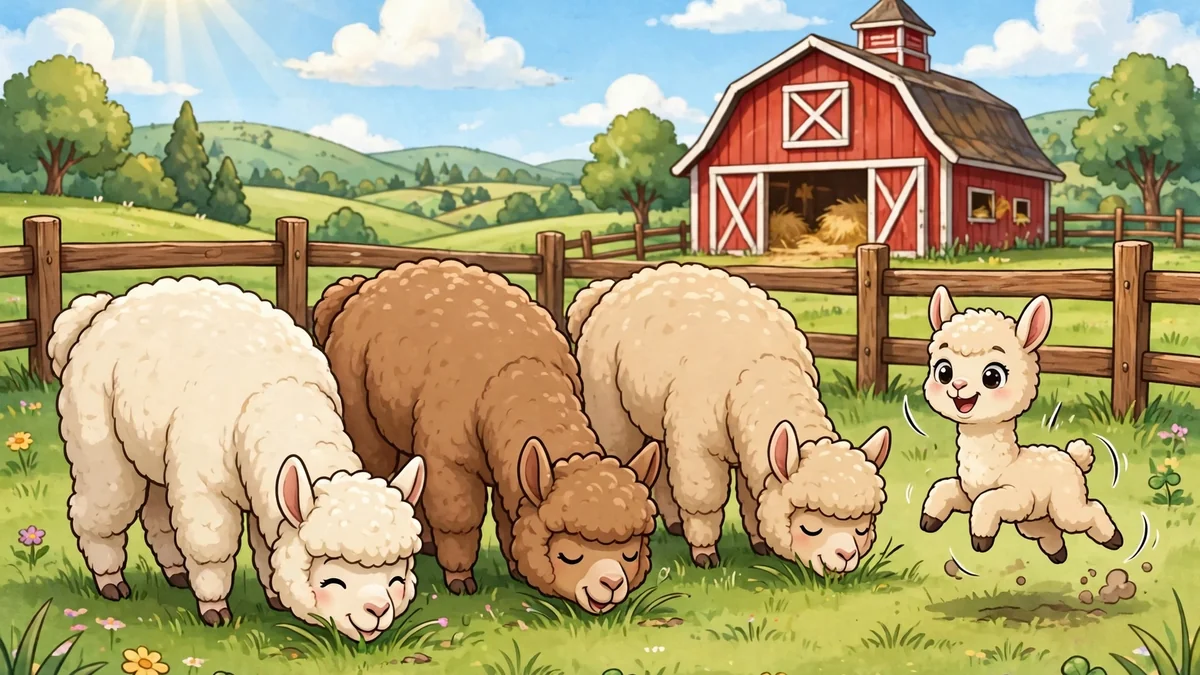
The alpaca is the Andes mountains’ softest ambassador. With fleece in twenty-two natural colors, a gentle hum that runs through the whole herd, and babies called crias that bounce like popcorn, these fluffy camelids have been making people smile since the days of the Incas. This collection gathers 200 original alpaca puns and one-liners, all written fresh for this page, all warm, and all safe for the whole family. No joke here is copied from anywhere; every line was thought up fresh for this page alone.
Why do alpaca jokes work so well? Because the animals themselves are walking punchlines — the humming, the bouncing crias, the silk-locked Suris, the once-a-year shearing drama. The jokes below stay fluffy and kind — our alpacas graze green pastures, take selfies, and knock on barn doors — and they never touch anything mean or unkind. Read the science section first, and every pun after it lands a little better. Then pick your favorites for the farm visit, the classroom animal week, or the caption that needs exactly one good line.
⚡ Quick Answer: Alpaca puns turn fluffy fleece, humming herds and Andes farm life into family-friendly fun. These 200+ original one-liners cover captions, classrooms, cards and parties — soft, silly, and safe for all ages.
Alpaca Science: Real Facts Behind the Fun
Alpacas belong to the camelid family, which makes them cousins of camels, llamas, vicuñas, and guanacos. They are native to the high Andes mountains of South America, and most of the world’s alpacas still live in Peru. They have been raised for their fiber for thousands of years.
Their fleece is the real star. Alpacas grow fiber in twenty-two recognized natural colors — from snowy white to true black — more than any other fiber animal on earth. The fiber has very little lanolin, the natural oil found in sheep’s wool, so it feels soft and much less itchy against the skin.
Alpacas are the quiet comedians of the farm because of the sounds they make. Humming is their most common sound, and the whole herd hums softly — mothers and crias most of all. It is how they check in with each other across the pasture.
Yes, alpacas spit — but the truth is gentler than the jokes. They spit mostly at each other to settle herd arguments, and only rarely at people. A well-treated alpaca at a farm visit will greet you with a curious nose, not a face full of trouble.
Alpacas are herd animals to their core. A lone alpaca gets stressed, so farmers always keep them in groups, and the group has its own gentle order. There are two types: Huacaya, with fluffy crimpy fleece, making up about 85 to 90 percent of alpacas, and Suri, the rare one with silky locks that hang like dreadlocks.
Once a year, usually in spring, every alpaca gets a haircut. Shearing day harvests five to ten pounds of fleece from a single animal — the fiber that becomes sweaters, scarves, and yarn. An alpaca pregnancy lasts about eleven months and almost always produces a single cria, who is up and bouncing within hours.
An adult alpaca stands about three feet tall at the shoulder and weighs between 100 and 175 pounds — noticeably smaller than a llama. The Incas called alpaca fiber the “Fibre of the Gods” and reserved it for royalty. That is the history behind every joke on this page.
Now the wordplay engine — the terms that power almost every alpaca pun. Learn these twelve and you will catch every joke on the page twice as fast, because nearly every line below is built on one of them:
Alpaca — the fluffy camelid star of the Andes
Fleece — the soft fiber coat, sheared once a year
Cria — a baby alpaca, Spanish for “baby”
Herd — a group of alpacas living and humming together
Halter — the gentle headgear used to lead an alpaca
Camelid — the family: camels, llamas, alpacas, vicuñas, guanacos
Suri — the rare alpaca with silky, dreadlock-like locks
Huacaya — the common alpaca with fluffy, crimpy fleece
Pasture — the grassy field where the herd grazes
Shearing — the yearly haircut that harvests the fleece
Hum — the soft sound the whole herd makes
Spit — the herd-debate tool, rarely aimed at people
Kinds of Alpacas: A Friendly Field Guide
Not all alpacas wear the same coat. Before the puns, here is a quick tour of the regulars — the five kinds you will meet on this page, each with its own look, its own job, and its own favorite corner of the pasture.
Huacaya alpacas: the fluffy majority — crimpy, teddy-bear fleece, about 85–90% of all alpacas.
Suri alpacas: the rare silkies — long, lustrous locks that hang like dreadlocks, prized by fiber artists.
Crias: the babies — long-legged, bouncy, humming from day one, weaned at about 6–8 months.
Show alpacas: the competitors — judged at certified alpaca shows on fleece fineness, conformation, and color.
Guard alpacas: the protectors — some farms keep alpacas with sheep flocks, where their alert humming warns off intruders.
Classic Alpaca One-Liners
These are the all-rounders — the lines that work at the farm gate, in the group chat, or on a card tucked into a birthday gift. They lean on the classic props from the science section: fleece, herds, crias, humming, and shearing day. Each one is a complete little scene, built for reading aloud, and none of them needs explaining. Keep a few ready; the next pasture visit will hand you a reason to use one, and the one after that will hand you three more.
The alpaca showed up to the pasture party with extra fluff and zero apologies.
My alpaca refuses to rush — she calls it grazing at the speed of fluff.
The herd held a meeting at dawn, and everyone hummed in agreement.
Shearing day is the one morning the alpacas walk out looking like new neighbors.
The cria bounced across the pasture like a popcorn kernel with legs.
An alpaca’s idea of a busy day is chewing hay while the clouds drift past.
The Huacaya wore her crimpy fleece like a warm winter coat made of clouds.
The Suri’s silky locks swung in the breeze, and the whole herd turned to stare.
No one at the farm can stay grumpy — the alpacas hum until you smile.
The pasture fence creaked, the dog barked, and the herd kept calmly grazing.
My neighbor asked for the secret to happiness; the alpaca just blinked and kept chewing.
The farmer waved a hay bale, and twenty alpacas formed the politest stampede in history.
An alpaca never argues at breakfast — she saves her opinions for the herd debate at noon.
The cria tried to jump the fence and landed exactly where she started, only happier.
Alpacas do not do drama; they hum softly and let the wind carry the gossip.
The show judge took one look at the Suri’s locks and forgot her clipboard.
Shearing shears hummed, fleece fell in waves, and the alpaca sighed with relief.
The guard alpaca spotted a strange shadow, hummed low, and the sheep flocked closer.
At feeding time, the herd lines up like a fluffy orchestra waiting for the hay.
The alpaca’s halter was brand new, but she walked like she had worn confidence for years.
A quiet morning, a full pasture, and a herd humming its favorite tune — that is the whole plan.
The cria asked her mother why the sky was blue, and the herd hummed, “No idea, but it is lovely.”
Two alpacas shared one patch of clover and called it a peace treaty.
The farm dog tried to herd the alpacas, and they politely herded him back.
Rain clouds gathered, the herd strolled to the barn, and not one complained.
The alpaca sneezed once, the herd looked up, and then everyone went back to chewing.
A new visitor reached out a hand, and the gentlest alpaca stepped forward first.
The Suri shook her locks dry after the rain and looked like a shampoo commercial.
Sunset over the Andes turned the whole herd gold, and the farmer just watched.
The cria’s first halter walk ended in the flower bed, which the flowers did not mind.
An alpaca’s calendar has one appointment: shearing day, written in the fluffiest ink.
When the herd hums at dusk, even the fence posts seem to lean in and listen.
Cute Alpaca Puns
Sometimes you do not need a clever twist — you just need maximum fluff. These cute lines are built for the cria lovers, the fleece fans, and anyone who has ever melted at a soft nose bump. They work beautifully on gift tags, in sweet texts, and under photos of the herd at golden hour. Pair one with a picture of a bouncing cria and watch the hearts roll in.
You are the fluffiest part of my whole day.
That cria has a smile that could melt a snowcap.
Hugging an alpaca should be a national holiday.
The baby cria’s hum is the tiniest lullaby in the Andes.
Alpacas: proof that clouds can have legs.
Her fleece is softer than the whisper of fresh snow.
The herd’s morning hum sounds like a sleepy choir warming up.
That little cria bounced so high the butterflies applauded.
An alpaca kiss is just a soft nose bump of approval.
The Suri’s locks flow like a waterfall made of silk.
Every pasture needs a cria bouncing through the clover.
The alpaca’s big eyes hold the calm of the whole mountain range.
Snuggle season starts the moment an alpaca leans in.
That fluffy face turns every bad day into a good one.
The herd hums, the cria giggles, and the world feels right.
Baby alpacas: tiny, bouncy, and professionally adorable.
Her crimpy fleece looks like a teddy bear’s dream come true.
The alpaca blinked slowly, and my whole week felt better.
Crias practice their bouncing so they can nail the landing on hearts.
That gentle hum is the sound of pure contentment.
The alpaca’s nose bump said what words never could.
Fluff, bounce, hum — the three ingredients of a perfect alpaca.
Alpaca Q&A Puns
Questions are the alpaca’s favorite format — probably because the herd is always humming answers. The first fourteen below teach real alpaca facts straight from the science section, so you can laugh and learn at the same time. The rest are pure pasture silliness. They are perfect for quiz nights, classroom warm-ups, and anyone who likes their jokes with a setup and a punchline.
Q: What family does the alpaca belong to? A: The camelid family — cousins of camels, llamas, vicuñas, and guanacos.
Q: Where are alpacas from? A: The Andes mountains of South America, mainly Peru, Bolivia, and Chile.
Q: How many natural fleece colors do alpacas have? A: Twenty-two — more than any other fiber animal on earth.
Q: Why is alpaca fleece so soft? A: It has very little lanolin, so it feels soft and less itchy than sheep’s wool.
Q: What is a baby alpaca called? A: A cria — from the Spanish word for “baby.”
Q: What sound do alpacas make? A: They hum — the whole herd hums softly, especially mothers and crias.
Q: Do alpacas spit? A: Yes, but mostly at each other to settle herd arguments — and only rarely at people.
Q: Can an alpaca live alone? A: Not happily — they are herd animals, and a lone alpaca gets stressed.
Q: What are the two types of alpaca? A: Huacaya, with fluffy crimpy fleece, and Suri, with rare silky locks.
Q: How often are alpacas sheared? A: Once a year, usually in spring — one animal gives five to ten pounds of fleece.
Q: How long is an alpaca pregnant? A: About eleven months, and she almost always has a single cria.
Q: How big is an alpaca? A: About three feet tall at the shoulder and 100 to 175 pounds — smaller than a llama.
Q: What did the Incas call alpaca fiber? A: The “Fibre of the Gods” — it was reserved for royalty.
Q: Where do most of the world’s alpacas live? A: Peru — home to the great majority of them.
Q: Why did the alpaca join the choir? A: She already knew how to hum every part.
Q: What is an alpaca’s favorite game? A: Hide-and-seek in the hay — the fluff always gives her away.
Q: Why did the cria bring a ladder to the pasture? A: She heard the jokes were over the fence.
Q: What does an alpaca order at the café? A: A tall glass of nothing — she is full of hay.
Q: Why is the herd never late? A: They follow the sun and hum the schedule.
Q: What did the farmer say on shearing day? A: “Time for your yearly haircut — try to sit still.”
Q: Why did the alpaca stare at the rainbow? A: She was counting which colors matched her fleece.
Q: What is a Suri’s favorite hairstyle? A: Long and silky — the locks do all the work.
Q: Why did the guard alpaca get a promotion? A: Her warning hum saved the whole sheep flock.
Q: What does the cria dream about? A: Bigger pastures and taller clover.
Q: Why did the alpaca refuse the umbrella? A: Her fleece was already weatherproof enough.
Q: What did the Huacaya say to the mirror? A: “Fluffy today, fluffy tomorrow, fluffy forever.”
Q: Why is the pasture so peaceful? A: Twenty alpacas humming the same calm tune.
Q: What is an alpaca’s favorite bedtime story? A: “The Night Before Shearing Day.”
Alpaca Captions & Texts
A photo of an alpaca deserves a caption as soft as the fleece. Below are two ready-made sets: Instagram-style captions for your farm-visit photos and short texts for the group chat. Copy your favorite, paste it under the picture, and let the herd do the rest of the talking.
Alpaca Instagram Captions
Pasture hair, don’t care.
Humming my way through Monday.
Fluff level: expert.
Cria sighting — heart officially stolen.
New haircut loading… shearing day soon.
Living that herd life.
Soft fleece, softer heart.
The Andes called — they want their sunshine back.
Just an alpaca and her pasture dreams.
Bouncing into the weekend like a cria.
Halter on, worries off.
Golden hour hits different on alpaca fleece.
Twenty-two colors of fabulous.
Farm visit: 10/10, would hum again.
She believed she could, so she bounced.
Serving looks and lanolin-free softness.
Herd mentality: always choose snacks together.
My happy place has four legs and a hum.
Fluff today, fleece tomorrow.
Warning: excessive cuteness in this pasture.
Short Alpaca Texts to Send
Can’t talk, petting an alpaca.
The cria says hi. You are welcome.
Meet me at the pasture fence at five.
Bad day? The herd is humming for you.
I found the fluffiest thing alive. Pics incoming.
Shearing day is Saturday — want to watch?
The alpacas missed you. So did I.
Bring carrots. The herd expects tribute.
Just watched a cria bounce. Life is good.
Rain check? The pasture is muddy but the alpacas are perfect.
New selfie with the Suri. She out-posed me.
Reminder: hug something fluffy today.
Alpaca Farm Days
Every joke in this section takes place on a working alpaca farm, from the sunrise feeding to the sunset hum. Morning feedings, halter walks, shearing-day bustle, fence-line hellos — the whole rhythm of pasture life is here. These are story jokes: a little longer, full of farm color, and perfect for readers who want to picture the whole scene before the laugh lands.
At sunrise the farmer unlatches the barn, and the herd files out humming the morning anthem.
The cria raced her mother to the water trough and declared herself the winner anyway.
Hay bales tumbled off the cart, and three alpacas investigated like tiny inspectors.
A visitor offered an apple slice, and the gentlest Huacaya took it with velvet lips.
The farm dog wove between twenty legs, and not one alpaca broke her stride.
Halter walks started at nine — the cria made it ten steps before chasing a butterfly.
Shearing shears buzzed in the barn while the next alpaca waited, humming nervously.
The fence-line hello: every alpaca paused her grazing to greet the morning walkers.
Clover patches drew a crowd, and the herd negotiated shares with polite head bobs.
At noon the whole herd flopped in the shade, a fluffy pile of contentment.
The Suri’s shearing took extra care — those silk locks deserve the slow treatment.
Sunset painted the barn red, and the herd hummed the day to a gentle close.
The Spit-Take Stand
Spit jokes need a light touch, so this whole section keeps them gentle, rare, and aimed at pigeons — never people. Picture a little farm comedy stand where a drama-queen alpaca performs, a hand-painted “no-spit zone” sign keeps order, and a young cria learns polite pasture manners. Every gag here is family-safe and ends with a smile, not a splash.
The drama-queen alpaca spit at a rude pigeon, and the whole stand cheered.
A hand-painted sign read “No-Spit Zone” — the alpacas found it hilarious.
The cria practiced her manners: hum first, spit never, snacks always.
When the pigeon stole a carrot, the alpaca’s aim was perfect and the crowd went wild.
The farm’s comedy stage hosted a spit contest, but the punchline never landed on anyone.
A toddler giggled as the alpaca pretended to spit and blew a raspberry instead.
The old Huacaya settled a fence-line feud with one look — no spit required.
The stand’s star performer took a bow after every polite head toss.
Someone asked if alpacas spit at people; the herd hummed, “Only in the cartoons.”
The cria learned the golden rule: spit is for herd debates, not for guests.
A gentle warning hum stopped the mischief before a single drop flew.
The stand’s closing sign read “Spit happens — just not on our watch,” and the herd nodded along.
Sarcastic & Clever Alpaca Puns
Two moods, one fence line. The sarcastic set rolls its eyes with love — the herd judges your fashion choices and your timing, but always with a wink. The clever set is for the wordplay fans: fleece metaphors, pasture philosophy, and lines that reward a second read. Serve the sarcastic ones to friends who get the joke; save the clever ones for the caption that needs to shine.
Sarcastic Alpaca Puns
Oh sure, the alpaca ignored me — probably busy solving world peace with that hum.
The cria bounced over my clean boots. Rude. Also adorable. Mostly rude.
Great, another sunset over the Andes — like the alpacas even noticed.
Shearing day: when your alpaca walks out thinner and somehow still judges you.
The herd hummed through my entire speech. Tough crowd.
I asked the Suri for fashion advice; she flipped her locks and walked away.
The alpaca ate the best clover patch and left me the weeds. Classic.
Sure, the guard alpaca warned the sheep — after posing for the photo first.
My alpaca’s halter cost more than my shoes. She knows it.
The cria knocked over the water bucket, then blamed the wind. Bold.
I said “smile for the camera,” and the alpaca yawned. Fair.
The herd voted on my jokes by humming louder. I lost.
Clever Alpaca Puns
An alpaca’s fleece is just a cloud that learned to walk.
The herd’s hum is nature’s way of keeping the volume low and the mood high.
Twenty-two colors of fleece, and the alpaca still wears confidence best.
The Suri’s locks prove that good hair days are a lifestyle.
Shearing an alpaca is like unwrapping the year’s softest gift.
The cria’s bounce defies gravity and improves it.
An alpaca never hurries — she arrives exactly when the hay does.
The Huacaya’s crimp is the original ripple effect.
Humming: the alpaca’s way of thinking out loud.
The pasture is a library, and every alpaca is reading the grass.
A halter walk is just a slow parade of mutual trust.
The Andes raised the fluff, and the fluff raised the bar.
Alpaca Puns for Kids, School & Parties
The youngest readers get the gentlest jokes. The kid-friendly set is all soft noses and bouncing crias — zero worry, all warmth. The school set doubles as a mini science lesson, with real alpaca facts tucked inside every line for animal week and classroom quizzes. And the party set brings the herd to the celebration: invitations, birthdays, and pasture picnics all get their own fluffy lines.
Kid-Friendly Alpaca Puns
The baby alpaca’s name is Cria, and she loves to play tag in the grass.
Alpacas hum a soft song when they are happy — listen close!
The fluffy alpaca gave the little girl a gentle nose bump hello.
Crias bounce like popcorn when they get excited.
The alpaca’s fleece is softer than your favorite teddy bear.
At the farm, the alpacas line up for breakfast like a fluffy parade.
The baby cria tried to catch a butterfly and giggled when it tickled her nose.
Alpacas live in the mountains where the air is fresh and cool.
The herd hums a lullaby when the sun goes down.
A Suri alpaca’s hair looks like long, silky ribbons.
The cria’s favorite snack is sweet green clover.
When you visit the farm, wave hello — the alpacas always wave back with their ears.
Alpaca School Puns
Alpacas are camelids, which makes them cousins of camels and llamas.
The Andes mountains in South America are the alpaca’s true home.
An alpaca’s fleece comes in twenty-two natural colors — draw them all!
A baby alpaca is called a cria — spell it with the class.
Alpacas hum to talk to each other — it is their herd language.
The Incas called alpaca fiber the “Fibre of the Gods.”
Huacaya alpacas are fluffy; Suri alpacas have long, silky locks.
Alpacas are sheared once a year, like a yearly haircut.
A lone alpaca feels sad, so farmers keep them in herds.
Most of the world’s alpacas live in Peru — find it on the map.
An alpaca weighs about as much as a grown-up person.
Alpacas spit at each other during arguments, but almost never at people.
Alpaca Party Puns
Welcome to the fluffiest party in the pasture — grab a hay bale seat!
The herd hums the birthday song better than any band.
Party hats on the crias, confetti in the clover — let us celebrate!
The Suri arrived fashionably late, locks flowing, crowd cheering.
Pin the tail on the alpaca? The alpaca volunteered as judge.
Cake for the guests, carrots for the herd — everyone wins.
The cria bounced through the balloon arch like a tiny champion.
Dance break! The alpacas hum the beat, you bring the moves.
Party favors: mini hay bales and one very soft hug each.
The guest of honor got a nose bump from the gentlest Huacaya.
Toast with apple juice — the alpacas raise their water trough.
As the sun set, the whole herd hummed the perfect goodbye song.
Knock-Knock Alpaca Puns
Every knock-knock here lands on a barn door, and every punchline brings the herd along. These are built for reading aloud — one person knocks, the other answers, and the cria bounces in the background. They work at parties, in the car, and anywhere a kid needs exactly one more joke before bed.
Knock, knock. Who’s there? Al. Al who? Al-paca my bags — we are going to the farm!
Knock, knock. Who’s there? Fleece. Fleece who? Fleece Navidad — the herd is celebrating!
Knock, knock. Who’s there? Cria. Cria who? Cria-key, it is the bouncing baby!
Knock, knock. Who’s there? Hum. Hum who? Hum along — the herd knows this tune!
Knock, knock. Who’s there? Halter. Halter who? Halter your horses — the alpacas are coming through!
Knock, knock. Who’s there? Suri. Suri who? Suri-ously, these locks are fabulous!
Knock, knock. Who’s there? Huacaya. Huacaya who? Huacaya-n believe how fluffy I am?
Knock, knock. Who’s there? Andes. Andes who? Andes the herd goes wild for clover!
Knock, knock. Who’s there? Herd. Herd who? Herd it here first — the pasture party is on!
Knock, knock. Who’s there? Clover. Clover who? Clover-ly hidden snacks for the whole herd!
Knock, knock. Who’s there? Wool. Wool who? Wool you be mine — the cria asked so sweetly!
Knock, knock. Who’s there? Pasture. Pasture who? Pasture bedtime — the herd is humming goodnight!
Alpaca Terms & What Makes Them Funny
Alpaca talk comes with its own vocabulary — and half of it already sounds like a joke waiting to happen. Here is the cheat sheet: ten terms, what each one really means, and why each one is funny. Memorize three before your next farm visit and you will sound like the cleverest visitor there.
Term
Quick Fact
Why It Is Funny
Alpaca
A South American camelid raised for its soft fleece
The fluffiest comedian on four legs
Fleece
An alpaca’s soft fiber coat, sheared once a year
A haircut that turns into a sweater
Cria
A baby alpaca
The tiniest herd member — and the cutest
Herd
A group of alpacas living together
The original group chat
Halter
The headgear used to lead an alpaca
A gentle leash for the fluff
Camelid
The family: camels, llamas, alpacas, vicuñas, guanacos
The family reunion nobody wants to miss
Suri
The rare alpaca with silky, dreadlock-like locks
The rock star of the pasture
Huacaya
The common alpaca with fluffy, crimpy fleece
The teddy bear of the Andes
Pasture
The grassy field where alpacas graze
The all-you-can-eat salad bar
Shearing
The yearly haircut that harvests the fleece
Spa day with a purpose
Alpaca Puns for Different Moments
The same pun can flop or fly depending on the moment you use it in. Here is a quick guide to matching the line to the occasion, with pointers to the right section of this page. Think of it as a seating chart for jokes: every line has a table where it belongs, and this guide walks it to its seat.
Farm-visit captions: this is where the Captions set earns its keep. Snap the selfie with the herd, then borrow a line like “Pasture hair, don’t care” — short, bright, and made for the photo. The Texts set handles the quick “guess where I am” updates to friends back home.
School animal week: keep it factual, fluffy, and a little funny. The Q&A section’s first fourteen answers teach real science — the camelid family, the twenty-two fleece colors, why alpacas hum — and the School set was written for teachers, quizzes, and hallway posters. Students remember the joke and keep the fact as a bonus.
Party invitations and cards: open with warmth. The Cute set is full of lines that fit a birthday invite, a thank-you note, or a good-luck card — one soft line about the fluffiest day tells the reader you are cheering for them. Handwriting it makes it twice as good.
Pasture picnics and family outings: lead with the classics, not the complicated. The Classic set is full of lines that fit between sandwiches, during the blanket setup, or right after the cria bounces past — one warm line about the herd tells the family exactly what kind of fun you are having. Pausing for the sunset makes it twice as good.
Nursery rhymes and kids’ bedtime: keep it gentle and bouncy. The Kid-Friendly set was written for little listeners — soft nose bumps, bouncing crias, humming lullabies — and the Knock-Knock set gives you one more joke for the “just one more” request. End with the herd humming goodnight.
How to Deliver an Alpaca Pun
A good alpaca pun is like a good farm visit: unhurried, friendly, and never aimed at anyone’s real feelings. Three small rules from the comedy handbook will keep your timing straight and your audience grinning. They fit on an index card, which is convenient, because you will want them in your pocket at the pasture gate.
1. Keep it fluffy — laugh WITH the herd, not AT anyone
The best alpaca puns celebrate the fluff, never mock it. Tell the joke about the cartoon cria, the willing volunteer, or yourself — and never aim a joke at a real person or a real animal’s feelings. Save the applause for the real alpacas doing their gentle, humming work on the farm.
2. Keep it clean — family first
The pun is only funny when everyone at the table can laugh. Humming herds, bouncing crias, silk-locked Suris — that is the energy. Anything grown-up or unkind stays out of the joke. When in doubt, make the cria the hero.
3. Timing beats quantity
One well-timed alpaca story as the herd files past beats ten puns before the gate is even open. Tell it, let it land, then pass the carrots. Farmers understand this rule — it is why the best pasture stories get told once, properly, at just the right moment.
Ethan Parker is the Lead Humor Strategist at Easy Puns, where he writes and fact-checks joke collections for readers of all ages. Every line on this page was written originally for Easy Puns — researched against top-ranking pages for topic coverage, then written from scratch so no joke is copied from anywhere. The alpaca facts above reflect widely shared knowledge — the camelid family, the twenty-two natural fleece colors, the humming herds, the Huacaya and Suri types, and the once-a-year shearing — and the whole collection is kept family-friendly and free of anything unkind. New collections go up regularly, so there is always a fresh page of jokes waiting.
Alpaca Puns FAQs
What are the most popular alpaca puns?
The favorites grow from a few classic props: fleece, herds, crias, and humming. Fresh versions of each run through this page — start with the Classic One-Liners and pick your favorites for the farm visit, the caption, and the group chat.
Are alpaca puns okay for kids?
Yes — when they stay gentle and cheerful like the ones on this page. Every pun here celebrates fluffy farm life, and nothing involves anything unkind. The Kid-Friendly section was written for little readers and zero worry.
What is the difference between an alpaca and a llama?
Alpacas are smaller — about three feet at the shoulder and 100 to 175 pounds — and are raised mainly for their soft fleece. Llamas are bigger, taller, and traditionally used as pack animals. Both are camelids from the Andes, and both hum.
Do alpacas spit?
They can, but they spit mostly at each other to settle herd arguments — and only rarely at people. A calm alpaca on a farm visit will greet you with curiosity, not a face full of trouble.
What is a baby alpaca called?
A cria — from the Spanish word for “baby.” Crias are up and bouncing within hours of birth and stay close to their humming mothers.
How can I write my own alpaca puns?
Start with a real alpaca detail — the cria that bounced, the herd that hummed at dusk, the Suri whose locks stole the show — then bend it into a full pasture scene with a warm ending. Short, fluffy, and kind is the whole recipe.