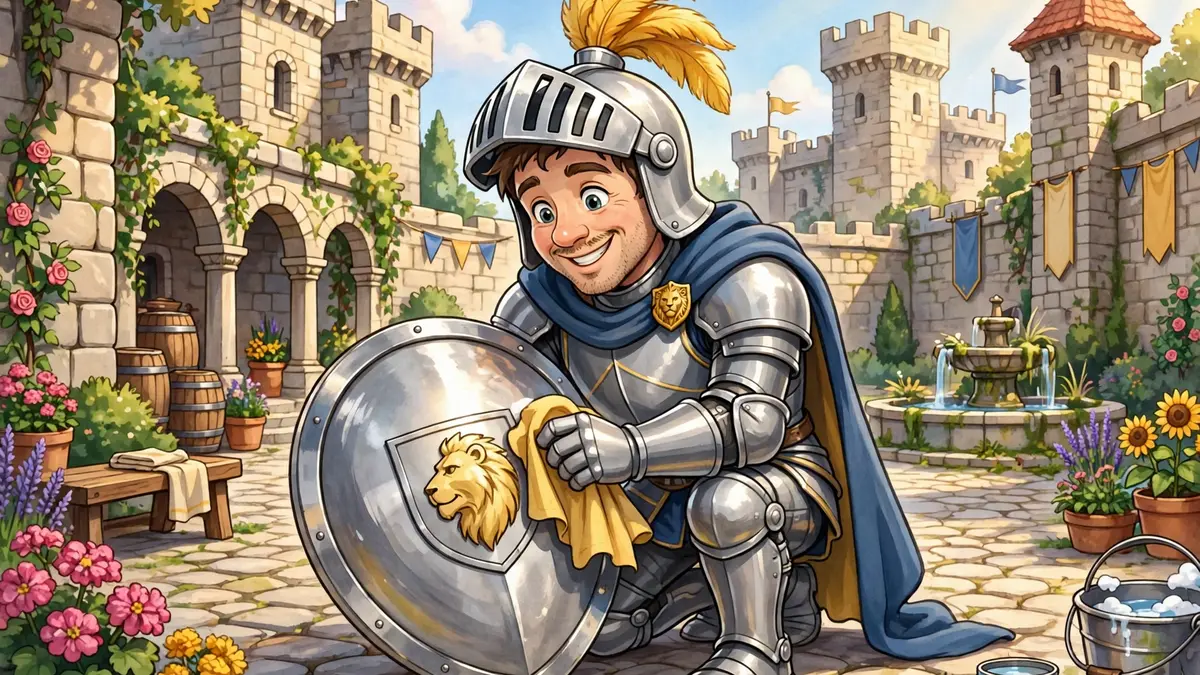
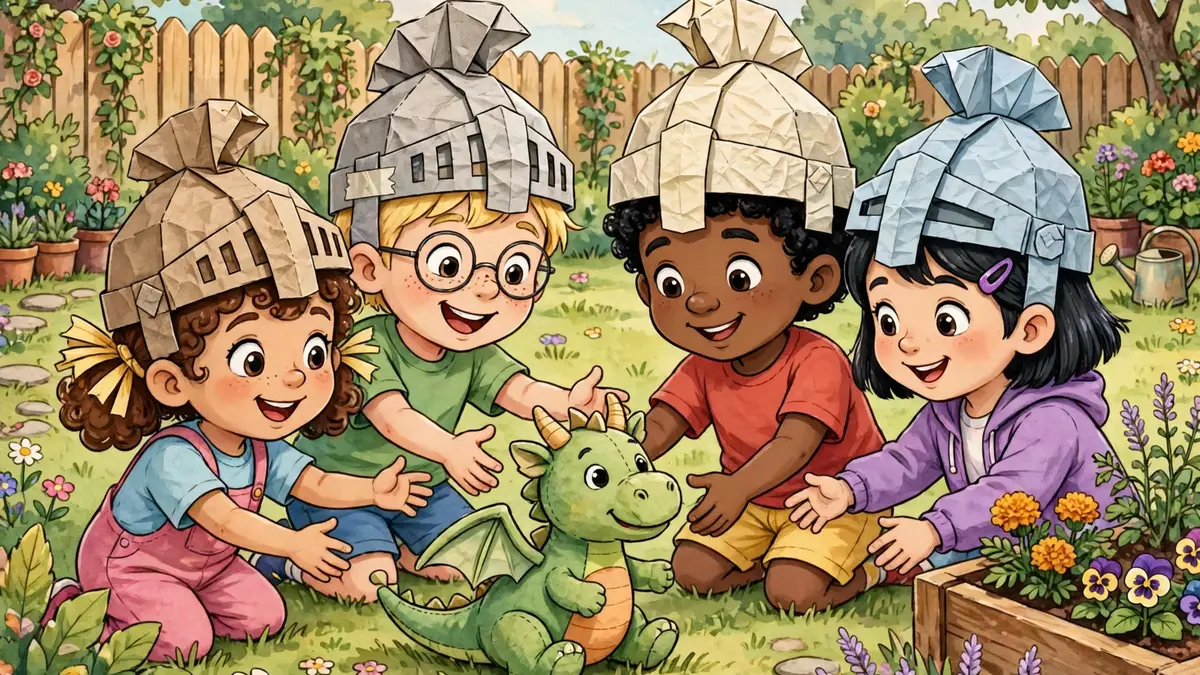
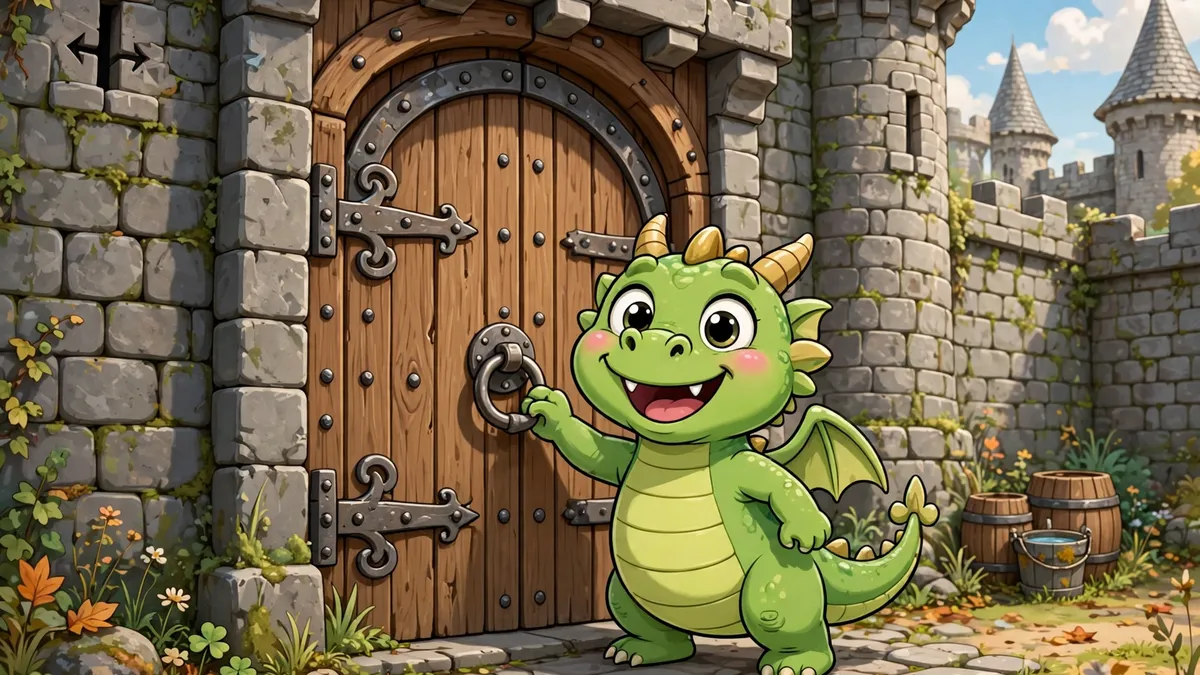
Medieval jokes are light, family-friendly one-liners about knights, castles, dragons, jesters, and life in the Middle Ages. This page has 210 original medieval jokes — classics, cute jokes, Q&As, captions, texts, knight and castle jokes, school jokes, dragon jokes, and knock-knock jokes — plus real history, a guide to telling them well, and answers to common questions.
Knight — a trained soldier who serves a king
Sword — the long blade a knight carries
Castle — the strong home of a king
Moat — the water ditch around a castle
Throne — the royal chair
Joust — a contest of knights on horseback
Squire — a young man learning to be a knight
Forge — the blacksmith’s workshop and fire
Lance — the long spear used in a joust
Armor — the metal suit that protects a knight
Jester — the funny entertainer of the court
Dragon — the great fire-breathing creature of stories
⚡ Quick Answer: Medieval jokes are clean, family-friendly one-liners about knights, castles, dragons, jesters and kings. This page has 210 original medieval jokes — classics, cute jokes, Q&As, captions, texts, knight and castle jokes and knock-knock jokes — plus real medieval history and a guide to telling them well.
Why Medieval Jokes Still Make Us Laugh
The Middle Ages lasted for about a thousand years, from around 500 to around 1500, and the stories from that time are still with us today. Knights in shining armor, tall castles with flags, friendly dragons, and jesters with bells give us words that are easy to play with, and every one of them can turn into a joke. That is why medieval jokes work for everyone, from kids at school to grown-ups at the dinner table.
A good medieval joke is simple: take a word like “knight” or “castle,” give it a funny new meaning, and build a short scene around it. The best ones are kind, clean, and easy to say out loud, so you can tell them at school, at a party, or in a text to a friend who needs a smile.
Classic Medieval Jokes
These are the all-round medieval jokes: simple, warm, and ready for any moment. Use them at breakfast, at a party, or in a text to someone who needs a smile.
The knight asked the blacksmith for a new sword, and the blacksmith said, “I can make you a sharp one, but you have to promise to stop testing it on the furniture.”
The castle cook put a sign on the kitchen door that said, “No knights in shining armor past this point, because the last one polished the floor with his shield.”
The jester told the king a joke about a dragon, and the whole court laughed so hard that the royal dog started barking in time with the music.
The squire spent all morning cleaning the knight’s armor, and by lunch the knight had already found a mud puddle to sit in.
The wizard opened a school for young dragons, and the first lesson was how to blow smoke rings without setting the classroom on fire.
The bard sang a song about a brave knight, and the knight asked him to change the part where he tripped over his own sword.
The queen asked the royal tailor for a dress with pockets, and the tailor said, “Your Majesty, queens carry fans, not snacks.”
The peasant brought a basket of apples to the market, and the merchant paid him with three shiny coins and a story about a knight who was scared of bees.
The knight’s horse learned to open the stable door, and now the whole castle checks the courtyard twice before dinner.
The blacksmith’s apprentice made a shield with a picture of a duck on it, and the knight said it was the bravest duck he had ever seen.
The dragon asked the wizard for a cough sweet, because breathing fire all day had made his throat feel like a chimney.
The cook’s cat slept in the bread oven’s warm corner, and the baker said the cat was the only kitchen helper who never complained about the heat.
The knight tried to learn the lute, and the bard said, “You hold the sword better than the strings, and that is saying a lot.”
The castle’s tallest tower had a flag that flapped so loudly that the guards used it as an alarm clock.
The jester hid the king’s crown under a pie, and the whole court spent dinner pretending not to notice the golden sparkle in the crust.
The squire packed the knight’s bag for the tournament and forgot the helmet, the lance, and the map, but remembered the sandwiches.
The wizard’s cat knocked a potion off the shelf, and for one whole afternoon every chair in the tower could talk.
The queen’s garden had roses so red that the royal painter ran out of red paint before lunch.
The knight told the stable boy that his horse was the fastest in the land, and the horse proved it by running away from a bath.
The baker made a loaf shaped like a castle, and the children argued over who got to eat the tower.
The dragon collected shiny spoons instead of gold, and the villagers said it was the politest dragon they had ever met.
The bard forgot the words to his song halfway through, so he made up a verse about a knight who forgot his horse.
The knight’s armor squeaked so loudly that the castle mice learned to dance to the sound.
The cook asked the jester to taste the soup, and the jester said, “It needs more salt, less singing, and a bigger spoon.”
The squire tied the knight’s shoelaces together as a joke, and the knight spent the whole morning hopping around the courtyard.
The wizard turned the king’s chair into a frog by mistake, and the court held all meetings standing up for a week.
The queen asked for a quiet afternoon, so the jester told all his jokes in a whisper and the guards fell asleep smiling.
The knight’s shield had a dent from every tournament, and he called the dents his “collection of brave mistakes.”
The dragon sneezed in the middle of the feast, and the candles went out so fast that the cook thought it was a magic trick.
The baker’s dog stole a pie from the windowsill, and the whole village agreed that the dog had excellent taste.
The squire asked the knight how to be brave, and the knight said, “You start by saying sorry to the horse you scared.”
The jester wrote a song about the castle cat, and the cat sat on the lute for the rest of the evening as if it were the star of the show.
Cute Medieval Jokes
These jokes are soft, sweet, and made for anyone who likes their knights gentle. They are perfect for kids, grandparents, and friends who love a warm laugh.
The baby dragon blew a tiny puff of smoke, and the knight said, “That is the smallest fire I have ever seen, and the cutest one too.”
The little squire polished his wooden sword until it shone, and the knight said it was the brightest sword in the whole castle.
The kitten curled up in the knight’s helmet, and the knight wore a hat to breakfast instead.
The baby owl hooted at the moon, and the wizard said the little bird was practicing its night song.
The pony wore a flower crown to the spring fair, and every child in the village wanted a picture with her.
The little jester told a joke about a sleepy dragon, and the dragon yawned so wide that a butterfly flew out.
The ducklings followed the knight across the moat bridge, and the guards saluted them like tiny soldiers.
The baby dragon learned to roast marshmallows, and the whole castle came to watch the sweetest fire show ever.
The little knight shared his sandwich with the castle mouse, and the mouse gave him a shiny button in return.
The kitten chased a feather around the great hall, and the queen said it was the best show of the day.
The baby dragon sneezed a heart-shaped puff of smoke, and the wizard framed it in the tower window.
The little page carried the knight’s shield and said, “When I grow up, I will carry a bigger one.”
The lamb wore a tiny crown at the spring festival, and the farmer said it was the softest king in the land.
The baby owl blinked at the candle, and the wizard said, “He thinks the flame is a tiny sun.”
The kitten fell asleep in the jester’s hat, and the jester performed the whole show with a purring hat.
The little dragon hugged the knight’s boot, and the knight said, “You are the warmest friend I have.”
The duckling wore a paper crown to the pond party, and all the other ducklings quacked with joy.
The baby horse tried to wear the knight’s helmet, and it slid down over his eyes like a shiny bucket.
The little squire sang a song to the horse, and the horse nickered along as if it knew the words.
The kitten batted at the knight’s feather plume, and the knight said, “You are braver than the dragon.”
The baby dragon toasted a marshmallow for the wizard, and the wizard said it was the best dessert in the kingdom.
The little page waved a flag on the castle wall, and the whole village waved back with smiles.
Medieval Q&A Jokes
Questions first, answers second, laughs all the way through. The first fourteen answers are plain facts about the Middle Ages, knights, and castles, and the rest are playful twists.
Q: When did the Middle Ages begin and end? A: The Middle Ages lasted from about the year 500 to about the year 1500.
Q: What is a knight? A: A knight is a trained soldier who served a lord or king and followed a code of honour called chivalry.
Q: How did a boy become a knight? A: A boy became a page at about age seven, then a squire at about fourteen, and a knight at about twenty-one.
Q: What is a castle? A: A castle is a large, strong building with thick walls and towers, built to keep people safe.
Q: What is a moat? A: A moat is a deep ditch around a castle, often filled with water, that made it hard for attackers to reach the walls.
Q: What is a drawbridge? A: A drawbridge is a bridge over a moat that can be pulled up to close the castle entrance.
Q: What is a joust? A: A joust is a contest where two knights on horseback ride toward each other with long lances.
Q: What is a tournament? A: A tournament is a series of contests, like jousts and sword games, held for knights to show their skill.
Q: What is chivalry? A: Chivalry is the code of good manners and brave, kind behaviour that knights were expected to follow.
Q: Who is King Arthur? A: King Arthur is a legendary king from old British stories, known for his knights and the sword Excalibur.
Q: What is a jester? A: A jester is a funny entertainer who told jokes, sang songs, and made the royal court laugh.
Q: What did people eat at a medieval feast? A: At a feast, people ate roast meat, bread, cheese, fruit, and sweet pies, served on long tables.
Q: What is a squire? A: A squire is a young man learning to be a knight by helping a knight with his armor, horse, and weapons.
Q: What is the feudal system? A: The feudal system is how medieval land was shared: the king gave land to lords, lords gave land to knights, and peasants worked the land.
Q: Why did the knight bring a ladder to the feast? A: Because he heard the food was on another level.
Q: What did the dragon say to the knight at breakfast? A: “Please pass the toast, and do not make me use my breath on it.”
Q: Why did the jester bring a map to the castle? A: Because he kept getting lost in the long hallways.
Q: What did the squire say when the knight asked for his sword? A: “I cleaned it, I polished it, and I am still looking for it.”
Q: Why did the castle have so many stairs? A: Because the builders wanted everyone to take the high road.
Q: What did the wizard say to the talking chair? A: “Please sit down, we need to have a word.”
Q: Why did the horse wear a bell? A: So the knight could hear him coming before he ate the royal roses.
Q: What did the cook say to the dragon? A: “You can warm the soup, but you cannot eat the pot.”
Q: Why did the knight take his shield to the market? A: Because he wanted to save a little face, and a lot of money.
Q: What did the bard sing about the sleepy knight? A: “He fought the pillow and the pillow won.”
Q: Why did the queen hire a jester? A: Because the throne room needed a little more laughter and a lot less yawning.
Q: What did the blacksmith say to the broken sword? A: “You have had a hard day, so let me give you a brand-new edge.”
Q: Why did the dragon join the school choir? A: Because his voice could warm up the whole hall in one note.
Q: What did the peasant say to the tax collector? A: “I have three apples, two eggs, and one very good joke.”
Medieval Captions and Texts
Short lines for photos, posts, and messages. Pick one, pair it with your picture, and let the castle do the rest.
Medieval Captions for Social Media
Living my best castle life, one tower at a time.
This knight is ready for the weekend, armor and all.
A dragon ate my homework, and honestly, I believe him.
Crown on, worries off, tea in hand.
Just a knight out for a stroll through the village.
My horse thinks he runs this kingdom, and he might be right.
Feast mode: on. Manners mode: still loading.
The moat is full, the drawbridge is up, and the snacks are safe.
Dressed like a jester, feeling like a star.
Today I choose the long sword and the longer nap.
A castle a day keeps the boredom away.
My shield is dented, my spirit is not.
The wizard made my coffee disappear, and I still need it.
Joust a little, laugh a lot, repeat tomorrow.
This dragon is my co-pilot, and he only breathes fire on Mondays.
A quiet tower, a good book, and a warm blanket.
The queen of snacks has arrived, and she brought pie.
My horse has better hair than I do, and I accept it.
Training to be a knight, one sandwich at a time.
The castle cat runs the great hall, and we all know it.
Medieval Texts to Send a Friend
“I tried to be a knight today, but my armor was in the wash.”
“The dragon ate the last cookie, and I am not even mad.”
“Meet me at the castle gate, and bring snacks for the horse.”
“I just saw a jester juggle five pies, and I need you to see this.”
“My sword is sharp, my jokes are sharper, and my lunch is ready.”
“The wizard turned my homework into a frog, so I am free tonight.”
“Feast at six, bring your best stories and your biggest appetite.”
“I found a secret tower room, and it has the best view in the land.”
“The knight said my jokes were fit for a king, so I am framing them.”
“A dragon moved in next door, and he is great at warming the house.”
“I am practicing my knight wave, and it looks better every day.”
“The castle cat stole my sandwich, and the whole court saw it.”
Knight Puns
Knights are the heroes of the Middle Ages, and their jokes are about horses, shields, swords, and long days of training. These lines are made for anyone who loves a brave knight with a kind heart.
The knight asked his horse to wait outside the bakery, and the horse waited so politely that the baker gave him a carrot.
The knight’s new shield had a picture of a sunrise on it, and he said it was the brightest start to every morning.
The knight practiced his bow in front of the mirror, and the mirror never once complained about the dent in the frame.
The knight’s lance was too long for the stable door, so he carried it like a flag and the whole village cheered.
The knight thanked his squire with a warm smile, and the squire said it was the best reward in the whole kingdom.
The knight’s armor shone so brightly in the sun that the flowers in the garden turned to look at him.
The knight told the young page, “A brave heart matters more than a sharp sword, and a kind word matters most of all.”
The knight’s horse learned the way home so well that the knight could nap in the saddle on the ride back.
The knight hung his shield by the door, and the children used it as a mirror to practice their bravest faces.
The knight’s sword stayed in its sheath all through the feast, because the only thing he wanted to cut was the cake.
The knight waved to the crowd from the tournament field, and the crowd waved back with flags, hats, and one very happy dog.
The knight’s boots were covered in mud from the morning ride, and he said the mud was proof of a good day’s work.
Castle Puns
Castles are the biggest homes in the Middle Ages, with thick walls, tall towers, and a moat full of ducks. These jokes are about the castle itself, from the kitchen to the tallest flag.
The castle’s front gate creaked so loudly that the guards used it to wake up the whole courtyard.
The castle cook baked bread in the shape of a tower, and the children fought over who got the tallest slice.
The castle’s garden had a fountain shaped like a dragon, and the birds drank from it every morning.
The castle’s tallest window had the best view of the village, and the queen kept her reading chair beside it.
The castle’s kitchen smelled of fresh bread all day, and the knights followed the smell like a map.
The castle’s library had books so old that the pages smelled like autumn leaves and wood smoke.
The castle’s moat was full of ducks, and the guards named each one after a famous knight.
The castle’s great hall echoed with music every evening, and the mice danced along the floorboards.
The castle’s blacksmith made a gate so strong that the wind itself had to knock before entering.
The castle’s flag flew high over the tallest tower, and the whole village could see it from the market square.
The castle’s cellar had barrels of apple juice, and the cook said they were the sweetest treasure in the land.
The castle’s courtyard had a fountain where the knights washed their hands before every feast.
Sarcastic Medieval Jokes
These jokes are gently sarcastic and best shared with friends who enjoy dry humour. Keep your voice light and your smile wide so everyone knows you mean it kindly.
The knight said his armor was “very comfortable,” and then he asked the squire to help him sit down for the third time.
The jester said the king’s new song was “wonderful,” and then he hummed a different tune all the way home.
The squire said cleaning the stables was “the best part of the day,” and the horse agreed by stepping on his foot.
The wizard said turning the prince into a frog was “a small mistake,” and the frog agreed by croaking very loudly.
The cook said the soup was “just right,” and the dragon used it to warm his hands.
The knight said the tournament was “easy,” and then he spent the afternoon looking for his lost helmet.
The bard said his new song was “short,” and the crowd was still listening when the sun went down.
The queen said the throne was “very soft,” and the king nodded while rubbing his back.
The blacksmith said the sword was “ready in no time,” and the knight came back three days later.
The dragon said he was “only a little hungry,” and the village hid all the sheep just in case.
The peasant said paying taxes was “his favourite hobby,” and the tax collector wrote it down anyway.
The knight said getting up at dawn was “his favourite part of the day,” and then he yawned for a full minute.
Clever Medieval Jokes
These are the smart ones: wordplay, twists, and lines that reward a second listen. Save them for friends who love a clever turn.
The knight kept his best jokes in his shield, because a good punchline needs a strong guard.
The wizard wrote his shopping list in riddles, so the grocer had to solve three puzzles to find the milk.
The jester hid a joke inside a song, and the court sang the punchline without even knowing it.
The blacksmith hammered a word into the sword, and the knight read it every time he drew the blade.
The bard rhymed “castle” with “hassle,” and the queen said it was the truest rhyme she had ever heard.
The squire counted the knight’s steps to the tower and found that bravery takes exactly forty-two stairs.
The dragon learned to read, and now he checks the menu before he breathes fire on it.
The queen’s mirror could tell jokes, but it only laughed at its own reflection.
The knight’s map had a joke written in the corner, and every traveler who found it smiled all the way home.
The wizard’s spell book had a joke on the last page, and the apprentice laughed so hard the candles went out.
The cook put a riddle on the menu, and the knights had to guess the soup before they could eat it.
The jester’s hat had a bell for every joke, and on a good night the whole hat sang.
Medieval Jokes for Kids
These jokes are made for little ones who love knights, castles, and silly words. They are simple, sweet, and easy to say out loud.
The little knight rode a wooden horse around the garden, and the garden gnomes cheered him on.
The baby dragon tried to toast a marshmallow, and the marshmallow turned into a tiny golden cloud.
The kitten wore a paper crown to the tea party, and all the dolls bowed to her.
The little jester juggled three apples, and the apples never once fell on his head.
The pony gave the children rides around the castle yard, and every ride ended with a carrot.
The little page carried a tiny shield, and the knight said it was the bravest shield in the land.
The ducklings marched across the courtyard in a line, and the guards pretended they were tiny knights.
The baby owl wore a tiny wizard hat, and the wizard said it was the cutest student he ever had.
The little dragon blew a bubble of smoke, and the children chased it around the garden.
The kitten fell asleep in the knight’s shoe, and the knight hopped to breakfast on one foot.
The little squire helped the cook stir the soup, and the soup tasted better than ever before.
The pony wore a flower crown to the fair, and the children sang a song about the prettiest pony in the land.
Medieval Jokes for School
These jokes are for students and teachers who want school to feel a little more medieval. They are clean, kind, and safe for the classroom.
The teacher asked the class to draw a castle, and one student drew a castle with a dragon on the roof and a moat full of ducks.
The history teacher said the Middle Ages lasted a thousand years, and the class said that was the longest homework ever.
The student wrote a story about a knight who forgot his horse, and the teacher gave it a gold star.
The class built a castle out of boxes, and the tallest tower was made from the teacher’s old books.
The student asked why knights wore armor, and the teacher said it was the first school uniform with built-in homework protection.
The class learned about castles, and the teacher showed them how a drawbridge works with a cardboard model.
The student wrote a poem about a dragon, and the dragon in the poem only breathed warm air.
The teacher asked who wanted to be a knight, and every hand in the class went up at once.
The class made paper crowns for history day, and the principal wore the biggest crown of all.
The student asked if jesters had homework, and the teacher said their homework was to make people laugh.
The class learned the word “chivalry,” and the teacher said it meant being brave and kind at the same time.
The student drew a map of a castle, and the map had a secret room full of books and snacks.
Dragon Puns
Dragons are the biggest stars of medieval stories, and these jokes are about the friendliest dragon you will ever meet. He warms the soup, lights the candles, and never scares anyone on purpose.
The dragon opened a bakery, and his bread was always warm before it even left the oven.
The dragon learned to play the flute, and the whole village gathered to hear the smokiest songs ever played.
The dragon’s garden grew the reddest roses, because he warmed the soil with a gentle puff of fire.
The dragon wore a scarf in winter, and the scarf was the longest one in the whole kingdom.
The dragon’s laugh sounded like a kettle, and the cook said it was the best sound in the kitchen.
The dragon collected smooth stones from the river, and he kept them in a pile by his cave door.
The dragon’s birthday cake had a hundred candles, and he lit them all with one tiny breath.
The dragon read bedtime stories to the village children, and his voice was softer than a summer breeze.
The dragon’s wings made a gentle sound in the wind, and the birds flew beside him like friends.
The dragon helped the farmer dry the hay, and the farmer said it was the fastest harvest ever.
The dragon’s cave had a warm fire all winter, and the village came to share stories by its light.
The dragon painted pictures with his tail, and the castle hung the best one in the great hall.
Knock-Knock Medieval Jokes
Knock-knock jokes with a medieval twist. Say the whole exchange out loud — the joke is in the answer.
Knock, knock. Who’s there? Lance. Lance who? Lance a lot of fun at the feast tonight!
Knock, knock. Who’s there? Arthur. Arthur who? Arthur any snacks left, or did the dragon eat them all?
Knock, knock. Who’s there? Moat. Moat who? Moat of the time, I love a good castle joke!
Knock, knock. Who’s there? Jester. Jester who? Jester minute, I have a joke to tell you!
Knock, knock. Who’s there? Dragon. Dragon who? Dragon my feet to the feast, I am so hungry!
Knock, knock. Who’s there? Shield. Shield who? Shield you from my jokes, they are coming fast!
Knock, knock. Who’s there? Crown. Crown who? Crown yourself king, the party is starting!
Knock, knock. Who’s there? Sword. Sword who? Sword of glad you came to the castle today!
Knock, knock. Who’s there? Squire. Squire who? Squire a lot of fun to be had at the tournament!
Knock, knock. Who’s there? Castle. Castle who? Castle the magic spell, the wizard is here!
Knock, knock. Who’s there? Knight. Knight who? Knight after knight, these jokes keep coming!
Knock, knock. Who’s there? Throne. Throne who? Throne in the towel, I cannot stop laughing!
Jester Jokes and the Court Fool
The jester was the funniest person in the castle, and his job was to make the king, the queen, and the whole court laugh. Jesters wore bright clothes with bells on their hats and shoes, and they told jokes, sang songs, juggled, and danced. A good jester could make a dull evening feel like a party, and a sad king feel like smiling again.
What made the jester special was that he was allowed to say things no one else could say. He could gently tease the king about his new hat or his loud snoring, as long as the joke was kind and clever. The best jesters knew that a joke is a gift: it should make everyone in the room feel lighter, never smaller. That is why jesters are still loved in stories today — they remind us that laughter belongs in every castle, even a royal one.
Medieval Feast and Food
A medieval feast was the biggest party in the castle, with long tables, bright candles, and food piled high. The cook served roast meat, fresh bread, soft cheese, sweet fruit, and pies with golden crusts, and the whole hall smelled of honey and warm spices. Musicians played in the corner, the jester told jokes between courses, and the knights raised their cups to the king and queen.
Feasts were held for birthdays, weddings, harvests, and the return of knights from a long journey. The best part was not the food alone, but the company: everyone sat together, shared stories, and laughed until the candles burned low. If you were lucky, you sat near the kitchen door, where the cook slipped you an extra slice of pie when no one was looking.
King and Queen
Kings and queens ruled side by side in the Middle Ages, and their stories fill books, songs, and jokes. The king wore the crown and led the knights, while the queen ran the castle, planned the feasts, and kept the whole household in good order. Together, they made the castle feel like a home, not just a fortress.
This post keeps its royal jokes short on purpose, because the kings and queens have a whole post of their own. If you want more royal laughs, visit our 200+ Best King Puns & One-Liners Fit for Royalty (2026) for 210 fresh king jokes, chess laughs, and royal knock-knocks.
How Castles Worked
A castle was more than a big house: it was a small town behind strong walls. The thick stone walls kept people safe, the tall towers gave the guards a view of the whole valley, and the gatehouse was the only way in or out. The moat was a deep ditch, often full of water, and the drawbridge could be pulled up like a door to close the castle off from the world.
Inside the walls, the castle had everything a community needed. The great hall was where feasts and meetings happened, the kitchen baked bread and roasted meat all day, and the blacksmith’s forge made swords, horseshoes, and tools. There was a well for fresh water, stables for the horses, a chapel for quiet prayer, and bedrooms in the towers for the lord’s family. A castle was a home, a workshop, and a safe place, all in one.
Middle Ages Timeline
The Middle Ages lasted for about a thousand years, and a lot happened in that long stretch. Around the year 500, the Western Roman Empire had fallen, and new kingdoms were growing across Europe. In 1066, William of Normandy won the Battle of Hastings and became the king of England, and castles of stone began to rise across the land. In 1215, the Magna Carta was sealed in England, a famous document that said even a king must follow the law.
Later in the Middle Ages, towns and trade grew, great cathedrals were built stone by stone, and markets filled with bread, cloth, and tools. Around 1440, the printing press was invented, and books became easier to share than ever before. By about 1500, the Middle Ages were ending, and a new age of discovery was beginning. Knights, castles, and jesters had filled a thousand years of stories — and the jokes from those stories still make us laugh today.
A Knight’s Day
A knight’s day began early, with morning prayer and practice in the courtyard. He trained with his sword and lance, rode his horse around the fields, and helped his squire care for the armor and the stable. A knight who skipped practice was easy to spot at the tournament, so the wise ones never did.
After training came the work of the castle: guarding the gates, settling small disputes fairly, and sharing meals in the great hall. In the evening, the knight joined the feast, listened to the bard’s songs, and told stories of the day’s rides. The code of chivalry guided all of it: be brave when it matters, be kind when it counts, keep your promises, and protect those who cannot protect themselves. A knight was not judged by the shine of his armor, but by the kindness of his deeds.
Medieval Terms & What Makes Them Funny
Ten words sit behind almost every joke on this page. Learn them, and you will start spotting the trick inside every joke you hear.
Term
Quick Fact
Why It Is Funny
Knight
A trained soldier who served a lord and followed the code of chivalry
It sounds like “night,” which starts wordplay
Castle
A large, strong building with thick walls and towers
It is the biggest house in the joke, so everything sounds grand
Moat
A deep ditch around a castle, often filled with water
It hides inside “remote,” which starts wordplay
Drawbridge
A bridge over a moat that can be pulled up to close the castle
It is a door that also works as a wall
Joust
A contest where two knights ride toward each other with lances
It sounds like “just,” which starts wordplay
Tournament
A series of contests where knights showed their skill
It is a sports day in armor, and armor makes everything funnier
Squire
A young man learning to be a knight by helping one
It sounds like “square,” which starts wordplay
Blacksmith
The worker who made swords, shields, and horseshoes in the forge
He works with fire all day, so his jokes are always warm
Jester
The funny entertainer who made the royal court laugh
His whole job is to make people laugh
Chivalry
The code of brave, kind, and honest behaviour for knights
It turns a joke about manners into a joke about heroes
Medieval Jokes for Different Moments
The same joke can land perfectly or fall flat depending on the moment. Here is a quick guide to matching the joke to the occasion, with pointers to the right section of this page.
At a birthday party. Use the dragon and kids sections, one joke at a time, and let the cake do half the talking.
In a text. Use the texts section, one joke per message, and keep it short so the laugh comes fast.
At school. Use the kids and school sections, and keep the lines short so the lesson can happen on time.
On a rainy day at home. Use the castle and knight sections, and tell one joke between chapters of a good book.
Before bedtime. Use the cute section, one gentle joke, and let the dragon tuck the day away.
How to Tell a Medieval Joke Well and Get the Laugh
A great joke with bad delivery is just a sentence on a page. These three rules keep every line landing well.
1. Say the setup slowly
Give people time to picture the scene. Say the first part of the joke clearly, at a normal speed, and look at your friends while you talk. If you rush the setup, nobody can follow the joke, and the punchline has nothing to land on.
2. Pause before the punchline
One short pause is enough. Stop for a beat after the setup, let your friends start guessing, and then deliver the last line. The pause is what turns a good joke into a great one, because the listener’s brain is already working on the answer.
3. Laugh with your friends, not at them
After the joke lands, laugh along with everyone else. Never use a joke to make someone feel small, and never keep joking when someone asks you to stop. A joke that makes the whole table laugh is a win; a joke that makes one person uncomfortable is not.
When a Medieval Joke Is Not the Right Move
Not every moment wants a joke. When someone is having a hard day, when a meeting is serious, or when the room feels heavy, a joke can wait. A warm “I am here for you” or a quiet hand on the shoulder says more than any punchline. Clean humour is at its best when it is kind: a joke in a text, a funny line at lunch, a knock-knock joke to welcome a friend. If the joke would make one person laugh and another feel small, tell a different one.
How to Make Your Own Medieval Pun
The best medieval pun is the one you make yourself, because only you know the medieval moment you had. This short formula turns any everyday word into a joke in three steps.
First, pick a medieval word that sounds like another word or phrase: “knight” sounds like “night,” “moat” hides inside “remote,” “throne” sounds like “thrown,” and “joust” sounds like “just.” Next, build the question around that sound. Ask a simple question, and let your friend guess the answer. Last, finish with the sentence that uses the second meaning. Keep it short, say it with a smile, and test it on a friend. If they laugh in three seconds, it works. If they look confused, pick a clearer word, not a longer joke.
Keep the Laughs Rolling on Easy Puns
One joke is never enough, so here are five more posts to keep the smiles going. Each one is written in the same clean, family-friendly style, with 210 fresh jokes of its own.
Every post on Easy Puns is written to the same standard: fresh jokes, real facts, and lines that families can share without worry. Here is who writes them and how they are checked.
Ethan Parker is the Lead Humor Strategist & Senior Editor at Easy Puns. He writes clean, family-friendly jokes that kids can tell at school and grown-ups can share at work. Every joke on this page was written fresh for this post, checked for warmth and kindness, and kept free of mean lines and copied lines, so parents and teachers can share it with confidence.
These medieval jokes are clean, family-friendly one-liners for parties, school, and home. If you have a question about a joke, a fact, or a section, the answers below cover the most common ones.
Medieval Jokes FAQs
What is a medieval joke?
A medieval joke is a joke about knights, castles, dragons, jesters, and life in the Middle Ages, with wordplay on words like knight, sword, and castle.
Are these medieval jokes good for kids?
Yes. Every joke on this page is clean and kind — no mean words, no rude topics, and nothing that would hurt a classmate’s feelings. Teachers and parents can share this page with confidence.
What is the best medieval joke to tell at school?
A short, cheerful one works best, like a knight joke or a castle joke from the school section. Keep it kind, keep it short, and tell it when the class needs a smile.
When did the Middle Ages take place?
The Middle Ages lasted from about the year 500 to about the year 1500, a stretch of around a thousand years filled with castles, knights, and great stories.
Can I use these medieval jokes in a text?
Yes. The captions and texts section was written for exactly that. Pick a short line, send it to a friend, and let the castle do the rest.
How can I make my own medieval pun?
Pick a medieval word that sounds like another word, like “knight” in “night” or “moat” in “remote.” Build a simple question around the sound, then finish with the sentence that uses the second meaning. The make-your-own section on this page has the full formula.